
🔍 Read the full analysis: Fonduta Valdostana: Alpine Cheese Melt For Truffle Shavings on Mad Tasting

Get kitchen staples and gadgets delivered free with Prime
- Fast, free delivery on millions of items
- Prime Video, Amazon Music and more included
- Member-only deals all year
TL;DR
Fonduta Valdostana is a traditional cheese dish from Valle d’Aosta, Italy, made with Fontina cheese and egg yolks for a smooth, creamy texture. Unlike Swiss fondue, it relies on gentle heating to prevent graininess and is often served with truffle shavings or simple dippers like bread and potatoes.
Fonduta Valdostana, a warm, spoonable cheese dish from Valle d’Aosta in northwestern Italy, is gaining attention for its distinct preparation method that relies on Fontina Valdostana and egg yolks rather than wine and starch. This traditional alpine melt offers a richer, dairy-forward flavor profile compared to common Swiss-style fondues, requiring careful low-heat cooking to achieve a smooth, non-grainy texture. The dish serves as a comforting winter meal, often enhanced with truffle shavings and accompanied by bread, potatoes, or vegetables.
The core of Fonduta Valdostana is Fontina Valdostana DOP, a semi-soft cow’s-milk cheese protected by designation of origin rules within the Valle d’Aosta region. This cheese provides a buttery, nutty base that distinguishes the dish from sharper, wine-based fondues. Traditional recipes often incorporate egg yolks to thicken the mixture, creating a consistency that coats bread without running off or setting like custard. The process involves soaking the cheese in milk for several hours or overnight to soften it before gentle melting.
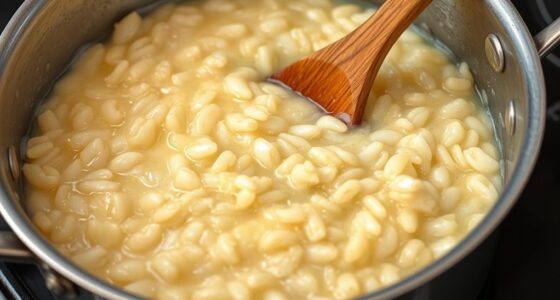
Cooking the fonduta requires patience and precise temperature control. The cheese and milk mixture must be warmed slowly in a heavy pan or double boiler, with constant stirring. Egg yolks are added near the end over low heat, and the mixture must never reach a boil. If the temperature rises too high, the cheese can separate, resulting in an oily or grainy texture. This sensitivity to heat is a key difference from Swiss fondues, which often use starch and wine to stabilize the emulsion at higher temperatures.
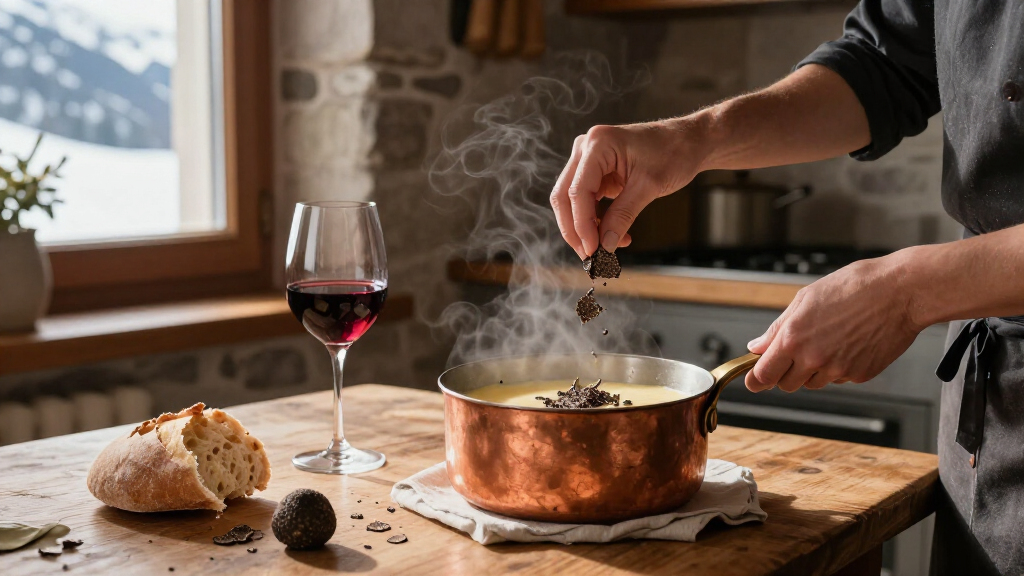
While truffle shavings are a popular luxury addition, they are optional. Fresh black or white truffle is shaved over the hot fonduta just before serving, allowing the steam to release its earthy aroma. The dish is typically shared, with dippers such as toasted bread, boiled potatoes, or steamed vegetables. The simplicity of the ingredients highlights the quality of the cheese, making it a focal point of alpine cuisine.
Alpine Table · Valle d’Aosta, Italy
Fonduta Valdostana: Alpine Cheese Melt for Truffle Shavings
A warm, spoonable Fontina fonduta built on gentle heat, egg yolks and the dairy heritage of the Italian Alps. Serve it at once, with truffle or simple, satisfying dippers.
The defining detail
Fontina Valdostana DOP and egg yolks create a rich, delicate melt. Slow warming keeps the cheese smooth and creamy.
01 / What makes it distinct
A richer kind of fondue
This Alpine specialty keeps its ingredient list simple and lets the cheese lead, with a preparation that rewards patience.
The cheese
Fontina Valdostana DOP
Buttery, nutty Fontina gives the dish its dairy-forward character and ties it to its Valle d’Aosta origins.
The texture
Egg yolks, not starch
Yolks help create a rich, coating consistency: spoonable enough for bread, without turning into a set custard.
The finish
Truffle is optional
Fresh black or white truffle adds an earthy aroma. The traditional cheese flavor stands confidently on its own.
02 / The gentle-melt method
Keep the heat slow
Temperature control is the key to a silky fonduta. Overheating can separate the cheese into an oily or grainy mixture.
Patience makes it smooth
Soak the sliced or cubed Fontina in milk for a few hours or overnight to soften it. Warm the cheese and milk slowly in a heavy pan or double boiler, stirring constantly. Add egg yolks near the end over low heat; keep the mixture below a boil.
Never let the fonduta boil. If it starts to look grainy, remove it from the heat and stir steadily as it cools slightly.
03 / Make it a shared meal
Choose a simple dipper
The rich, buttery cheese pairs well with accompaniments that bring a little crunch or a mild, earthy flavor.
Aromatic finishing touch
Shave fresh truffle over the hot fonduta just before serving, so its steam can carry the earthy aroma.
04 / A useful comparison
Two cheese melts, two methods
Fonduta Valdostana’s egg-and-milk approach gives it a different flavor and cooking rhythm from a common Swiss-style fondue.
| Feature | Fonduta Valdostana | Common Swiss-style fondue |
|---|---|---|
| Signature base | Fontina Valdostana DOP | Cheese blend |
| Typical thickener or liquid | Egg yolks and milk | Often wine and starch |
| Cooking approach | Slow, gentle warming | Often cooked hotter |
| Flavor profile | Buttery, rich and dairy-forward | Often sharper, with wine notes |
05 / Place and tradition
Rooted in Alpine dairy
Fontina and fonduta reflect a regional food culture shaped by mountain pastures, local dairying and cold-weather cooking.
Protected origin
Fontina Valdostana DOP Its designation links the cheese to production standards and place in Valle d’Aosta.A practical dish, refined over time
Valle d’Aosta, an autonomous region in the Italian Alps, is known for high-altitude pastures and a long cheese-making tradition. Fontina has been produced there for centuries.
Fonduta offered nourishing warmth in winter and made good use of local cheese. It later became a restaurant favorite, while the base recipe remained focused on dairy and careful technique.
06 / Cook’s notes
Small choices, better results
Household recipes vary in richness and thickness. Keep the method gentle, then adapt the accompaniments to your table.
Ingredient choice
Look for the DOP
Regular Fontina can work, but Fontina Valdostana DOP is preferred for its regional flavor and characteristic texture.
Recipe variation
Adjust to your taste
Soaking time can range from a few hours to overnight. Some cooks add butter; others rely on milk and cheese alone.
Leftovers
Repurpose gently
Fonduta thickens as it cools. Avoid direct reheating; use cooled leftovers as a pasta filling or vegetable topping.
07 / Key questions
Quick answers for the kitchen
A few practical pointers can help preserve the dish’s smooth texture and let its simple ingredients shine.
Can I use regular Fontina?
Yes. Fontina Valdostana DOP is preferred for its specific texture and flavor, while the designation identifies cheese made to regional production standards.
Why did my fonduta turn grainy?
Overheating can separate cheese proteins from fat. Remove the pan from the heat and stir steadily to help bring the temperature down.
Is truffle essential?
No. It is an optional luxury garnish. Fonduta is delicious on its own, with its rich Fontina flavor at the center.
What should I serve with it?
Try toasted bread, boiled potatoes or steamed vegetables. Their mild flavors complement the buttery cheese without overpowering it.
Distinctive Alpine Culinary Identity
The preparation of Fonduta Valdostana underscores the cultural and culinary identity of Valle d’Aosta, where dairy production has historically been central to the local economy and diet. By using Fontina Valdostana DOP, the dish supports regional agricultural standards and preserves traditional methods that prioritize ingredient quality over complex additives. For home cooks, understanding the difference between this method and Swiss-style fondue allows for more accurate replication of authentic flavors. The reliance on egg yolks for thickening rather than starch creates a distinct mouthfeel that is richer and more delicate, appealing to those seeking a nuanced cheese experience. This dish also highlights the versatility of cheese as a main course component, moving beyond simple snacking to a structured, shared meal.
As an affiliate, we earn on qualifying purchases.
Valle d’Aosta’s Dairy Heritage
Valle d’Aosta is an autonomous region in the Italian Alps, known for its high-altitude pastures and long-standing tradition of cheese-making. Fontina has been produced in this area for centuries, with its production methods codified under the Protected Designation of Origin (DOP) status to ensure authenticity. The cheese is made from unpasteurized cow’s milk, contributing to its complex, evolving flavor profile. Historically, fonduta was a practical way to use up aged cheese and provide calorie-dense warmth during harsh winters. Over time, it evolved into a refined dish, often served in restaurants as a signature item. The addition of truffle reflects the region’s access to high-quality forest ingredients, though the base recipe remains rooted in simple, local dairy products.
Variations in Household Recipes
While the core ingredients of Fontina, milk, and egg yolks are consistent, specific proportions and additional ingredients vary between households and chefs. Some recipes include butter for richness, while others rely solely on milk and cheese. The exact soaking time for the cheese can range from a few hours to overnight, depending on the desired texture. There is no single authoritative standard for the ratio of egg yolks to cheese, leading to variations in thickness and richness. Additionally, the availability of fresh truffle is seasonal, meaning the dish’s appearance and aroma may differ significantly throughout the year. Whether to use white or black truffle is also a matter of personal preference, with no strict rule governing the choice.
Serving and Storage Considerations
For those preparing Fonduta Valdostana at home, the next step is to prepare accompaniments and ensure the dish is served immediately. Since the fonduta thickens as it cools, prompt serving is essential to maintain its spoonable consistency. Leftovers should not be reheated directly, as this can cause the texture to break; instead, they can be cooled and used as a filling for pasta or a topping for vegetables. For future preparations, sourcing Fontina Valdostana DOP is recommended to achieve the authentic flavor. Cooks may experiment with different dippers, such as roasted root vegetables or cured meats, to complement the dish’s rich profile. Monitoring the cheese’s freshness and storage conditions is also vital for optimal melting results.
Key Questions
Can I use regular Fontina instead of Fontina Valdostana DOP?
While regular Fontina can be used, Fontina Valdostana DOP is preferred for its specific texture and flavor profile. The DOP designation ensures the cheese meets strict production standards in Valle d’Aosta, which are crucial for achieving the authentic creamy consistency of the dish.
Why did my fonduta become grainy?
Graininess usually results from overheating the mixture. If the temperature gets too high, the cheese proteins can separate from the fat, creating an oily or grainy texture. To fix this, remove the pan from the heat immediately and stir steadily to lower the temperature.
Is truffle necessary for Fonduta Valdostana?
No, truffle is an optional addition. The dish is traditionally enjoyed for its rich cheese flavor, and truffle is used as a luxury garnish to enhance the aroma. The base recipe works perfectly well without it.
What are the best dippers for Fonduta Valdostana?
Traditional dippers include toasted bread, boiled potatoes, and steamed vegetables. These neutral-flavored items complement the rich, buttery taste of the Fontina without overpowering it.
Source: Mad Tasting
NFL season / tailgating Picks
team gear
As an affiliate, we earn on qualifying purchases.