Irish cuisine centers on hearty stews and simple soda bread that highlight the natural flavors of land and sea. You’ll find dishes packed with fresh ingredients like lamb, seafood, potatoes, and dairy, all prepared in a straightforward way that emphasizes quality. Each bite tells a story of Ireland’s landscape and history, blending rustic comfort with regional diversity. Keep exploring to discover more about the rich traditions behind these iconic Irish dishes.
Key Takeaways
- Irish cuisine emphasizes hearty, simple dishes that highlight fresh, natural ingredients like potatoes, lamb, and dairy.
- Traditional Irish stew combines lamb or beef with root vegetables, slow-cooked for rich, comforting flavors.
- Soda bread, made with baking soda and buttermilk, is a quick bread that pairs perfectly with stews.
- Regional diversity influences Irish recipes, reflecting local ingredients from coastlines, inland farms, and dairy regions.
- Irish culinary heritage celebrates rustic yet refined flavors, connecting dishes to land, history, and cultural identity.
Ever wondered what makes Irish cuisine unique? It’s a rich, comforting blend of flavors rooted in tradition, shaped by the land and sea. Central to Irish cooking are traditional Irish ingredients like hearty potatoes, fresh cabbage, tender lamb, and dairy products such as butter and cream. These staples form the backbone of many regional Irish dishes, each offering a taste of Ireland’s diverse landscape and history. When you explore Irish cuisine, you’ll discover how these ingredients come together to create dishes that are both simple and deeply satisfying.
Irish cuisine combines hearty ingredients like potatoes, lamb, and dairy to create simple, satisfying dishes rooted in tradition.
Regional Irish dishes reflect the country’s geographic diversity. In the west, you might find hearty stews featuring fresh seafood like salmon and shellfish, highlighting Ireland’s extensive Atlantic coastline. Moving inland, lamb and beef become prominent, often prepared as slow-cooked roasts or stews that emphasize the quality of Irish meat. In the east, dairy products like butter and cheese are essential, used in everything from bread to sauces. The influence of local ingredients ensures that each region offers its own unique take on classic recipes, making Irish cuisine a tapestry of flavors that tell stories of the land and its history.
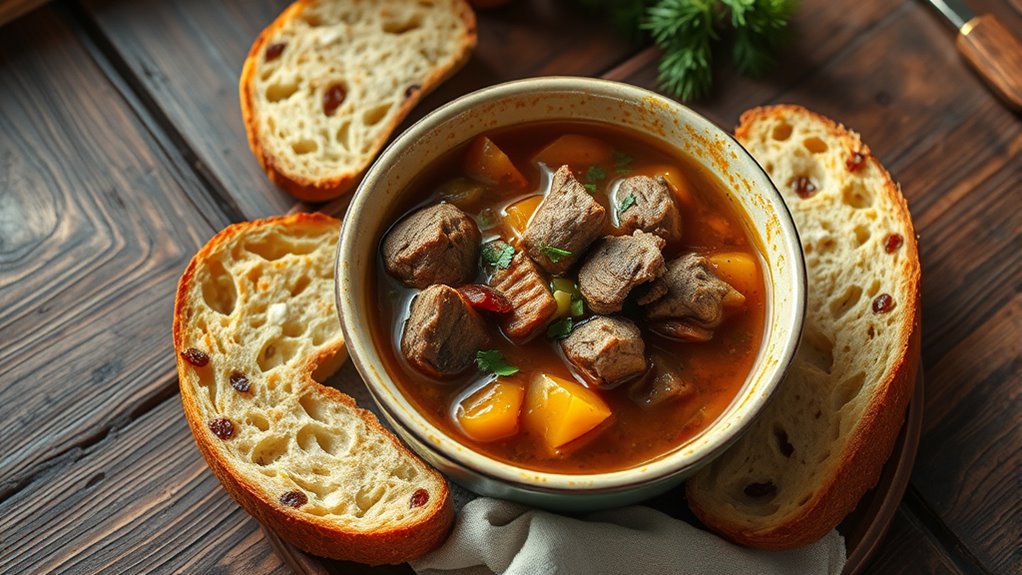
One of the most iconic elements of Irish cuisine is the humble stew. It’s a simple yet flavorful dish, often made with lamb or beef, root vegetables, and plenty of herbs. The slow-cooking process allows the flavors to meld, resulting in a comforting meal perfect for Ireland’s often cool climate. Closely linked to this tradition is soda bread—a quick bread made with traditional Irish ingredients like baking soda, flour, buttermilk, and a pinch of salt. You’ll find soda bread served alongside stews, offering a chewy texture and slightly tangy flavor that complements the richness of the meat and vegetables.
Exploring Irish cuisine means embracing its straightforward, hearty approach to cooking. It’s about celebrating the quality of simple ingredients and letting their natural flavors shine. Additionally, understanding the regional diversity of Irish dishes enhances appreciation for how local ingredients influence traditional recipes. Whether you’re sampling regional Irish dishes or savoring classic staples like stew and soda bread, you’ll experience a culinary heritage that’s both rustic and refined. Each dish tells a story of Ireland’s landscape, climate, and history, making every bite a journey into the heart of Irish culture. So, next time you enjoy a hearty stew or a slice of warm soda bread, remember that you’re tasting centuries of tradition, crafted from some of the finest ingredients Ireland has to offer.
Frequently Asked Questions
What Are Traditional Irish Desserts?
Traditional Irish desserts include sticky toffee pudding, apple tart, and carrageen moss pudding. You’ll find these desserts often use simple ingredients like apples, berries, and dairy, combined with Irish baking techniques such as making rich, moist puddings or flaky pastry. You might also enjoy Bailey’s Irish cream cheesecakes or bread and butter pudding, which showcase the country’s love for comforting, hearty sweets rooted in local ingredients and baking traditions.
How Is Irish Stew Traditionally Prepared?
To prepare Irish stew, you start by browning tender Irish potato chunks and lamb or beef in a large pot. Add Celtic spices, onions, carrots, and garlic for flavor. Cover everything with water or broth, then simmer slowly until the meat is fall-apart tender and the flavors meld. This traditional method creates a hearty, comforting dish that highlights simple, fresh ingredients and authentic Irish culinary traditions.
Are There Regional Variations in Irish Soda Bread?
Irish soda bread varies across regions, like a tapestry woven with local ingredients and baking techniques. You’ll find that in certain areas, bakers incorporate regional ingredients such as buttermilk or sour milk, while others stick to traditional methods. These subtle differences make each loaf unique, reflecting local flavors and customs. So, when you enjoy soda bread, remember it’s a delicious mosaic of Ireland’s diverse culinary landscape.
What Beverages Complement Irish Meals?
You should pair Irish meals with drinks like Irish whiskey and Irish tea to enhance the flavors. Irish whiskey complements hearty dishes with its smooth, warming notes, while Irish tea offers a revitalizing, comforting contrast. Both beverages balance the meal perfectly, whether you’re enjoying a hearty stew or soda bread. Sipping Irish whiskey or tea adds an authentic touch, making your dining experience more enjoyable and true to Irish tradition.
How Has Irish Cuisine Evolved Over Centuries?
You’d be amazed at how Irish cuisine has evolved over centuries, shaped by a rich history of Irish ingredients and colonial influences. Once simple and hearty, the dishes now blend tradition with modern flavors, reflecting Ireland’s resilience and adaptability. Colonialism introduced new spices and techniques, expanding Irish recipes beyond humble roots. Today, Irish cuisine is a vibrant tapestry of history and innovation, showcasing how centuries of change have created a truly dynamic culinary heritage.
Conclusion
As you savor the rich aroma of hearty stew and the warm, crusty embrace of soda bread, you can almost feel Ireland’s timeless spirit. The bubbling pot and golden slices evoke cozy pubs and family gatherings, where tradition and warmth mingle in every bite. Irish cuisine invites you to experience its soul—comforting, hearty, and full of stories told through simple, honest flavors that linger long after the meal ends.