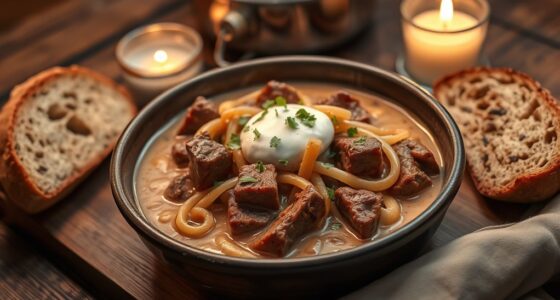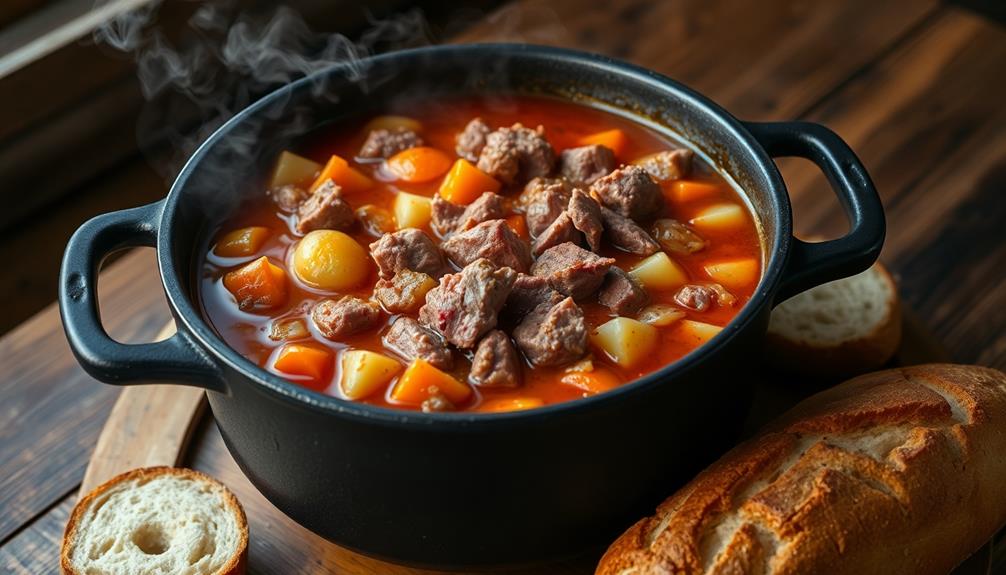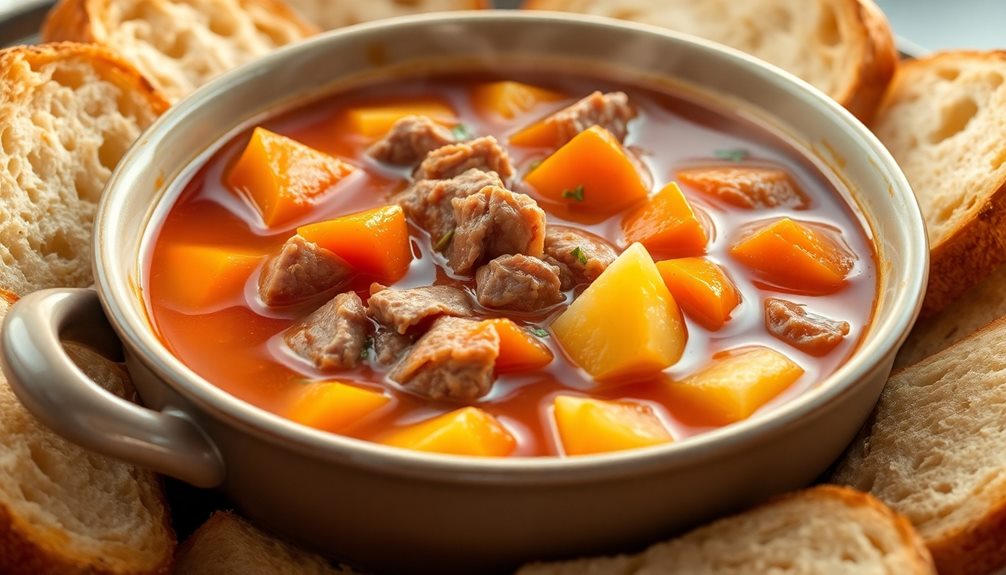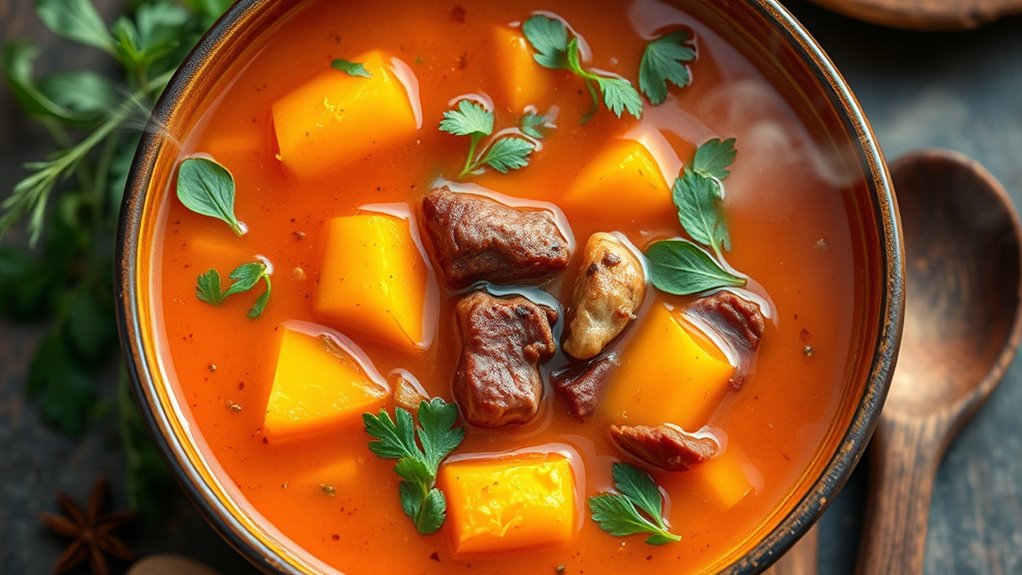

Soup Joumou is a vibrant Haitian squash soup that celebrates independence and resilience. Prepared with pumpkin or squash, vegetables, herbs, and tender meats, it’s a symbol of freedom and cultural pride. Traditionally, Haitians gather to cook and share this dish on New Year’s Day, honoring their history and unity. If you want to explore more about its rich significance and cultural roots, keep going for a deeper look.
Key Takeaways
- Soup Joumou is a traditional Haitian squash soup symbolizing freedom, resilience, and independence, especially celebrated during Haitian New Year.
- It features ingredients like pumpkin, vegetables, herbs, and meats, prepared through communal family activities.
- Originating during slavery, it became a symbol of resistance and liberation after Haiti’s independence in 1804.
- Serving Soup Joumou on January 1st fosters national pride, unity, and cultural continuity among Haitians worldwide.
- The vibrant orange color and traditional preparation reflect Haitian heritage, resourcefulness, and culinary traditions passed through generations.
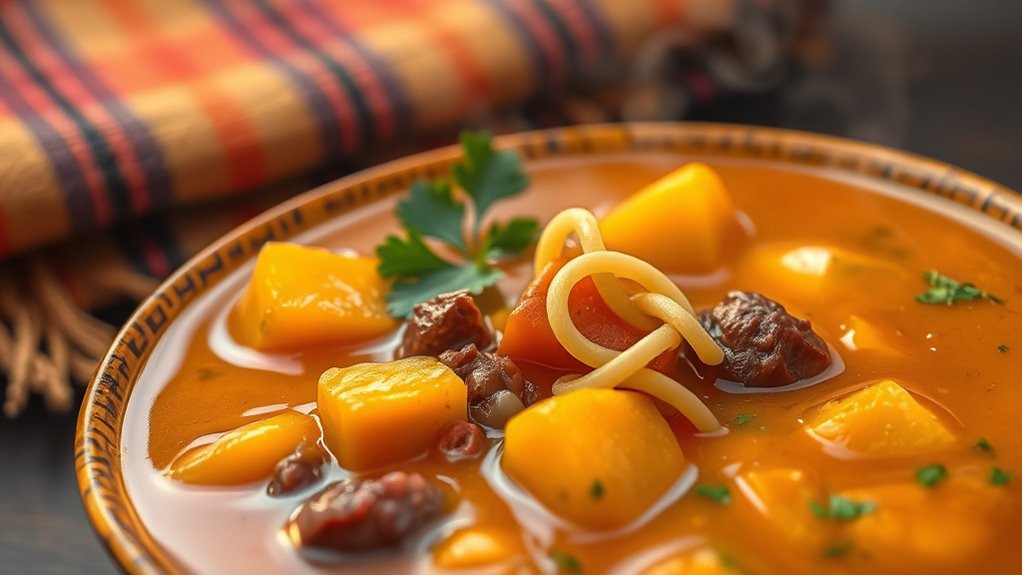
Have you ever tasted Soup Joumou? If not, you’re missing out on more than just a flavorful dish—you’re missing a crucial piece of Haitian culture. This vibrant, hearty soup holds deep cultural significance and is a cornerstone of Haitian culinary traditions. It’s more than just a meal; it’s a symbol of freedom, resilience, and identity for the Haitian people. During each New Year’s celebration, families gather around large pots of Soup Joumou, sharing stories and memories that reinforce their history and unity. The act of preparing and consuming this soup is a powerful reminder of the country’s struggle for independence, making it a cherished ritual that connects generations.
In Haiti, culinary traditions are woven into the fabric of daily life, and Soup Joumou exemplifies this beautifully. Its ingredients—pumpkin or squash, vegetables, herbs, and tender beef or other meats—are simple yet thoughtfully combined to create a complex, comforting flavor. The preparation process is a communal activity, often involving multiple family members working together, passing down recipes, and preserving cultural heritage. The vibrant orange hue of the soup is as symbolic as its taste, representing hope and vitality. The use of squash, a humble vegetable, underscores the importance of resourcefulness and tradition in Haitian cuisine. Over time, the recipe has evolved, but its significance remains unchanged, highlighting the resilience of Haiti’s culinary identity. Additionally, the cultural symbolism embedded in Soup Joumou helps maintain a sense of pride and continuity among Haitians worldwide.
Celebrating Haitian New Year with Soup Joumou isn’t just about nourishing the body; it’s about honoring history and asserting cultural pride. The soup’s origins trace back to the days of slavery when enslaved Haitians transformed a simple dish into a powerful symbol of their fight for freedom. When Haiti gained independence in 1804, the act of consuming Soup Joumou became an act of rebellion, a way to reclaim dignity and celebrate liberation. Today, serving this soup on January 1st is a tradition that continues to foster unity and pride among Haitians worldwide. It’s a reminder of their ancestors’ strength and the importance of preserving cultural practices amid modern changes.

Haidilao Hot Pot Soup Base — Red Chili 220g 海åº•æ ž 火锅底料-清油
Authentic Sichuan Mala Flavor Experience the signature numbing & spicy (麻辣) taste of Sichuan hot pot with aromatic…
As an affiliate, we earn on qualifying purchases.
As an affiliate, we earn on qualifying purchases.
Frequently Asked Questions
Can Soup Joumou Be Made Vegetarian or Vegan?
Yes, you can make Soup Joumou vegetarian or vegan. Use vegetarian substitutions like vegetable broth instead of meat-based broth, and add plant-based proteins such as beans or tofu. For vegan adaptations, skip any animal products and include ingredients like coconut milk for creaminess. These adjustments keep the authentic flavors while making the soup suitable for vegetarian or vegan diets, allowing everyone to enjoy this traditional Haitian dish.
What Are Traditional Side Dishes Served With Soup Joumou?
Ever wonder what complements Soup Joumou perfectly? You typically serve it with warm bread rolls or fried plantains, which balance the spicy, savory flavors. These side dishes soak up the delicious broth and add a satisfying crunch or softness to each bite. Wouldn’t you agree that bread rolls and fried plantains elevate the meal, making it even more festive and memorable? They’re a must-have for an authentic Haitian experience.
How Long Does It Take to Prepare Soup Joumou?
Preparing Soup Joumou typically takes about 2 to 3 hours, depending on your familiarity with the recipe. The preparation time involves peeling and chopping vegetables, seasoning the meat, and gathering ingredients. The cooking duration includes simmering the soup until the squash is tender and flavors meld perfectly. Be patient, as this slow cooking process guarantees a rich, flavorful soup that’s well worth the effort and time invested.
Are There Regional Variations of Soup Joumou in Haiti?
Yes, there are regional variations of Soup Joumou across Haiti. You’ll notice differences in regional flavors and ingredient differences, depending on local tastes and available ingredients. For example, some areas add more spicy peppers, while others emphasize herbs or specific meats. These variations reflect the diverse culinary traditions within Haiti, allowing you to experience unique flavors no matter where you enjoy this traditional dish.
Is Soup Joumou Suitable for All Dietary Restrictions?
Soup Joumou can be suitable for many dietary restrictions, but you should check allergy considerations first. It’s naturally free of gluten if made without wheat-based thickeners, making it a good gluten-free option. However, some recipes include ingredients like wheat or dairy, so ask about specific preparations. Always confirm with the cook or restaurant to ensure it aligns with your dietary needs to enjoy this flavorful Haitian tradition safely.

Alpine Cuisine 12-Piece Stainless Steel Stock Pot and Steamer Set – Large Cooking Pots with Lids For Soup, Boiling, Canning, Steaming, Tamales 6.5/9.5/12/16 Quart
STAINLESS STEEL STOCK POT STEAMER: To ensure safe cooking, the Steamer pot body is composed of food-grade stainless…
As an affiliate, we earn on qualifying purchases.
As an affiliate, we earn on qualifying purchases.
Conclusion
As you enjoy a bowl of Soup Joumou, remember it’s more than just a delicious dish—it’s a symbol of Haitian independence and resilience. Did you know that only about 10% of Haitians can afford this hearty soup regularly? By savoring it, you’re partaking in a powerful tradition that celebrates freedom and unity. So, next time you taste Soup Joumou, appreciate its rich history and the strength it represents for the Haitian people.

Hanna's Fine Herbs, Premium Quality, 4 fl oz Jar
Comes in 4 fl. Oz. glass jar (net weight 0.13 oz. )
As an affiliate, we earn on qualifying purchases.
As an affiliate, we earn on qualifying purchases.

McCormick Culinary Unseasoned Meat Tenderizer, 35 oz – One 35 Ounce Container of Meat Tenderizer Seasoning, Perfect for Fall-off-the-Bone Meat
JUICY, TENDER TASTE: Make your signature meat dishes undeniably juicy and delicious with McCormick Culinary Unseasoned Meat Tenderizer;…
As an affiliate, we earn on qualifying purchases.
As an affiliate, we earn on qualifying purchases.