
King cake traditions like the French galette des rois and Mexican rosca de reyes celebrate cultural identity and community through centuries-old baking customs. You’ll find symbolic decorations, colorful glazes, and fillings such as fruit or cream cheese. These treats connect generations and blend history, religion, and regional pride. The detailed techniques and meaningful ornaments make each celebration unique—exploring further reveals a rich heritage worth discovering.
Key Takeaways
- Galette des Rois and Rosca de Reyes symbolize kingship, sharing, and cultural heritage during Epiphany celebrations.
- Regional variations include rich fillings like almond paste and fruit preserves, reflecting local traditions.
- Traditional baking involves shaping brioche-like dough into rings, decorated with colorful sugars and figurines.
- The small figurine hidden inside signifies luck and is a key element in each tradition.
- These desserts foster community bonding, connecting generations through centuries-old customs.
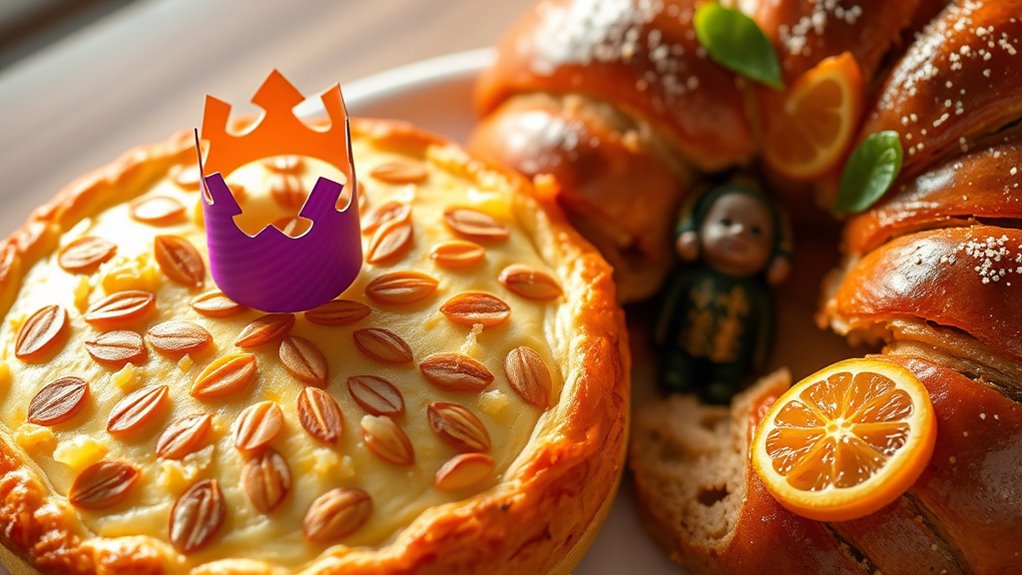
King cake traditions are a vibrant part of celebrations leading up to Mardi Gras, especially in New Orleans. These festive customs go beyond just enjoying a sweet treat; they hold deep cultural significance that ties communities together and celebrates heritage. When you partake in a king cake, you’re joining a long-standing tradition that dates back centuries, blending history, religion, and regional pride. Each slice you take connects you to generations of revelers who have made these desserts an essential part of their festivities. The cultural significance of king cakes varies slightly depending on the region, but the core idea remains the same: it’s a symbol of community, celebration, and shared joy.
King cake traditions connect communities through centuries of celebration, symbolizing joy, heritage, and shared cultural pride.
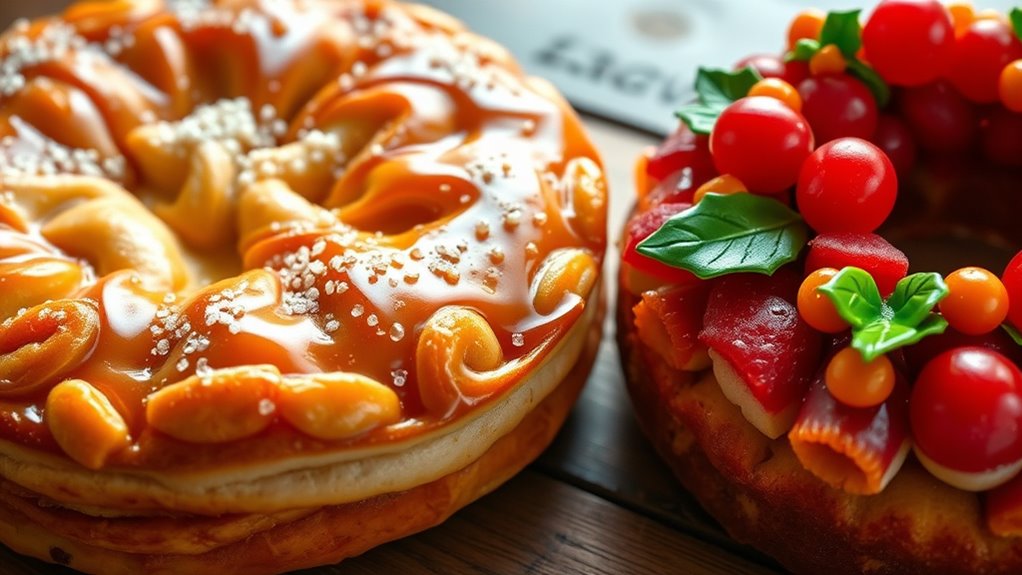
Making a king cake involves specific baking techniques that elevate it from an ordinary pastry to a treasured tradition. Whether you’re preparing a Galette des Rois in France, a Rosca de Reyes in Mexico, or a classic New Orleans-style king cake, mastering these techniques is key. The dough is typically a rich, brioche-like bread, requiring careful kneading to develop its soft, airy texture. You want to ensure the dough is smooth and elastic, which is achieved through proper kneading and fermentation. After rising, the dough is shaped into a large ring or oval, symbolizing eternity and unity. Before baking, many bakers incorporate a colorful sugar glaze, often in traditional shades of purple, green, and gold, representing justice, faith, and power.
Filling the cake is another step where technique matters. Some recipes call for a simple cinnamon-sugar mixture, while others include more elaborate fillings like cream cheese, fruit preserves, or almond paste. When working with fillings, you need to evenly distribute them without overstuffing, which can cause the dough to tear or spill during baking. The finishing touches, such as decorating with icing, colored sugars, or figurines—often a small plastic baby in the case of the king cake—are also important. These details aren’t just decorative; they carry symbolic meaning and add to the excitement of the tradition.
Baking techniques also influence the final texture and appearance of the cake. Proper oven temperature, baking time, and even cooling methods can make a difference. A well-baked king cake should be golden-brown, with a tender interior and a shiny, colorful glaze on top. Understanding the baking process and applying these techniques ensures you preserve the cultural significance while creating a delicious centerpiece for Mardi Gras celebrations. Whether you’re making one for family, friends, or a community event, your attention to detail ensures that this cherished tradition continues to thrive.

Mam Papaul's King Cake Mix 2pk
Authentic New Orleans king cake mix from Mam Papaul's brings Mardi Gras tradition home with a sweet dough,…
As an affiliate, we earn on qualifying purchases.
As an affiliate, we earn on qualifying purchases.
Frequently Asked Questions
What Are the Origins of King Cake Celebrations?
You might find it fascinating that king cake celebrations have deep cultural significance rooted in historical origins from Europe, especially France and Spain. These festivities date back centuries, marking the Epiphany and honoring the visit of the Wise Men. The cake’s tradition symbolizes unity and celebration, with the hidden figurine representing good luck. Understanding these roots helps you appreciate how these customs connect to history and cultural identity today.
How Do Different Cultures Customize Their King Cakes?
You’ll notice that different cultures customize their king cakes through cultural variations and ingredient differences. For instance, in France, they use puff pastry and almond cream, while in Mexico, the Rosca de Reyes features dried fruits and a tiny figurine. In New Orleans, the King Cake often has colorful icing and a plastic baby inside. These variations reflect local traditions, flavors, and festivities, making each celebration unique.
Are There Specific Days for King Cake Festivities Worldwide?
When it comes to king cake festivities worldwide, timing varies because different regions have their own traditions. You might think everyone celebrates on the same day, but regional variations and modern adaptations mean some mark the occasion in January, while others celebrate closer to Mardi Gras or Epiphany. So, keep your eyes peeled—these celebrations are a moving target, and the dates can change depending on local customs and modern twists.
What Are Common Symbols Hidden Inside King Cakes?
You’ll find common symbols hidden inside king cakes that represent cultural symbolism and hidden treasures. Typically, a small figurine or a bean is concealed, symbolizing luck, prosperity, or the presence of a hidden treasure. These symbols add fun and tradition to the celebration, encouraging everyone to search carefully. When you uncover them, it’s a reminder of the cultural symbolism behind the cake and the excitement of finding hidden treasures.
How Has the Tradition Evolved Over the Years?
Imagine a tapestry woven with vibrant threads—your tradition has evolved with colorful cultural variations and modern adaptations. Over the years, you’ve seen the cake’s shape and fillings change, blending old customs with new flavors. Today, you celebrate with creative decorations and diverse ingredients, making each gathering unique. This evolution reflects your community’s dynamic spirit, embracing tradition while innovating to keep the celebration fresh and relevant.

Silikomart | 33.214.87.0065 Galette of Rois 04 – Silicone Stencil for Making The Traditional Galette of Kings. Ø 210 H 2.5 mm
La Galette des rois a traditional cake of French culture enjoyed on the occasion of the Epiphany period….
As an affiliate, we earn on qualifying purchases.
As an affiliate, we earn on qualifying purchases.
Conclusion
As you explore these festive traditions, you’ll find that king cakes are more than just sweet treats—they’re the heartbeat of celebration, weaving communities together like vibrant threads in a tapestry. Whether it’s the French galette des rois or the Spanish rosca de reyes, each bite carries centuries of history and joy. Embrace these customs with open arms, letting them bloom into cherished memories that turn every January into a festival of unity and hope.

LUHUADUO 30Pcs King Cake Baby Jesus Figure, 1.5inch Plastic Jesus Doll Mini Nativity Christ Figurines Gifts Set for Christmas, Easter, Shower, Mardi Gras Party Favors
PACKAGE CONTENTS: Set of 30 miniature Baby Jesus figurines, each measuring 1.5 inches, perfect for various religious and…
As an affiliate, we earn on qualifying purchases.
As an affiliate, we earn on qualifying purchases.

Mardi Gras King Cake Decoration Gift Box Kit Yellow Green Purple Sanding Sugars with King Baby – White
Assortment of colors include purple, green, and yellow. Great for cupcakes, donuts, or even finish off the look…
As an affiliate, we earn on qualifying purchases.
As an affiliate, we earn on qualifying purchases.