
Understanding heat transfer in your Dutch oven is key to baking perfect bread. When preheated, the cast iron conducts heat directly to the dough’s surface, ensuring even cooking. The oven’s lid enhances thermal radiation, helping browning and moisture retention. Both conduction and radiation work together to create a stable, high-temperature environment that produces a crisp crust and light crumb. Explore these mechanisms further, and you’ll discover better baking results with every loaf.
Key Takeaways
- Preheating the Dutch oven ensures efficient heat conduction and stable temperature for even bread baking.
- Cast iron’s excellent heat conduction quickly transfers heat from the oven to the dough’s surface.
- Covering the Dutch oven with a lid enhances thermal radiation, promoting crust browning and even baking.
- Both conduction and radiation work together to create a moist, enclosed environment that supports dough rise.
- Proper handling and timing optimize heat transfer, resulting in a crispy crust and well-risen bread.
When baking bread in a Dutch oven, understanding how heat transfers is key to achieving that perfect crust and crumb. The way heat moves through the Dutch oven influences how evenly your bread bakes, how well it develops a crispy crust, and how the interior rises. Two main mechanisms drive this heat transfer: material conduction and thermal radiation. Recognizing how these processes work helps you optimize your baking technique and select the right Dutch oven for your needs.
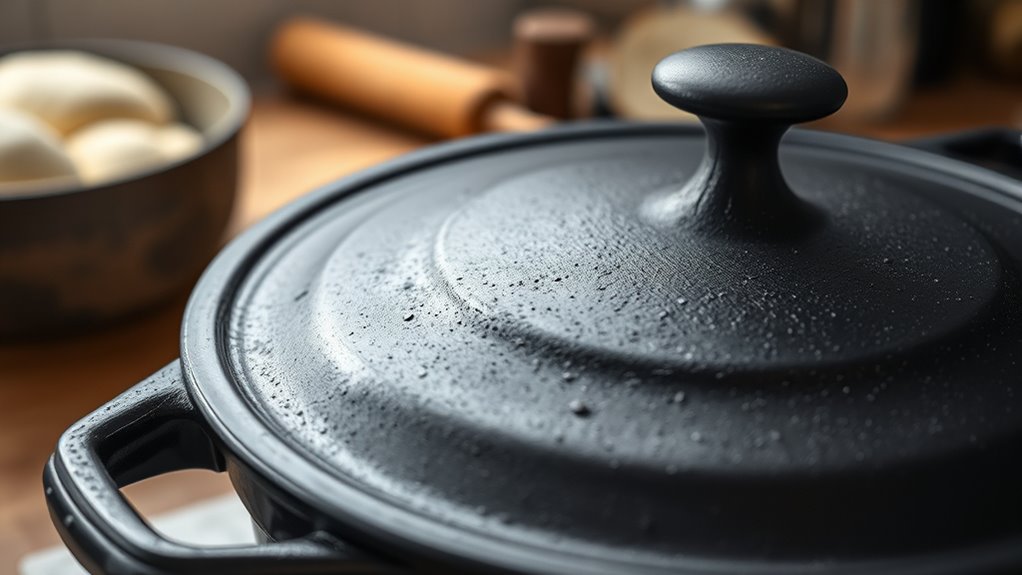
Material conduction occurs when heat travels directly through the material of the Dutch oven itself. Most Dutch ovens are made from cast iron, which is an excellent conductor of heat. When you preheat your oven, the cast iron absorbs and retains this heat, creating a stable environment for baking. As the bread dough makes contact with the hot interior, heat transfers directly from the cast iron to the dough’s surface. This direct contact ensures that the crust forms quickly and evenly, which is essential for that desirable crispiness. The thickness and quality of the material influence how well heat conducts; thicker cast iron retains heat longer, providing a consistent baking temperature over time.
Most cast iron Dutch ovens conduct heat efficiently, ensuring even baking and a crispy crust.
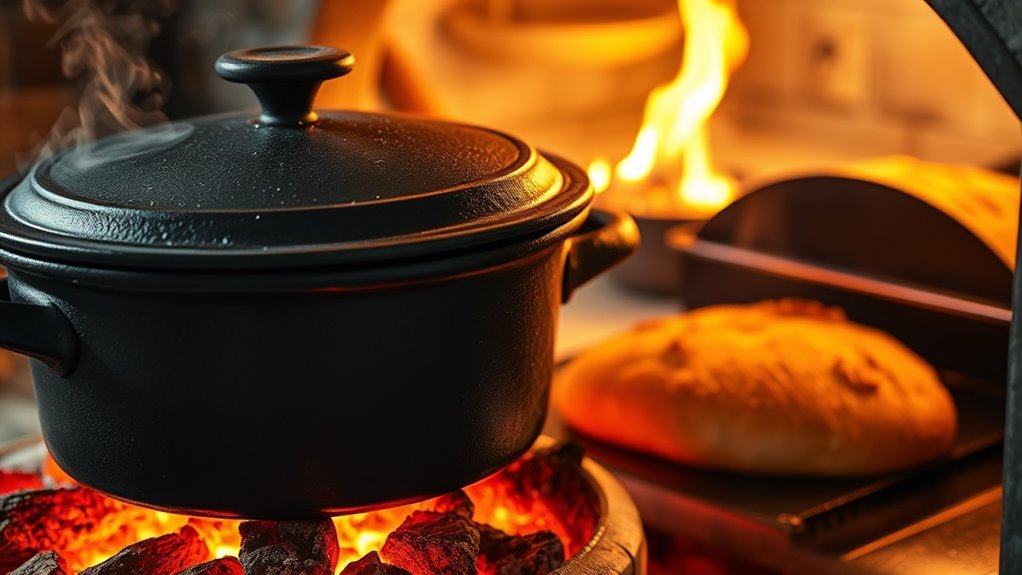
Thermal radiation also plays a vital role, especially when you cover the Dutch oven with a lid. As the oven heats up, the cast iron emits infrared radiation, transferring heat to the bread indirectly. This process allows the heat to envelop the dough from all sides, promoting even baking. When the lid is on, the cast iron radiates heat inward, creating a mini oven environment that traps moisture and promotes a good rise while fostering the development of that signature crust. The intensity of thermal radiation depends on the temperature of the Dutch oven’s surface; the hotter the surface, the more infrared energy is emitted, which accelerates browning and crust formation.
Both conduction and radiation work together during the baking process. Conduction delivers the initial heat directly to the dough, while radiation helps distribute heat evenly around the bread, especially in the oven’s enclosed space. To maximize these effects, you should always preheat your Dutch oven thoroughly so that its surface temperature remains high and stable throughout baking. Additionally, using a Dutch oven with a well-fitting lid enhances thermal radiation, trapping heat and moisture inside for optimal bread development. Proper preheating techniques ensure that the heat transfer mechanisms work efficiently for perfect bread results.
In essence, understanding how material conduction and thermal radiation operate allows you to control the baking environment better. By doing so, you ensure your bread bakes evenly, develops a beautiful crust, and achieves that light, airy crumb you’re aiming for.

Enameled Cast Iron Dutch Oven – Umite Chef 5QT Pot with Lid & Cotton Potholders – Heavy-Duty Cookware for Bread Baking, Braising, Stews, Roasting(Cream White)
Even Heat Distribution Retention: This Umite Chef Dutch oven Made with heavy-duty enameled cast iron, ensures even heat…
As an affiliate, we earn on qualifying purchases.
As an affiliate, we earn on qualifying purchases.
Frequently Asked Questions
How Does Humidity Affect Heat Transfer in Dutch Ovens?
Humidity affects heat transfer in Dutch ovens by influencing moisture evaporation. When humidity is high, moisture evaporates more slowly, which can lead to a softer crust and more steaming inside the oven. Proper humidity control helps you manage this process, ensuring even heat transfer and a better crust. You can adjust humidity by adding water to the oven or controlling the environment, allowing you to optimize baking conditions for perfect bread.
What Are the Best Materials for Optimal Heat Retention?
Choosing the best materials for superior heat retention depends on material conductivity and heat capacity. You want a material with low conductivity to prevent rapid heat loss and high heat capacity to store and evenly distribute heat during baking. Cast iron and enameled cast iron are ideal, as they offer excellent heat retention due to their high heat capacity and moderate conductivity, ensuring consistent oven temperatures and better bread crusts.
How Does Lid Design Influence Heat Distribution?
Lid design influences heat distribution by ensuring proper lid sealing, which traps moisture and maintains consistent heat. When the lid fits well, it prevents heat loss and encourages even cooking. Additionally, a well-designed lid allows some air circulation, balancing moisture and heat inside. This synergy between sealing and airflow creates an ideal environment, leading to a beautifully crusted loaf with uniform crumb, making your baking experience more successful and enjoyable.
Can Different Bread Types Require Different Dutch Oven Temperatures?
You might find that different bread types need varied Dutch oven temperatures to achieve ideal results. For high-hydration doughs, a slightly lower initial temperature helps prevent burning, while denser breads may require higher heat. Keep in mind, oven insulation affects heat retention, influencing how evenly heat transfers. Adjusting temperature based on dough hydration and your oven’s insulation ensures the bread bakes perfectly, with a crispy crust and tender crumb.
How Do Preheating Techniques Impact Heat Transfer Efficiency?
Preheating techniques substantially impact heat transfer efficiency. If you allow a longer preheating duration, your Dutch oven heats more evenly, improving heat transfer. Keep the oven door well-insulated to retain heat, preventing temperature drops. Avoid opening the door too often, as it disrupts the heat flow. By maintaining proper preheating duration and ensuring good insulation, you maximize heat transfer, resulting in better crust and overall bread quality.

EDGING CASTING 2-in-1 Pre-Seasoned Cast Iron Dutch Oven Pot with Skillet Lid Cooking Pan, Cast Iron Skillet Cookware Pan Set with Dual Handles, Indoor Outdoor for Bread/Frying/Baking/Camping/BBQ, 5 Qt
Pre-seasoned 2-in-1 cast iron dutch oven: The 2-In-1 cast iron dutch oven pot with skillet lid has been…
As an affiliate, we earn on qualifying purchases.
As an affiliate, we earn on qualifying purchases.
Conclusion
By mastering heat transfer in your Dutch oven, you reveal the secret to perfect bread. Think of it as a dance where heat and moisture move in harmony, creating that irresistible crust and tender crumb. When you understand these principles, baking becomes an art, not just a skill. So, embrace the science behind it, and watch your bread rise to new heights—proof that knowledge truly is the yeast of success.
Enameled Cast Iron Dutch Oven – Umite Chef 5QT Pot with Lid & Cotton Potholders – Heavy-Duty Cookware for Bread Baking, Braising, Stews, Roasting(Cream White)
Even Heat Distribution Retention: This Umite Chef Dutch oven Made with heavy-duty enameled cast iron, ensures even heat…
As an affiliate, we earn on qualifying purchases.
As an affiliate, we earn on qualifying purchases.

Silicone Bread Sling for Dutch Oven, 2 PCS Red Non-Stick & Reusable Bread Baking Supplies with Extra Long Handles, Easily Transfer Sourdough, Dishwasher Safe, Round
[PERFECT NON-STICK RELEASE] – Achieve a flawless release every time! Our non-stick surface guarantees your sourdough bread never…
As an affiliate, we earn on qualifying purchases.
As an affiliate, we earn on qualifying purchases.