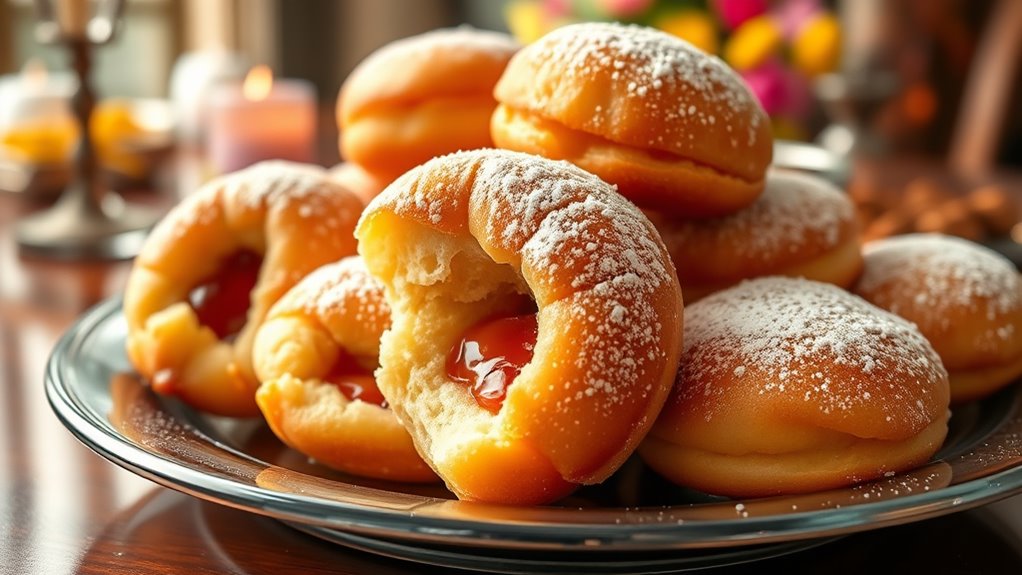

Sufganiyot, or jelly donuts, are a essential part of Hanukkah celebrations, symbolizing the miracle of oil and Jewish resilience. You’ll find them made with simple ingredients, fried until golden, and filled with sweet jelly or custard. The frying process honors the miracle story, while families often gather to make them together, passing traditions down. If you want to explore more about the rich history and cultural meaning behind these treats, keep going.
Key Takeaways
- Sufganiyot are traditional jelly-filled donuts central to Hanukkah celebrations, symbolizing the miracle of oil and religious perseverance.
- The recipe involves deep-frying dough made from simple ingredients like flour, eggs, and sugar, often filled after frying.
- Frying techniques ensure donuts are crispy and evenly cooked, preserving their symbolic significance and authentic flavor.
- The tradition of making sufganiyot is passed down through families, fostering cultural identity and communal bonds during Hanukkah.
- Sufganiyot’s cultural meaning celebrates resilience, hope, and the miracle of oil, reinforcing the festive spirit of Hanukkah.

Have you ever wondered why certain foods are central to Hanukkah celebrations? One of the most beloved treats is sufganiyot, or jelly donuts. These sweet, fried pastries are more than just delicious—they’re deeply rooted in tradition and cultural significance. When you bite into a sufganiyah, you’re participating in a centuries-old custom that celebrates resilience, faith, and community. The tradition of making and sharing these donuts during Hanukkah has been passed down through generations, preserving a sense of identity and unity among Jewish communities worldwide.
Sufganiyot are prepared using traditional recipes that have remained largely unchanged over the years. The dough is typically made with basic ingredients like flour, yeast, sugar, eggs, and milk, which come together to create a soft, airy base. Once the dough rises, it’s carefully shaped into rounds and deep-fried until golden brown. The frying process is essential, as it symbolizes the miracle of the oil that lasted eight days in the Hanukkah story. After frying, the donuts are filled with jelly, custard, or other sweet fillings, then dusted with powdered sugar. This method not only enhances their flavor but also keeps the filling contained, offering a delightful surprise with every bite. Additionally, proper frying techniques help ensure the donuts are crispy and evenly cooked, which is key to achieving authentic flavor and texture.
The cultural significance of sufganiyot during Hanukkah ties back to the miracle of oil, which is central to the holiday’s history. When the Maccabees reclaimed the Holy Temple, they found only a small vial of ritually pure oil capable of lighting the menorah for just one day. Miraculously, the oil burned for eight days, giving the Jewish people enough time to prepare more consecrated oil. Frying donuts in oil during Hanukkah is a symbolic act that commemorates this miracle. It’s a way to honor the perseverance and faith of those who fought for religious freedom, reminding you of the importance of resilience and hope.
Sharing sufganiyot during Hanukkah is also about community and tradition. Families gather to prepare these treats together, passing down recipes and stories that connect past and present. Each bite becomes a celebration of cultural heritage, reinforcing bonds and creating new memories. Whether enjoyed at a festive gathering or as a simple family treat, sufganiyot embody the spirit of Hanukkah—miracle, perseverance, and joy. When you indulge in these traditional recipes, you’re not just tasting a sweet dessert; you’re participating in a meaningful cultural practice that has sustained Jewish identity across generations.

5L Manual Stainless Steel Donut Filling Machine, Donut Churros Jelly Filling Machine, Paste/Liquids Infusing Machine with 1 Long Nozzle & 3 Short Nozzles, for Kitchens Bakeries Restaurants Cafes
【Efficient Cream Filling】 The 5L capacity machine fills donuts with cream accurately and quickly, enhancing your productivity and…
As an affiliate, we earn on qualifying purchases.
As an affiliate, we earn on qualifying purchases.
Frequently Asked Questions
When Did Sufganiyot First Become Popular During Hanukkah?
You’ll find that sufganiyot first gained popularity during Hanukkah in the 19th century, rooted in their historical origins as a festive treat. Their cultural significance grew as Jews in Eastern Europe embraced them to celebrate the miracle of the oil. Today, these jelly donuts symbolize resilience and joy, making them a beloved part of Hanukkah traditions worldwide, connecting past stories with present celebrations.
Are There Regional Variations of Jelly Donuts Across Jewish Communities?
Like a tapestry woven with different threads, regional variations of jelly donuts reflect community customs and local flavors across Jewish communities. In Israel, sufganiyot are often filled with strawberry or raspberry jam, while in Eastern Europe, they might feature prune or apricot preserves. These regional flavors add unique character to the traditional treat, celebrating diverse cultural influences while uniting communities through shared holiday customs.
What Are the Traditional Fillings Used in Sufganiyot?
You’ll find that traditional sufganiyot are filled with sweet fillings like strawberry, raspberry, or apricot jam, which add a fruity burst of flavor. Some enjoy savory twists, such as cheese or other fillings, offering a unique variation. These sweet fillings make each bite delightful, while creative bakers sometimes experiment with savory options to surprise and delight your palate during Hanukkah celebrations.
How Has Commercial Production Affected Traditional Recipes?
You notice how mass production has transformed sufganiyot, turning them into uniform, glossy treats that lack the handmade charm of artisanal techniques. Commercial bakers prioritize efficiency, often sacrificing traditional methods and unique flavors. While these donuts are now widely accessible, they sometimes miss the cozy, flaky texture and rich fillings crafted through careful, small-batch processes. This shift affects the authentic, nostalgic experience of enjoying homemade sufganiyot during Hanukkah.
Are There Any Dietary Restrictions or Modern Adaptations for Sufganiyot?
You’ll find plenty of dietary options for sufganiyot today, including gluten-free options and vegan adaptations. Many bakeries now offer these versions to cater to different needs, using alternative flours or plant-based ingredients. So, whether you’re avoiding gluten or dairy, you can still enjoy this traditional treat during Hanukkah. Modern adaptations make it easier to celebrate while respecting dietary restrictions without sacrificing flavor or tradition.

CRAFT911 Candy Thermometer with Pot Clip – Deep Fry Oil Thermometer for Frying and Candle Making
ACCURATE FAST READINGS (No More Burned Candy) — Our candy deep fry thermometer provides instant and accurate temperature…
As an affiliate, we earn on qualifying purchases.
As an affiliate, we earn on qualifying purchases.
Conclusion
As you savor sufganiyot this Hanukkah, remember you’re tasting centuries of tradition that hold the power to connect generations. Every bite carries the spirit of resilience and joy, more vibrant than any holiday lights. These sweet treats aren’t just desserts—they’re a delicious reminder of perseverance and hope, shining brighter than the brightest menorah. So, indulge fully, knowing you’re part of a centuries-old story that continues to inspire and unify us all.

Puff Cream Filling Piping Tip 3 Pcs,Cupcake Filler Tool with 20 Disposable Pastry Bags for Filling Donuts,Cupcakes & Eclairs
Donut Filler Piping Tip: Easily fill your homemade donuts with delicious cream or jelly using our specially designed…
As an affiliate, we earn on qualifying purchases.
As an affiliate, we earn on qualifying purchases.

DVK Cast Iron Frying Pan with Various Shapes for Christmas Cookies Cutters Small Skillet for Heart/Snowman (4PCS)
Christmas Frying Pan Mold Set: DVK's classic festive gingerbread baking pans come in two different shapes—a gingerbread man…
As an affiliate, we earn on qualifying purchases.
As an affiliate, we earn on qualifying purchases.