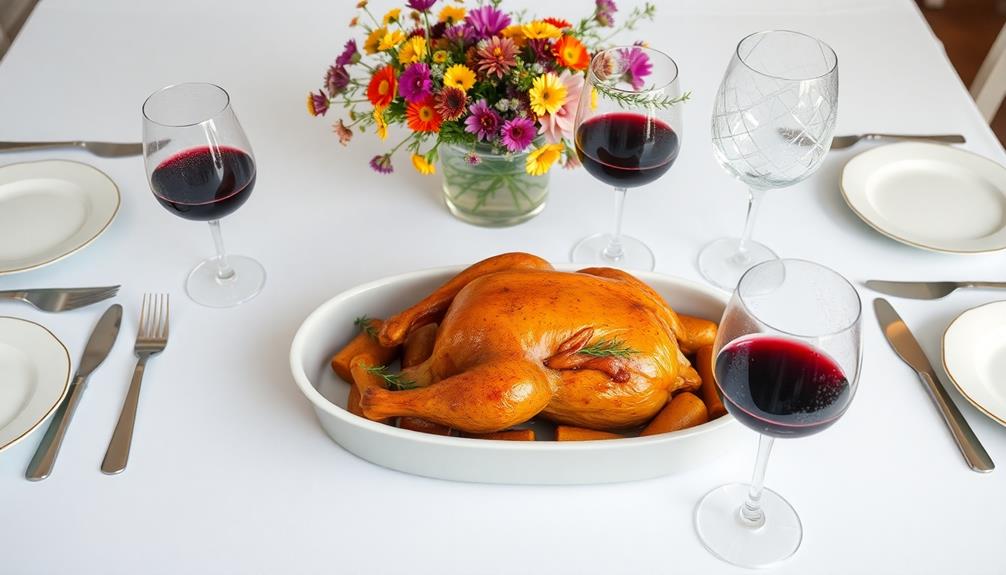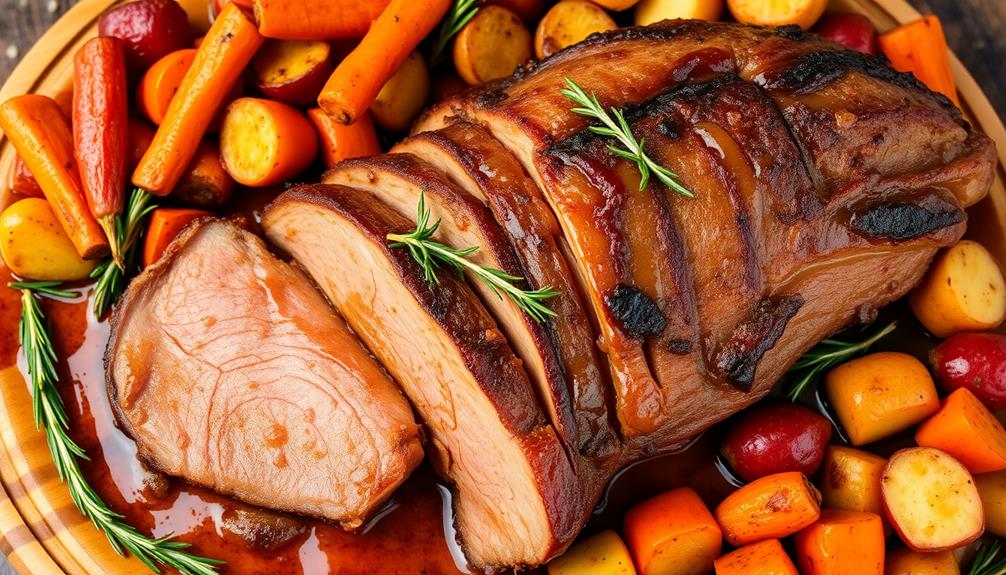
Celebrate the winter solstice by embracing traditions that turn darkness into light, like lighting candles or fires to symbolize the sun’s return. Warming foods such as hearty root vegetables, baked goods flavored with cinnamon, and sharing nourishing meals foster community and resilience. Creating a Yule log or decorating with evergreens highlights renewal and hope. These rituals and foods connect you to natural cycles and inspire a sense of renewal—stick around to discover more ways to honor this special time.
Key Takeaways
- Traditional winter solstice foods include hearty root vegetables and spiced baked goods that symbolize abundance and warmth.
- The Yule log, often made from a special wood, is burned to honor the sun’s return and symbolize resilience.
- Lighting candles or bonfires during solstice rituals signifies the return of light and hope after the longest night.
- Incorporating evergreen branches in decorations represents eternal life and resilience amid winter darkness.
- Seasonal foods and natural materials in ceremonies reinforce the connection to nature and the cycle of the year.
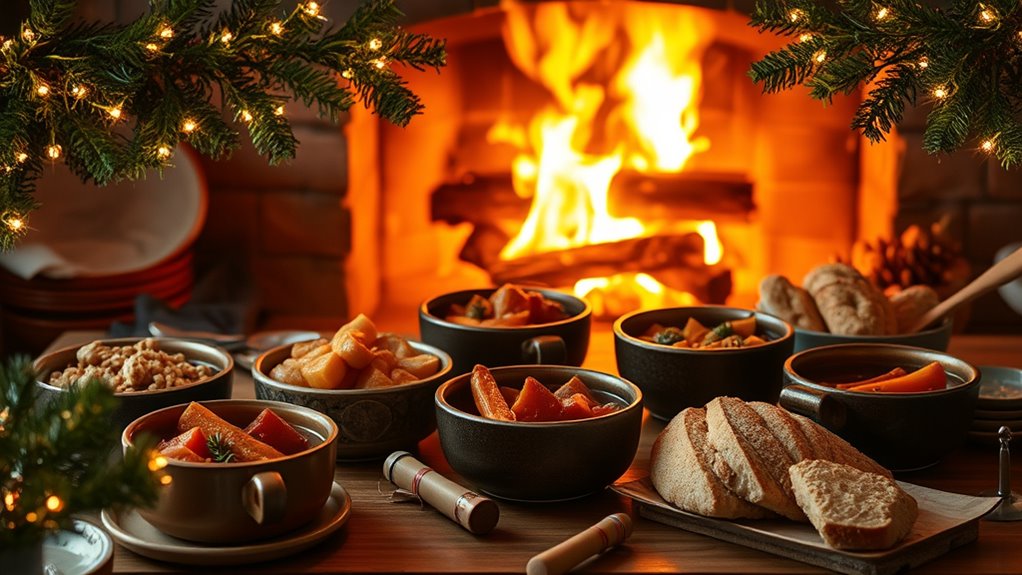
Have you ever wondered why the winter solstice marks such a special moment in the year? It’s the turning point when the days start to grow longer, and the darkness begins to give way to light. This shift has been celebrated across cultures for centuries, often through solar rituals that honor the sun’s return. These rituals serve as a reminder of renewal, hope, and the cyclical nature of life. As you embrace this time, you might find that many traditions involve lighting fires, candles, or bonfires—symbols of the sun’s rebirth and a way to invite warmth and light into the darkest days. People also incorporate seasonal foods into their celebrations, using hearty, warming dishes to comfort and sustain themselves during the cold months. These foods aren’t just nourishment; they carry symbolic significance, representing abundance, fertility, and the sun’s energy. Think of roasted root vegetables, hearty stews, and spiced baked goods that fill your home with inviting aromas.
During the winter solstice, it’s common to partake in solar rituals that involve lighting candles or fires, symbolizing the return of the sun. These rituals can be simple, like lighting a single candle at sunset, or more elaborate, such as gathering around a bonfire with friends and family. The act of lighting fire or candles awakens the energy of light amidst the darkness, marking a celebration of hope and renewal. Many traditions also include the creation of a Yule log, a large piece of wood that is burned to symbolize the sun’s strength and the promise of longer days. You might also decorate your space with evergreens, which stand for eternal life and resilience during the winter months. Incorporating natural materials like wood and greenery enhances the authenticity and symbolism of these celebrations.
In addition to solar rituals, seasonal foods play a crucial role in celebrating the solstice. The focus is on warming, hearty dishes that nourish both body and spirit. You might prepare stews filled with root vegetables like carrots, parsnips, and potatoes—foods that store energy from the earth during winter. Baked goods flavored with cinnamon, cloves, and ginger evoke warmth and comfort. Sharing these foods with loved ones enhances the festive spirit, creating a sense of community and continuity. These foods and rituals come together to honor the natural cycle, reaffirming your connection to the earth and its rhythms. The winter solstice isn’t just about marking the shortest day; it’s about celebrating the promise of light, growth, and renewal that follow even the longest night.

Magic Wood Silicone Yule Log Kit
Exceptional Versatility: Offers multiple uses
As an affiliate, we earn on qualifying purchases.
As an affiliate, we earn on qualifying purchases.
Frequently Asked Questions
What Are the Origins of the Yule Log Tradition?
The Yule log origins trace back to ancient winter rituals where people burned a large log to honor the rebirth of the sun and guarantee warmth during cold months. You might find it fascinating that these rituals symbolized hope, protection, and renewal. As you observe the tradition today, remember it’s rooted in celebrating light’s return after the longest night, connecting you to centuries of seasonal customs from diverse cultures.
Which Foods Are Considered Most Warming During Winter?
They say, “An ounce of prevention is worth a pound of cure,” and that’s true for winter foods. You’ll find comfort foods like hearty stews, creamy soups, and roasted root vegetables are perfect for cold days. Spicy dishes, such as chili or curries, also warm you from the inside out. These warming foods help you stay cozy and add a little heat to combat winter’s chill.
How Do Different Cultures Celebrate the Solstice?
You can see that different cultures celebrate the solstice through unique solar rituals and cultural symbolism. For example, in Scandinavia, people light fires and burn the Yule log to symbolize the return of light. In China, lantern festivals illuminate the night sky, representing hope. Meanwhile, in Native American traditions, ceremonies honor the Sun’s rebirth. These diverse practices connect communities through shared reverence for the sun’s essential role.
Can Winter Foods Boost Immunity Effectively?
Yes, winter foods can boost your immunity effectively. Incorporate seasonal superfoods like citrus fruits, root vegetables, and greens that deliver essential nutrients. Add immune-boosting herbs such as ginger, turmeric, and garlic to your meals for added protection. These ingredients help fight off colds and illnesses by supporting your immune system. Eating a variety of these warming foods regularly ensures you stay healthier during the colder months.
Are There Modern Twists on Traditional Winter Solstice Recipes?
You’ll find modern twists on traditional winter solstice recipes by blending festive ingredient pairings with seasonal beverage trends. For example, infusing mulled wine with exotic spices or adding superfoods like turmeric to hot cocoa updates classic drinks. Think of it as giving old traditions a fresh coat of paint—keeping their warmth but making them more vibrant and suited to today’s tastes. Embrace innovation while honoring winter’s comforting flavors.

Winter Candle Set, Candles for Home Scented, 4 Pack Soy Candles Gifts for Women Men, Winter Scents of Gingerbread Cookies/Apple & Cinnamon/Coffee Latte/Pine & Cedarwood
【Winter Ambiance Collector】 Immerse yourself in winter's finest moments: Crisp pine and cedar evoke a post-snow forest stroll;…
As an affiliate, we earn on qualifying purchases.
As an affiliate, we earn on qualifying purchases.
Conclusion
As the winter solstice marks the return of longer days, remember that embracing warming foods and cherished traditions like the Yule log connects you to ancient cycles of renewal. Just as the sun’s rebirth mirrors nature’s resilience, your celebrations can ignite hope and warmth in your heart. Keep these customs alive, honoring the timeless dance of darkness and light, and let the promise of spring inspire your spirit to endure the cold with grace and gratitude.

10oz Tasty Vegetable Soup Blend, Dehydrated Vegetables for Ramen Toppings, Stews, and Emergency Food, Bulk Resealable Bag, All Natural and Non GMO
FRESH WHEN YOU NEED THEM: Perfect dried vegetable combo to top off your ramen or as a base…
As an affiliate, we earn on qualifying purchases.
As an affiliate, we earn on qualifying purchases.

Norfolk 6 Ft Christmas Pine Garland, Artificial Green Evergreen Holiday Decoration for Mantle, Fireplace, Indoor Winter Decor
GENEROUS SIZE: 6 feet long artificial pine garland provides ample coverage for mantles, fireplaces, staircases, or doorways, creating…
As an affiliate, we earn on qualifying purchases.
As an affiliate, we earn on qualifying purchases.