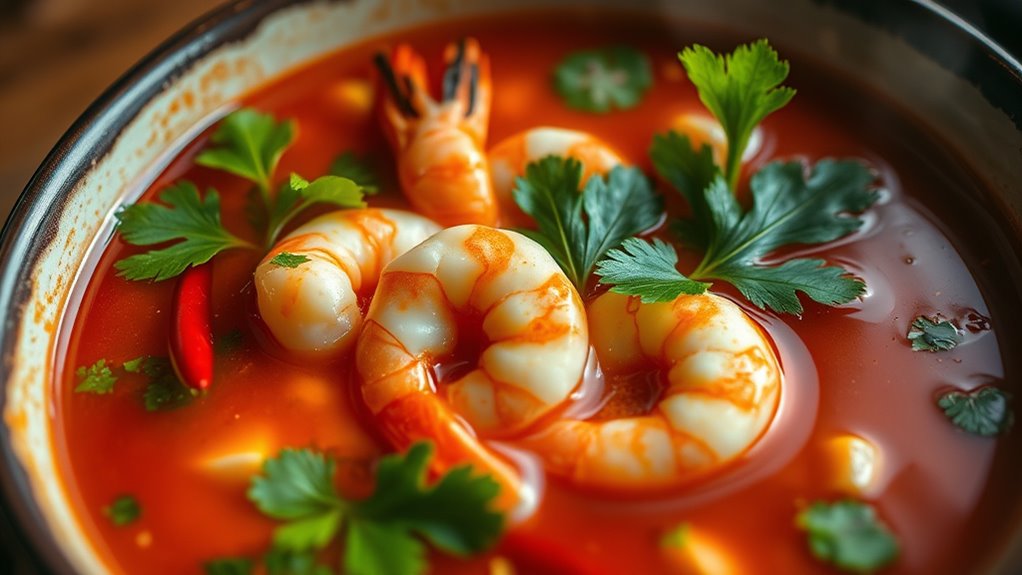

Tom Yum Goong is a classic Thai soup that highlights the country’s vibrant culinary heritage with its bold blend of spicy, sour, and aromatic flavors. It’s usually made with fresh shrimp, lemongrass, kaffir lime leaves, galangal, chili peppers, fish sauce, and lime juice, creating a bright, flavorful broth. Regional variations let you explore different ingredients and textures, reflecting local tastes and ingredients. Keep exploring to discover how this iconic dish captures Thailand’s rich food culture and adaptable nature.
Key Takeaways
- Tom Yum Goong is a iconic Thai dish symbolizing hospitality and culinary heritage, celebrated worldwide for its bold flavors.
- The soup features a spicy, sour broth made from fresh shrimp, lemongrass, kaffir lime leaves, galangal, and chili peppers.
- Regional variations include seafood focus in coastal areas and vegetable or coconut milk additions inland, reflecting local ingredients and tastes.
- Preparation allows flavor adjustments, such as spice level, ingredient substitutions, and added fruits or vegetables for complexity.
- Its cultural significance and versatile recipe make Tom Yum Goong a globally appreciated representation of Thai cuisine.

Begin a flavorful journey as you explore the world’s most iconic soups, each with its own unique story and cultural significance. Thai Tom Yum Goong stands out as a vibrant expression of Thailand’s culinary heritage, blending bold flavors with centuries of tradition. This spicy shrimp soup isn’t just a dish; it’s a symbol of Thai hospitality, often served during celebrations and family gatherings. Its cultural significance runs deep, reflecting the Thai people’s love for balancing flavors—hot, sour, sweet, and salty—in every spoonful. When you plunge into a bowl of Tom Yum Goong, you’re tasting more than just ingredients; you’re experiencing a piece of Thailand’s history and identity. Additionally, the support hours for local restaurants and eateries can influence the availability of authentic ingredients, making it helpful to plan your culinary adventure accordingly. What makes Tom Yum Goong particularly fascinating is its ingredient variations, which can differ based on region, season, or personal preference. The core ingredients, however, usually include fresh shrimp, lemongrass, kaffir lime leaves, galangal, and chili peppers. These ingredients create a bright, aromatic broth that’s both spicy and tangy. Some versions add mushrooms, tomatoes, or even pineapple for added complexity. The broth’s heat comes from bird’s-eye chilies, which can be adjusted to suit your spice tolerance, ensuring everyone can enjoy it. Fish sauce and lime juice are vital for achieving the signature savory and sour notes, while fresh herbs like cilantro add a burst of freshness at the end. The ingredient variations you might encounter highlight the soup’s versatility. In coastal regions, you’ll find more emphasis on seafood, naturally, while inland recipes may incorporate different vegetables or herbs. Some cooks prefer to use dried spices or homemade broth, adding layers of depth. Others might include a splash of coconut milk for a creamier texture. Despite these differences, the essence of Tom Yum Goong remains consistent—an invigorating, flavorful dish that captures the essence of Thai cuisine. As you prepare or savor this soup, remember that the ingredient variations aren’t just about flavor—they’re about cultural adaptation and personal touch. Each bowl tells a story of local ingredients, climate, and tradition. Whether you stick to the classic recipe or experiment with regional twists, you’re participating in a culinary tradition that’s been cherished for generations. Tom Yum Goong’s ability to adapt while maintaining its core identity makes it a truly iconic dish, celebrated worldwide for its bold flavors and cultural significance. It’s more than a soup; it’s a flavorful connection to Thailand’s rich culinary tapestry.
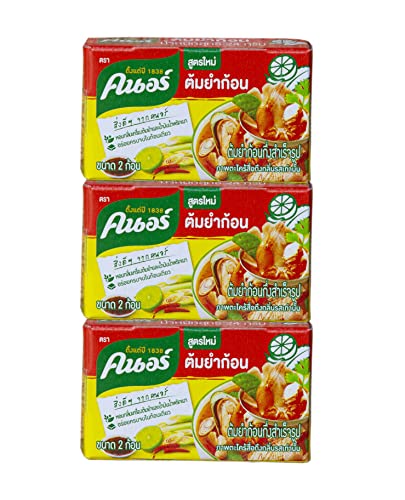
Thai Knorr Tom Yum Seasoning Cubes 24g. (Pack of 3)
Thai Knorr tom yum seasoning cubes (pack of 3) stir-fried soup tom yum soup for cook tom yum…
As an affiliate, we earn on qualifying purchases.
As an affiliate, we earn on qualifying purchases.
Frequently Asked Questions
What Are the Best Substitutes for Shrimp in Tom Yum Goong?
If you’re looking for seafood alternatives or vegetarian options for tom yum goong, you can try using firm tofu, mushrooms, or tempeh. These options absorb the soup’s flavors well and provide a satisfying texture. You might also consider adding hearts of palm or zucchini for extra substance. These substitutes keep the soup flavorful and hearty, perfect if you want a seafood-free or plant-based version of this spicy, tangy Thai classic.
How Can I Adjust the Spice Level to My Preference?
To adjust the spice level to your preference, start by adding less chili or chili paste initially. Taste the soup as you go, and if it’s too mild, gradually add more until you reach your desired heat. Remember, balancing the flavor is key—if it gets too spicy, add a splash of lime juice or some broth to tone it down. This way, you control the spice level and maintain flavor harmony.
Is Tom Yum Goong Suitable for Vegetarians?
Is tom yum goong suitable for vegetarians? Think of it as a symphony where each ingredient plays a crucial role; without the shrimp, it can be adapted for vegetarians. You can explore vegetarian options by using plant-based alternatives like tofu or vegetables, and request a broth free of fish or seafood. While traditional tom yum goong is seafood-based, modifying it makes it accessible for vegetarians seeking flavorful, spicy Thai soup.
What Are Traditional Side Dishes Served With Tom Yum?
You’ll typically find steamed jasmine rice served alongside tom yum, balancing its spicy and tangy flavors. Complementary condiments like fish sauce, crushed chili, and lime wedges enhance the dish. Regional variations may include fresh herbs like cilantro or sawtooth coriander, and some places serve it with Thai-style omelets or sticky rice. These sides and condiments elevate your experience, allowing you to customize the soup’s bold flavors to your preference.
How Long Does Homemade Tom Yum Goong Typically Last in the Fridge?
You can usually store homemade tom yum goong in the fridge for up to 2-3 days. To maximize freshness, refrigerate it promptly in an airtight container and avoid leaving it out at room temperature for long periods. Follow proper refrigeration tips, like reheating thoroughly before serving, and check for any signs of spoilage before consuming. This way, you enjoy your flavorful soup safely.

Thai Tom Yum Soup | Tom Kha Fresh Ingredients | Kaffir Lime Leaves, Fresh Galangal and Fresh Lemongrass
1 oz. Fresh Kaffir Lime Leaves
As an affiliate, we earn on qualifying purchases.
As an affiliate, we earn on qualifying purchases.
Conclusion
Now that you’ve tasted the tantalizing tang of Thai Tom Yum Goong, take this spicy soup sensation on your own culinary journey. Savor the savory spices, spicy symphony, and sensational seafood, and share it with friends or family. Let each spoonful spark your spirit and ignite your imagination. With every slurp, remember: exploring exotic eats excites and enriches, so keep comforting your curiosity and continue your global soup tour with zest!

Maruchan Bowl Hot & Spicy Shrimp Flavor, 3.32 Oz, Pack of 6
MICROWAVABLE: Instant ramen noodle soup. Pop these bowls in the microwave for 3 minutes and serve as a…
As an affiliate, we earn on qualifying purchases.
As an affiliate, we earn on qualifying purchases.

Quoc Viet Foods Thai Tom Yum Flavored Soup Base 10oz Cot Lau Thai Lan Brand
Thai Tom Yum Cuisine, Spicy Hot Pot
As an affiliate, we earn on qualifying purchases.
As an affiliate, we earn on qualifying purchases.