
TL;DR

Get kitchen staples and gadgets delivered free — and shop member deals
- Fast, free delivery on millions of items
- Access to Prime Big Deal Days deals on October 6–7
- Prime Video, Amazon Music and more included
Online interest in tips for reviving bland soup is spiking, according to trend signals, though the trigger is unconfirmed. Long-established culinary guidance centers on salt, acid, and umami-rich additions rather than new methods.
Interest in advice for reviving bland soup is spiking across search and online food coverage, according to trend-signal data picked up via RSS monitoring. No product launch, celebrity chef statement, or publication event has been identified as the trigger — the surge appears to reflect general reader demand for practical kitchen fixes rather than a single news development.
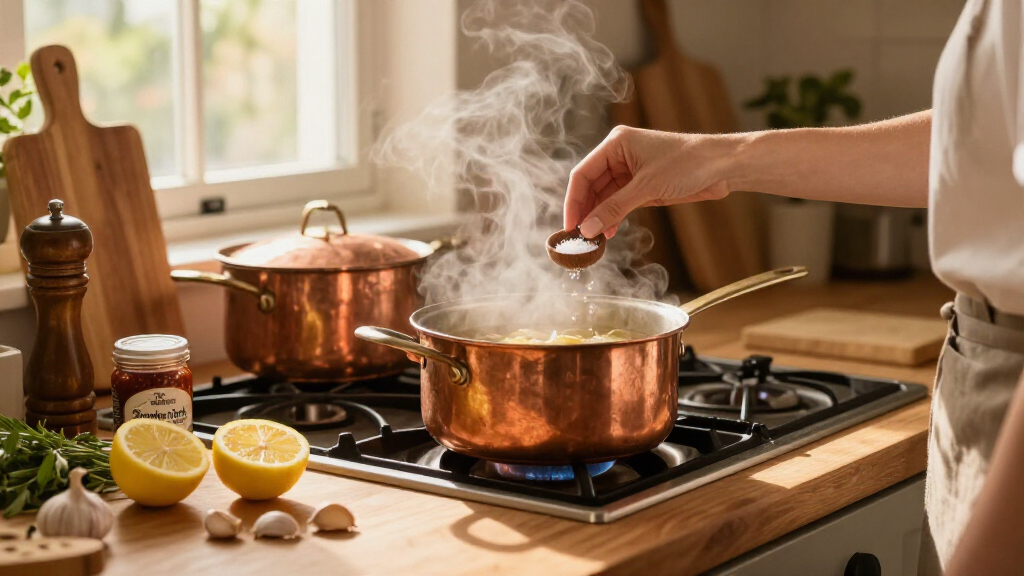
The trending topic centers on a familiar kitchen problem: a soup that tastes flat or under-seasoned after cooking. The advice circulating in food media is not new. Long-established culinary guidance identifies three main levers for correcting a bland pot. The first is salt, added gradually and tasted between additions, because under-salting is the most common cause of dull flavor. The second is acid — a splash of lemon juice, vinegar, or a spoonful of yogurt added at the end of cooking, which brightens flavors that salt alone cannot fix.
The third lever, and the one most often described as the “simple trick” in trending headlines, is umami: adding ingredients rich in glutamates such as a small amount of soy sauce, fish sauce, miso, parmesan rind, tomato paste, or dried mushrooms. This approach is standard, well-documented technique in professional cooking and home-cooking references alike; nothing in the current coverage introduces a newly discovered method.
Food-safety basics still apply when adjusting a finished soup. If the soup has been sitting out, it should not be left in the temperature danger zone between 40°F and 140°F (4°C to 60°C) for more than two hours. Leftover corrected soup should be cooled promptly and refrigerated within that window, and reheated to a rolling boil or at least 165°F (74°C) before serving. Common finishing additions also carry allergen considerations — soy sauce and miso contain soy, fish sauce contains fish, and dairy toppings contain milk — which matters for guests with allergies.
Why Kitchen-Fix Content Surges
The spike matters less as culinary news and more as a signal of reader behavior. Practical, low-cost cooking advice consistently draws heavy search traffic, and seasonal cooking patterns — cooler months, batch cooking, budget meal planning — plausibly feed demand for soup rescue techniques. For food publishers, the trend shows that evergreen technique content, when framed around a single memorable “trick,” can still generate fresh attention without any underlying news event. For readers, the practical takeaway is that the underlying advice is stable and well-tested: taste as you go, season in layers, and reach for acid or umami before assuming a soup is ruined.
The Long-Standing Science of Flavor
The techniques behind the trend are rooted in established food science. Salt enhances perception of other flavors; acid balances richness and lifts dullness; umami compounds add savory depth. Professional kitchens have long used layered seasoning — salting broth early, finishing with acid, and building umami bases with tomato paste, miso, or cured fish products. The current wave of interest repackages this standard knowledge under headline-friendly framing such as “the simple trick,” a common pattern in food content where an old technique is reintroduced to a new audience.
What the Trend Data Doesn’t Show
The trigger for the spike is unconfirmed. The available signal indicates only that interest in the topic is elevated; it does not specify when the surge began, how large it is compared with a baseline, which publications or platforms are driving it, or whether a specific article, video, or social post set it off. No named chefs, new cookbooks, product launches, or studies have been verified in connection with this trend. Any claim that a particular “trick” is new or uniquely effective should be treated as marketing framing rather than established fact.
Where the Interest Goes From Here
Readers can expect more publishers to repackage seasoning and flavor-balancing advice while the trend holds. If the surge is seasonal, interest will likely taper as warmer-weather cooking content takes over. Watch for verified follow-ups — a named expert commentary, a data-backed analysis of the trend’s size, or a specific origin article — which would turn this from a trend observation into a reportable development. Until then, the practical guidance stands on its own long-established merits.
Key Questions
Is there actually a new trick for fixing bland soup?
No new method has been verified. The trending advice restates long-established technique: adjust salt gradually, add acid like lemon juice or vinegar, and boost umami with soy sauce, miso, parmesan, tomato paste, or dried mushrooms.
Why is my soup bland even though I followed the recipe?
Common causes include under-salting, dilution from added water or stock, long storage dulling flavors, and ingredients that need time to release flavor. Tasting and adjusting in layers — rather than adding everything at once — is the standard correction.
What is the safest way to store soup after adjusting it?
Cool it promptly and refrigerate within two hours of cooking; don’t leave soup between 40°F and 140°F (4–60°C) for longer than that. Reheat to at least 165°F (74°C) before serving.
Are there allergy concerns with common flavor-boosting additions?
Yes. Soy sauce and miso contain soy, fish sauce contains fish, and dairy finishes like yogurt or cream contain milk. Flag these additions to guests with allergies.
What caused the current spike in interest in this topic?
That is unconfirmed. The trend signal shows elevated interest only; plausible drivers include seasonal soup cooking and budget meal planning, but no specific trigger has been verified.
Source: rss
NFL season / tailgating Picks
team gear
As an affiliate, we earn on qualifying purchases.