
To give your turkey leftovers a delicious makeover, start by picking apart the carcass, saving bones, skin, and any leftover meat. Add vegetables like onions, carrots, and celery, then cover everything with cold water and simmer for 4 to 6 hours. Strain out the solids to create a rich, flavorful broth, perfect for hearty soups. Keep going, and you’ll discover how to turn scraps into a nourishing meal everyone will enjoy.
Key Takeaways
- Save turkey carcass, bones, skin, and leftovers to create a nutrient-rich bone broth.
- Add vegetables and simmer for 4-6 hours to extract maximum flavor and nutrients.
- Strain out solids, then incorporate leftover turkey, vegetables, and herbs to make a hearty soup.
- Use homemade broth for a deep, savory base that enhances the overall flavor of your soup.
- This method minimizes waste, maximizes flavor, and transforms holiday leftovers into a wholesome meal.
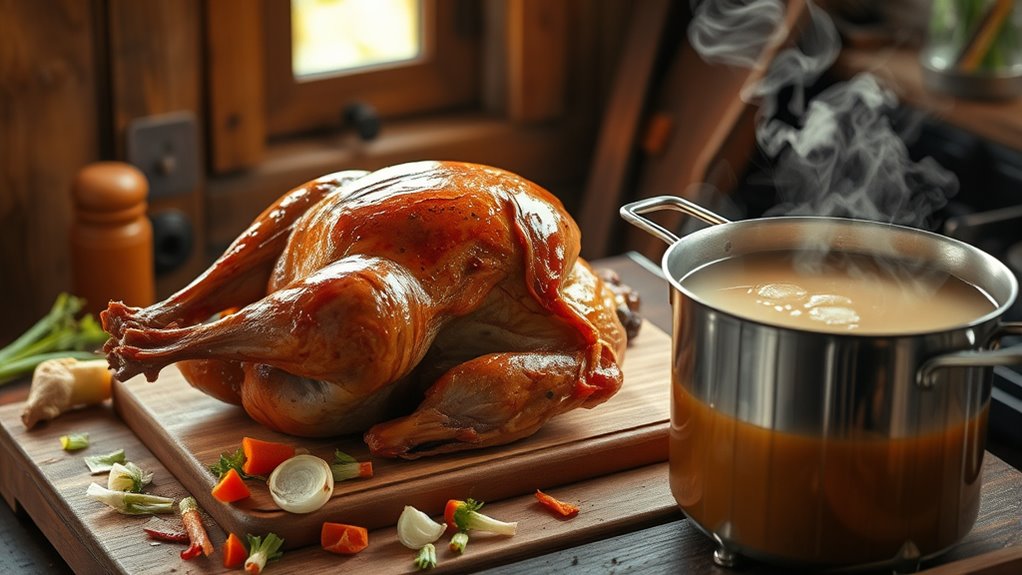
Ever wondered how to turn yesterday’s leftovers into a fresh, delicious meal? Using your whole turkey carcass to make soup is a perfect way to do just that. It’s economical, flavorful, and allows you to extract every ounce of goodness from your holiday feast. The key to a rich, comforting soup lies in creating a good base, and that starts with making bone broth. Bone broth isn’t just a fancy term; it’s a nutrient-rich liquid that results from simmering bones for hours. This process releases collagen, minerals, and gelatin, which not only boost the nutritional profile of your soup but also dramatically enhance its flavor. When you use the turkey carcass, you’re fundamentally making a homemade bone broth that provides a deep, savory foundation for your soup.
Transform leftovers into hearty soup with homemade bone broth from turkey carcass—rich, nutritious, and full of flavor.
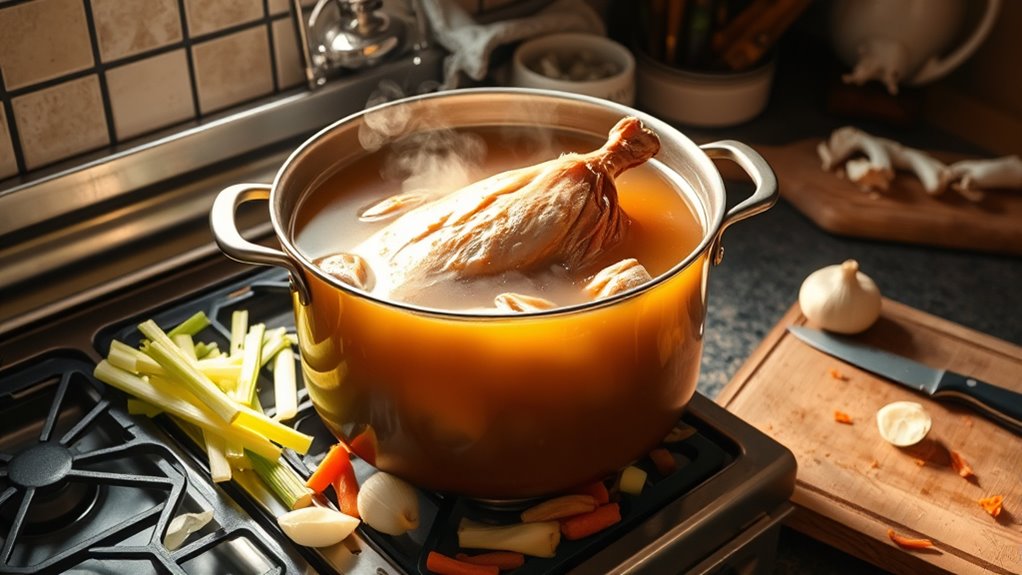
To begin, pick apart your cooked turkey, saving all the bones, skin, and any leftover meat. Place these into a large stockpot, add vegetables like onions, carrots, and celery—these will contribute to the flavor enhancement—and cover everything with cold water. Bring it to a gentle simmer, then reduce the heat and let it simmer for at least 4-6 hours. The longer you cook, the more flavor and nutrients you extract, resulting in a more robust broth. During this slow simmer, the bones release marrow and gelatin, turning the liquid into a nourishing, flavorful base. Skim off any foam or impurities that rise to the surface to keep your broth clear and clean-tasting.
Once done, strain out the solids, discarding the bones and vegetables, and set the broth aside. Now, you have a rich, homemade bone broth that’s the perfect starting point for your soup. You can add fresh vegetables, leftover turkey pieces, herbs, and spices to enhance the flavor further. The bone broth acts as a flavor enhancer, elevating the entire dish by providing depth and richness that store-bought stocks can’t match. Additionally, selecting a good quality air purifier can help improve your indoor air quality, especially during long simmering sessions that might release cooking odors into your home. It’s also a great way to reduce waste, as you’re using every part of the bird to craft something new and delicious.
This approach not only saves money but also guarantees you’re nourishing your body with wholesome ingredients. Plus, the process of making bone broth and turning it into soup fills your kitchen with a warm, inviting aroma—making the leftovers feel like a new culinary creation. So next time you have a turkey carcass, don’t toss it out. Instead, turn it into a flavorful, comforting soup that celebrates the entire bird and your resourcefulness.
Frequently Asked Questions
How Long Can Leftover Turkey Carcass Be Stored Safely?
You can store your leftover turkey carcass safely for up to 2 to 3 days in the refrigerator, following food safety and storage guidelines. To maximize freshness, place it in an airtight container or wrap it tightly. If you want to keep it longer, freeze the carcass, and it’ll stay good for about 3 to 6 months. Always check for signs of spoilage before using.
Can I Freeze the Carcass for Later Use?
Yes, you can freeze the turkey carcass for later use. To guarantee proper carcass preservation, remove any remaining meat and cool it quickly before freezing. Use airtight containers or heavy-duty freezer bags, squeezing out excess air. Label them with the date, and store in the freezer for up to 6 months. Freezing tips like these help maintain flavor and quality, making your future soup-making easy and delicious.
What Vegetables Complement Turkey Soup Flavors Best?
Did you know that adding carrots and celery to turkey soup can increase its antioxidant levels? You should include vegetables like carrots, celery, and onions for the best flavor balance. These vegetables complement turkey’s savory taste and work well with herb pairings like thyme and rosemary. Their subtle sweetness enhances the broth, creating a rich, well-rounded flavor. Feel free to add green beans or peas for extra color and freshness!
How Do I Ensure the Broth Is Clear and Not Cloudy?
To guarantee clarity and avoid cloudy broth, use clarity techniques like skimming foam during simmering and avoid stirring too much. Start with cold water and bring it slowly to a boil, then reduce heat to keep it gentle. Strain the broth through a fine mesh sieve or cheesecloth after cooking. These steps help achieve a clear, flavorful broth, making your turkey soup look as appetizing as it tastes.
Are There Any Dietary Restrictions to Consider When Making Turkey Soup?
When making turkey soup, consider dietary restrictions by offering gluten-free options like rice or gluten-free noodles, and vegan substitutes such as vegetable broth and plant-based proteins. You can customize recipes to accommodate allergies or preferences, ensuring everyone can enjoy the soup. Be mindful of ingredients like soy, nuts, or dairy, and label dishes clearly, so guests with restrictions know what’s suitable for them.
Conclusion
So next time you find yourself with a turkey carcass, remember it’s more than just scraps—it’s a treasure chest waiting to be opened. Like turning a rough diamond into sparkling jewelry, transforming leftovers into flavorful soup gives new life to what might seem like the end. My first time making turkey soup, I was amazed at how a simple carcass could create a warm, hearty meal that felt like a comforting hug. Don’t waste those bones—let them tell their delicious story.