When comparing farm-fresh eggs to store-bought ones under a microscope, you’ll notice that farm eggs often have thicker, more robust shells with complex protein structures. These microstructural differences are linked to healthier hen diets and better environments, leading to stronger calcium carbonate crystals and denser proteins. Store-bought eggs may show thinner shells with simpler protein arrangements, reflecting less diverse diets. Exploring these microstructural contrasts can reveal more about egg quality and nutrition.
Key Takeaways
- Farm-fresh eggs typically have more robust eggshell microstructures with better-organized calcium carbonate crystals.
- Store-bought eggs often show microstructural imperfections and thinner shells due to diet and handling differences.
- The protein matrix within eggshells influences crystal formation, which varies between farm and commercial eggs.
- Microstructural analysis reveals that farm eggs generally possess stronger, less permeable shells at the microscopic level.
- Differences in diet and environment affect the eggshell’s protein and mineral organization, impacting overall shell integrity.
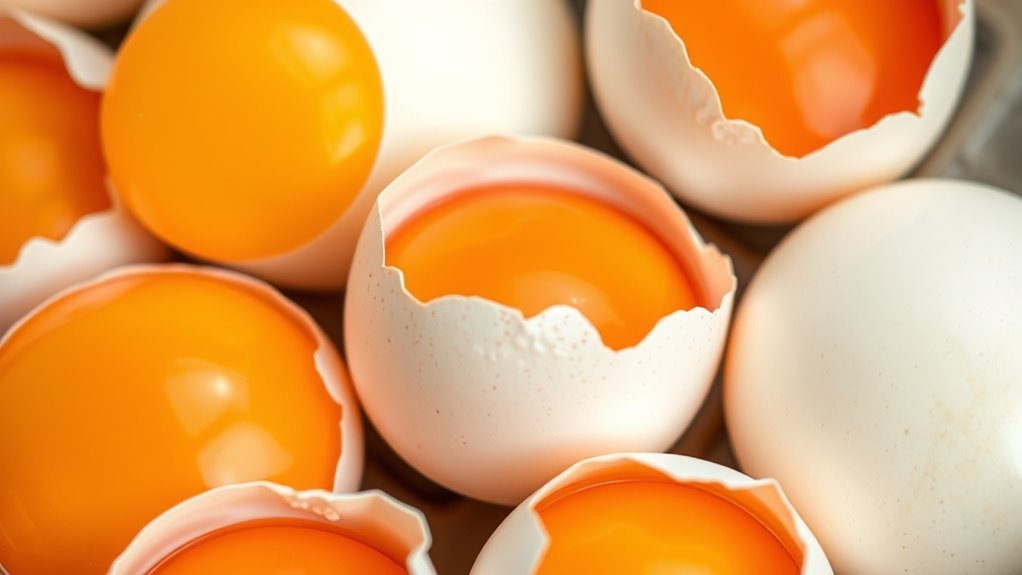
When choosing eggs, many people wonder whether farm-fresh eggs are worth the extra effort or cost compared to store-bought options. One way to understand this is by examining the eggshell composition and nutritional differences. Eggshells, often overlooked, play a vital role in protecting the egg’s interior and can reveal insights about the hen’s health and diet. Eggshells, made primarily of calcium carbonate, can vary considerably depending on the hen’s diet and environment. Farm-fresh eggs typically have thicker, more robust shells, thanks to a diet rich in calcium and varied nutrients. This not only makes them less prone to cracking but also indicates better overall quality. In contrast, store-bought eggs often come from hens in large-scale operations, where their shells might be thinner due to less diverse diets or rapid production cycles. The eggshell’s microstructure—its calcium carbonate crystals—can vary considerably, influencing its strength and permeability. Eggshell quality is a useful indicator of hen health and diet, which directly impacts the shell’s integrity and internal nutrient content. Additionally, the differences in eggshell composition and nutritional content are interconnected. Thicker shells from farm-fresh eggs usually indicate a healthier hen with a diet that supports overall egg quality. This, in turn, affects the egg’s internal nutrient composition, making farm-fresh eggs a richer source of essential nutrients. The microstructure of the eggshell and the internal nutrient profile are both influenced by the hen’s environment and feed, which explains why farm-fresh eggs often outperform store-bought ones in these areas. Furthermore, nutrient density can be significantly higher in farm-fresh eggs due to the diverse diets they receive. Additionally, the calcium content of eggshells can serve as an indicator of the hen’s overall health and diet quality, further linking shell robustness to internal nutrient richness. A deeper understanding of microscopic structure can help consumers make more informed choices about egg quality and nutritional value.
Frequently Asked Questions
How Do Hen Diets Affect Egg Protein Structure?
Your hen’s diet directly influences the protein composition of the eggs she produces. When she eats a balanced, nutrient-rich diet, it enhances the amino acid profile and overall protein quality. Conversely, a poor diet can lead to weaker or less structured proteins. By providing ideal nutrition, you guarantee the egg proteins have a stable, healthy structure, which can improve their nutritional value and functionality.
Can Cooking Methods Alter Egg Protein Integrity?
Cooking methods definitely alter egg protein integrity. When you boil, scramble, or fry eggs, heat causes proteins like albumen to denature, reducing albumen viscosity and changing texture. High heat can also impact eggshell mineralization indirectly by weakening the structure. So, your cooking choices affect not only taste but also the microscopic protein structure, influencing both texture and overall egg quality.
Do Organic Eggs Have Different Protein Structures?
You might think organic eggs are just a fancy label, but they actually have subtle differences in protein structures. Organic eggs often come from hens with better diets, affecting eggshell composition and yolk pigmentation. These factors can influence protein stability and texture. While the core proteins remain similar, the nutrient-rich environment in organic eggs may lead to slight variations, making them potentially more nutritious and biologically active than conventional options.
How Does Storage Impact Egg Protein Quality?
You should know that storage can substantially impact egg protein quality. Over time, changes in eggshell composition can lead to moisture loss and nutrient degradation. This affects nutrient stability, weakening protein structures inside the egg. To maintain ideal protein quality, store eggs in a cool, consistent environment. Proper storage helps preserve their nutrient integrity, ensuring the proteins stay intact and functional for longer periods.
Are There Health Differences Linked to Protein Variations?
You might wonder if protein variations affect your health. Differences in protein digestibility can influence how well your body absorbs nutrients, potentially impacting your overall nutrition. Additionally, some protein structures may have higher allergenic potential, increasing allergy risks. Choosing fresher, high-quality eggs can help guarantee you get the most digestible proteins with lower allergenic risks, supporting better health and reducing food sensitivities.
Conclusion
So, don’t let concerns about convenience or cost keep you from enjoying farm-fresh eggs. Under the microscope, their protein structures reveal freshness and quality that store-bought eggs often can’t match. While it might seem easier to pick up eggs from the store, choosing farm-fresh can truly enhance your meals and nutritional value. Give them a try—you might just taste the difference and feel good knowing you’re supporting local farms.