
To organize and label your spice rack DIY style, first gather all your spices and decide on the best storage like jars, wall racks, or drawer inserts. Use uniform, transparent containers and label them clearly with a label maker or printable stickers, including freshness dates. Mount wall strips or magnetic holders to save space and keep spices accessible. Group similar flavors together for quick access. Keep refining your system—if you keep going, you’ll discover tips to make it both functional and attractive.
Key Takeaways
- Select a suitable wall, countertop, or drawer space to install or place your DIY spice rack for easy access.
- Use uniform, transparent jars with clear labels and consistent labeling methods for organized storage.
- Implement wall-mounted racks, magnetic strips, or tiered drawer inserts to maximize space and visibility.
- Group spices by category (herbs, peppers, blends) for quick identification and efficient cooking.
- Regularly maintain and update labels and organization to ensure long-term functionality and aesthetics.

Organizing your spice rack can transform your kitchen into a more efficient and visually appealing space. When you take control of your storage solutions, you make cooking faster and shopping more straightforward. The key is to find a system that keeps your spices accessible, visible, and easy to identify. Start by evaluating what you have. Gather all your spices and consider their frequency of use. This helps you determine which storage solutions will work best—whether that’s a spice drawer, a wall-mounted rack, or clear jars on a countertop. The goal is to maximize space while keeping everything within reach. Using uniform containers can create a clean look and prevent clutter, but make sure they’re transparent or labeled clearly so you can see what’s inside at a glance.
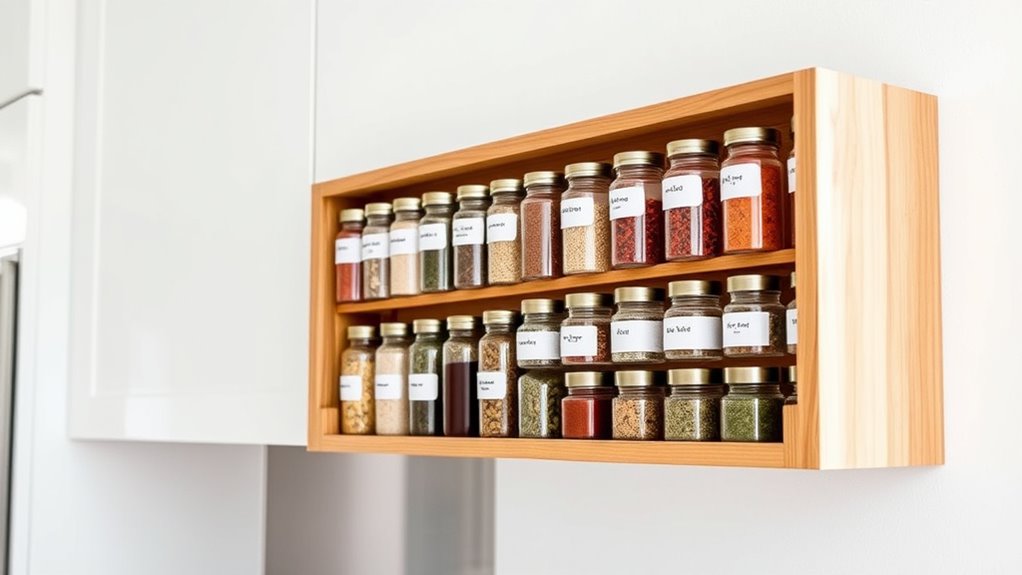
Labeling techniques are essential for quick identification, especially if you opt for generic jars or containers. Invest in a good label maker or create your own labels using printable sticker paper. Place these labels on the lids or sides of your jars, making sure they’re easy to read. Consistent labeling not only saves you time but also prevents mistakes like grabbing the wrong spice. Consider including both the name and the date you bought or transferred the spice into the jar; this keeps your collection fresh and organized. If you prefer a minimalist look, use chalkboard labels that you can rewrite as needed, or write directly on the jars with a permanent marker for a sleek, uniform appearance.
When setting up your storage solutions, think vertically to save counter space. Wall-mounted racks or magnetic strips attached to the wall or inside cabinet doors are excellent options. They keep your spices visible and accessible without taking up precious counter or drawer space. For a more traditional approach, a spice drawer insert or tiered spice rack inside a cabinet works well. Just make sure your storage solutions are sturdy and securely mounted, so they can hold the weight of your jars and withstand daily use. As you arrange your spices, group similar flavors together—like herbs, peppers, or blends. This organization method makes it easier to find what you need during cooking. Additionally, choosing high-contrast labels can improve visibility and quick identification in your organized setup.
Top picks for "spice rack organization"
Open Amazon search results for this keyword.
As an affiliate, we earn on qualifying purchases.
Frequently Asked Questions
How Do I Prevent Spices From Spilling During Storage?
To prevent spices from spilling during storage, choose the right spice container types with secure storage container seals. Airtight lids or screw-top jars keep spices contained and prevent leaks. Make sure to check seals regularly and replace any that are damaged. Store spices upright and avoid overfilling containers. Properly sealed and sturdy containers, combined with careful handling, will help keep your spices fresh and mess-free.
What Materials Are Safest for DIY Spice Racks?
You should use wood or stainless steel for your spice rack, as they’re safe and durable. Opt for materials with non-toxic finishes to make certain your spices stay free from harmful chemicals. Avoid treated or painted woods that might contain toxic substances. Glass containers are also a good choice, but make sure the racks themselves are sturdy and safe. Prioritize material safety and non-toxic finishes to keep your spices fresh and your kitchen healthy.
How Can I Keep Spices Fresh Longer?
Did you know that spices lose about 85% of their flavor within a year? To keep your spices fresh longer, focus on herb preservation by storing them in airtight containers. Always keep your spice jars away from heat, light, and humidity, which can diminish their quality. Regularly check for freshness and replace old spices promptly. Proper storage ensures your herbs stay potent and flavorful for months.
Are There Space-Saving Ideas for Small Kitchens?
To save space in your small kitchen, consider using compact shelving and wall-mounted racks. These solutions free up counter and cabinet space, keeping essentials within easy reach. Install wall-mounted racks for spices, utensils, or small cookware, and opt for compact shelving units to maximize vertical storage. This approach helps you stay organized and makes your kitchen feel more open and functional without sacrificing storage.
How Do I Maintain Labels Over Time?
Think of your labels as the heartbeat of your spice rack, keeping everything alive and organized. To preserve label durability, use waterproof or laminated labels that withstand moisture and handling. Re-label whenever you notice fading or peeling; simple re-labeling tips include using a permanent marker or printing new labels with a label maker. Regular touch-ups ensure your spices stay fresh in appearance and function, keeping your kitchen both beautiful and efficient.
Conclusion
Now that you’ve organized and labeled your spice rack, it’s easy to find what you need in an instant. The chaos of clutter becomes a thing of the past, replaced by a sleek, functional space. While your pantry looks tidy and inviting, remember that this simple project also sparks creativity and pride. It’s a small change that transforms your cooking experience, proving that organization isn’t just about neatness—it’s about making everyday life smoother and more enjoyable.