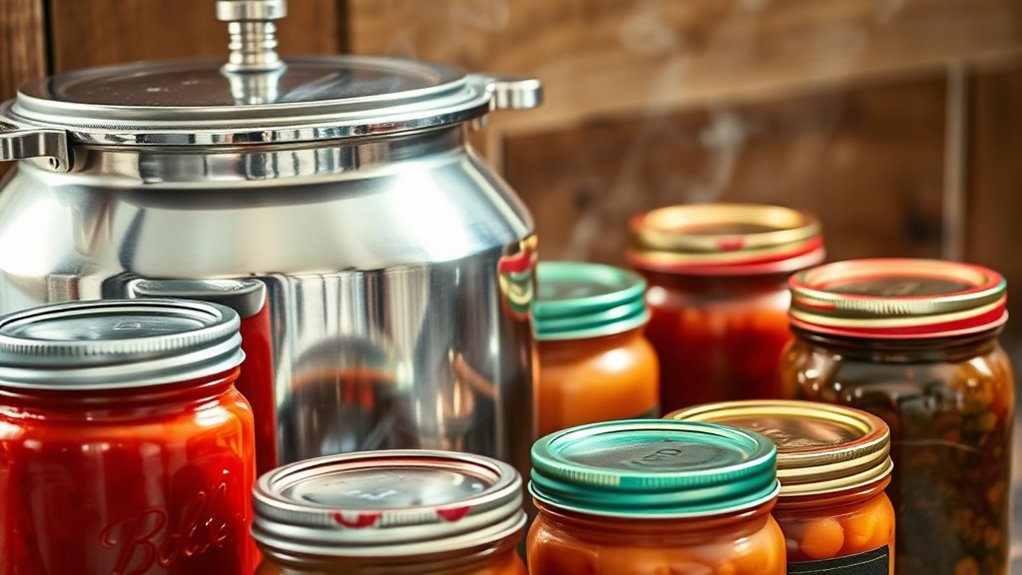

To safely preserve soups and sauces, use a reliable pressure canner with a properly calibrated gauge. Handle hot jars carefully with a jar lifter and place them on a rack with space for heat circulation. Maintain the correct pressure—usually 10 or 15 psi—throughout processing, and avoid opening the canner until pressure drops naturally. Check seals after cooling, label jars, and store them in a cool, dark spot. If you want to learn more, keep exploring how to master pressure canning safely.
Key Takeaways
- Use a reliable pressure canner with a properly calibrated gauge to ensure safe processing temperatures.
- Follow recommended processing times and pressure levels specific to soups and sauces for safety.
- Prepare jars properly, leaving appropriate headspace and ensuring lids and gaskets are in good condition.
- Maintain steady pressure throughout processing; do not open the canner until pressure has fully decreased.
- Check seals after cooling, label jars with date, and store in a cool, dark, and dry place for optimal safety and quality.
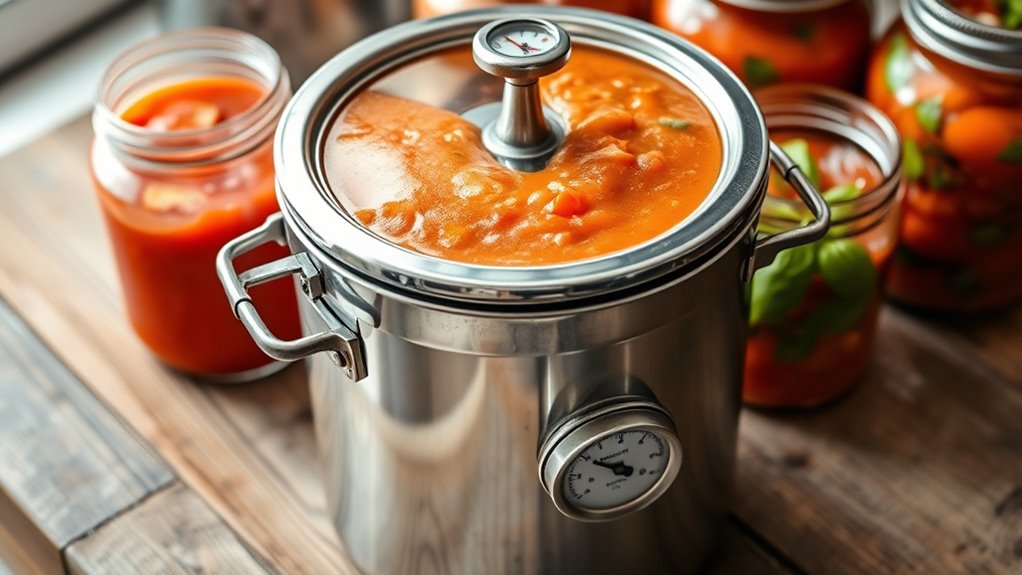
Pressure canning is a safe and effective way to preserve low-acid foods like vegetables, meats, and soups for long-term storage. Unlike water bath canning, which works best for high-acid foods such as jams and pickles, pressure canning guarantees that harmful bacteria, particularly Clostridium botulinum, are destroyed by reaching and maintaining the necessary temperature and pressure. To do this safely, you need a reliable pressure canner equipped with a well-maintained pressure gauge. Regularly check the pressure gauge for accuracy, as an incorrect reading can compromise safety, leading to under-processed food that could cause illness. Always follow manufacturer instructions for your specific pressure canner, ensuring the gauge is calibrated correctly before each use.
Pressure canning safely destroys bacteria in low-acid foods with a reliable, calibrated pressure gauge.
When you’re ready to load jars into the canner, use a jar lifter. This tool minimizes the risk of burns and accidents by allowing you to handle hot jars securely without direct contact. The jar lifter grips the jar firmly, preventing slips that could break the glass or cause hot liquid spills. When placing the jars into the canner, ensure they sit on the rack with some space between them for heat circulation. Once the jars are in place, add the recommended amount of water or canning liquid, which helps generate steam and pressure inside the canner. Secure the lid tightly, making sure the gasket is in place and the lid is properly sealed.
As the canning process begins, monitor the pressure gauge closely. Most recipes specify a certain pressure level—such as 10 or 15 pounds per square inch (psi)—that must be maintained throughout the processing time. Adjust the heat as needed to keep the pressure steady, and avoid opening the canner during processing. Sudden drops in pressure can result in improperly processed food, which is unsafe to consume. When the processing time is complete, turn off the heat and allow the pressure to naturally decrease before opening the lid. Use the jar lifter again to carefully remove the jars, placing them on a towel or cooling rack to cool undisturbed.
Proper handling of the pressure gauge and the use of a jar lifter are essential for safe pressure canning. These tools help you maintain control throughout the process and prevent accidents. Once cooled, check that jars have sealed properly by inspecting the lids—press down gently; if it doesn’t flex, the jar is sealed. Label your jars with the date and contents, and store them in a cool, dark place. Following these steps ensures your soups and sauces remain safe, flavorful, and ready for future meals. Additionally, understanding home food preservation principles can help you improve your canning techniques and ensure optimal safety.
Frequently Asked Questions
Can I Use a Regular Pot for Pressure Canning?
You shouldn’t use a regular pot for pressure canning because it doesn’t guarantee pressure cooker safety. A proper pressure canner maintains the correct pressure and temperature needed to safely preserve foods. Standard pots don’t regulate pressure or fit canning jar types securely, risking spoilage or contamination. Always use a tested, dial or weighted gauge pressure canner to keep your jars safe, and follow manufacturer instructions for best results.
How Do I Adjust Recipes for Altitude?
Did you know that altitude can affect boiling points by up to 4°F per 1,000 feet? To guarantee safe pressure canning, you need to make altitude adjustments and modify recipes accordingly. Increase processing times and pressure levels based on your elevation, typically adding 5 pounds of pressure for every 1,000 feet above sea level. Always consult a local extension service or canning guide for precise recipe modifications.
What Are the Signs of a Failed Canning Jar?
You’ll notice jar seal failure if the lid doesn’t pop back or if it’s loose when pressed. Look for visible mold, which indicates spoilage, or any cracks and leaks around the jar rims. Sometimes, the lid may look bulged or rusted. If you see these signs, don’t consume the contents. Always check for a proper vacuum seal before storing, and discard any jars showing these failure signs.
Is It Safe to Reuse Canning Lids?
Did you know that about 50% of home canners reuse lids? While lid reuse might seem cost-effective, it’s not always safe. For canning safety, use new lids each time to ensure a proper seal and prevent spoilage. Reusing canning lids can compromise the vacuum, increasing the risk of foodborne illness. Always prioritize safety by following recommended procedures and using fresh lids for each canning session.
How Long Can Canned Foods Be Stored Safely?
You can typically store canned foods safely for about 1 to 2 years, but check the food shelf life for specific items. Always look for spoilage indicators like bulging lids, leaks, bad odors, or discoloration before consuming. Properly stored in a cool, dark place, canned goods can last longer, but if you notice any signs of spoilage, discard them to prevent foodborne illness.
Conclusion
Think of pressure canning as your trusty shield, protecting your soups and sauces from spoilage. Just like a strong fortress keeps out invaders, proper technique guarantees your preserved foods stay safe and delicious for months. With careful attention, you’re building a timeless pantry, a treasure chest of flavors ready to warm your days. Embrace these methods, and your canned creations will stand tall like sturdy walls, safeguarding your harvest’s goodness for years to come.