
Choosing the right knife for the task is key to safe and efficient cooking. Use a paring knife for small, detailed work like peeling or trimming, and a chef’s knife for chopping and slicing larger ingredients. Make sure your blades are sharp to reduce slips and force. Proper technique and maintenance are essential. Keep learning about the best tools for each job, and you’ll improve both safety and results in your kitchen.
Key Takeaways
- Select a knife suited for the specific task, such as paring knives for detailed work and chef’s knives for chopping larger items.
- Ensure the knife is sharp; a well-maintained blade reduces effort and enhances safety during use.
- Consider the knife’s size and weight for comfortable handling and precise control.
- Use appropriate safety techniques, like the claw grip, regardless of the knife type.
- Match the knife material and design to your cutting surface and food prep needs for optimal performance.
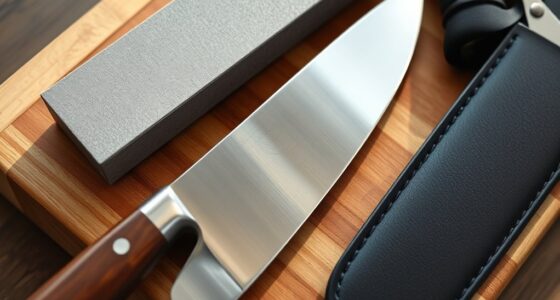
Ever wondered how the right knife can make all the difference in your kitchen? Choosing the appropriate knife for each task isn’t just about convenience; it’s about efficiency, safety, and achieving the best results. To do this effectively, you need to understand the importance of proper knife maintenance and safety precautions. Keeping your knives sharp and well-maintained isn’t just about prolonging their lifespan; it’s about guaranteeing your safety while cooking. Dull knives require more force to cut through food, increasing the risk of slips and accidents. Regularly honing your knives with a honing rod or sharpening them with a quality sharpener helps maintain their edge. When you handle your knives with care, you reduce the chance of accidental cuts and make your prep work smoother and safer.
Safety precautions are essential every time you pick up a knife. Always use a stable cutting surface, such as a wooden or plastic cutting board, to prevent slipping. When cutting, curl your fingers inward on the hand holding the food, keeping your fingertips tucked away from the blade’s edge. This “claw grip” protects your fingers from potential cuts. Never try to catch a falling knife; instead, step back and let it drop to avoid injury. Always store knives properly—preferably in a knife block or on magnetic strips—so the blades don’t become dull or cause accidental cuts when reaching into drawers. When cleaning knives, do so carefully, preferably by hand, avoiding the dishwasher, which can dull blades and damage handles. Use a sponge or brush, and always keep the blade pointed away from you. Incorporating AI-driven safety tips into your routine can help identify potential hazards and improve overall kitchen safety.
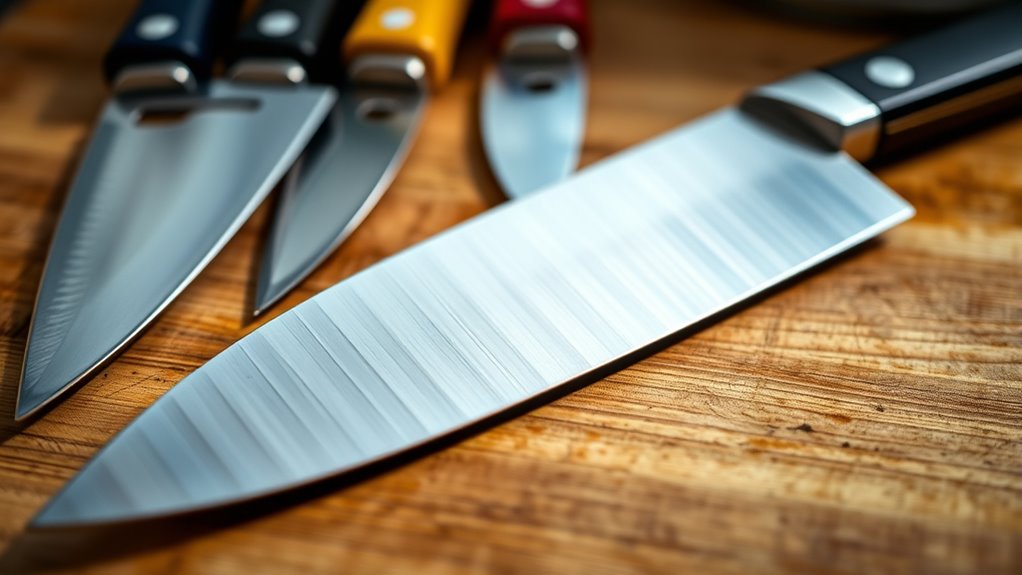
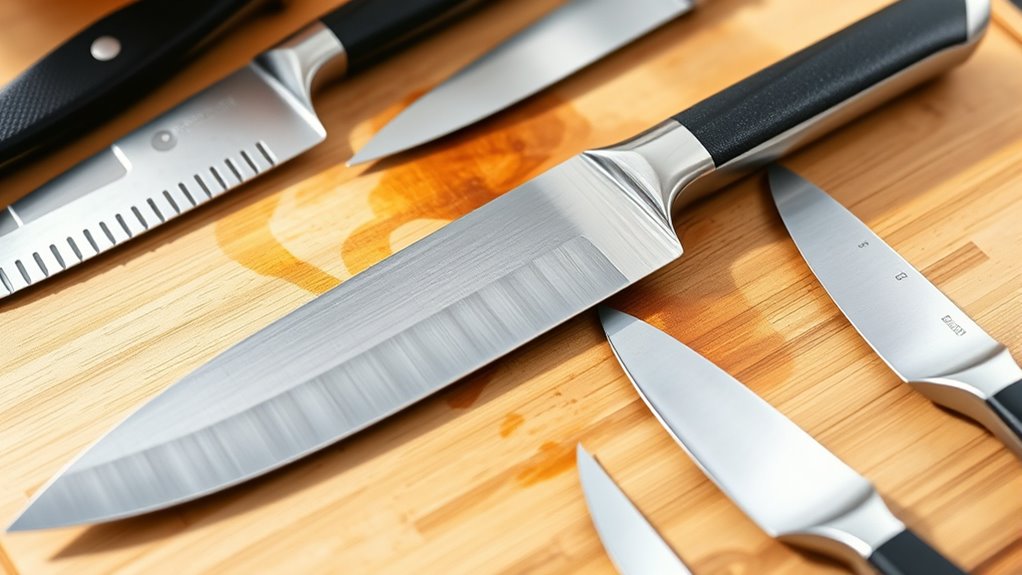
Understanding the different types of knives and their specific uses can also improve your safety and efficiency. For example, a paring knife is perfect for small, detailed tasks, while a chef’s knife handles chopping and slicing larger items. Using the correct knife prevents applying unnecessary force, which could lead to slips. Remember, the key to safe and effective knife work is consistency. Regular maintenance keeps your blades sharp, reducing the effort needed and minimizing accidents. Practicing proper safety precautions every time you handle a knife ensures you stay injury-free and make the most of your kitchen tools. When you combine the right technique with well-maintained knives and safety awareness, you’ll find cooking becomes more enjoyable, precise, and safe.
Frequently Asked Questions
How Often Should I Sharpen My Knives?
You should sharpen your knives every 1-2 weeks, depending on how often you use them. A good sharpening schedule helps maintain a sharp edge and makes your tasks easier. Follow maintenance tips like hand washing and storing knives properly to reduce dulling. Regular honing between sharpenings also keeps your blades in top shape. By staying consistent, you’ll make certain your knives stay sharp and safe for every cut.
What Safety Precautions Are Necessary When Using Knives?
You should always prioritize safety when using knives. Start by choosing a proper knife grip—firm yet controlled—to prevent slips. Confirm you’re working on a stable cutting surface and keep it clean to avoid accidents. Investigating whether certain grips reduce injury risks reveals that a pinch grip offers better control. Always cut away from your body, keep your fingers tucked, and stay focused to minimize injury risks and ensure safe, effective use.
Can I Use the Same Knife for Multiple Tasks?
You can use multifunctional knives for multiple tasks, but it’s best to have versatile kitchen tools designed for specific jobs. While some knives are crafted to handle various tasks, using the same knife for everything can compromise safety and efficiency. Always consider the task at hand and choose the right knife to guarantee safety, precision, and peak results. Remember, investing in specialized knives improves your cooking experience.
How Do I Properly Store My Kitchen Knives?
Imagine your knives as trusted allies—treat them well. To keep them sharp and safe, store your kitchen knives properly through knife storage options like a magnetic strip, knife block, or drawer insert. Good knife organization prevents accidents and preserves blade quality. Always clean and dry your knives thoroughly before storing, and avoid loose drawers. Proper storage isn’t just practical; it’s a simple way to safeguard your culinary tools and elevate your kitchen experience.
What Materials Are Best for Durable Knife Blades?
You should look for blade materials like high-carbon stainless steel, VG-10, or Damasus steel, as they offer excellent durability. These materials resist rust and maintain sharpness longer, making them ideal for everyday use. Durability factors include hardness, corrosion resistance, and edge retention. By choosing knives with these blade materials, you guarantee your knives stay sharp and sturdy through frequent use, saving you time and effort in the kitchen.
Conclusion
Now that you know how each knife feels in your hand and slices through different foods, you’re ready to master your kitchen. Picture yourself effortlessly gliding a sharp chef’s knife through ripe tomatoes, or wielding a delicate paring knife like a painter’s brush. With the right tool, cooking becomes an artful dance, turning raw ingredients into delicious creations. Trust your instincts, and let your knives become your trusted partners in every culinary adventure.