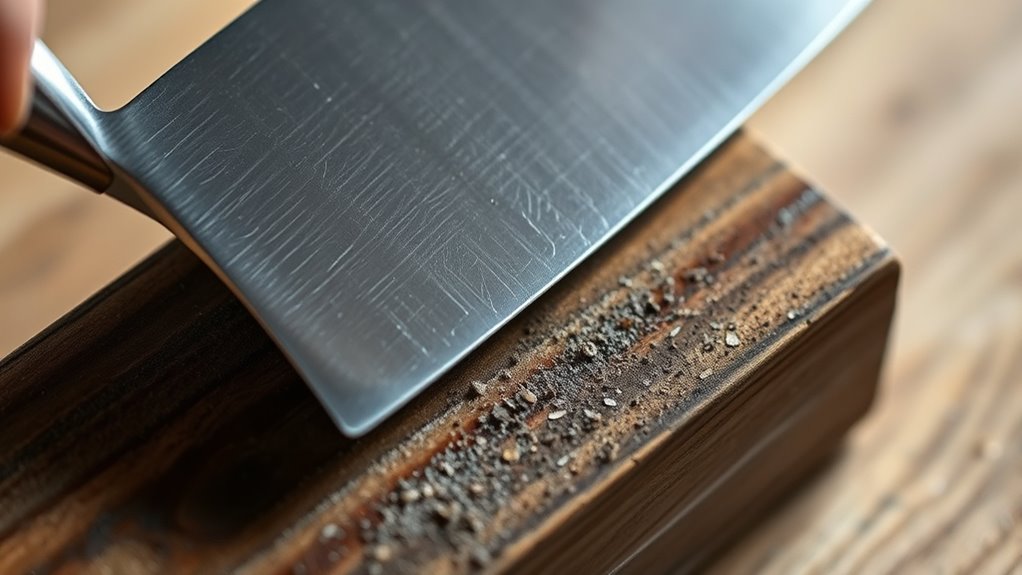

To sharpen your skills with knives, understand that honing straightens the existing edge with a steel or rod, maintaining sharpness with quick, regular practice. Sharpening, on the other hand, involves removing metal to reshape a dull or damaged blade using a stone or electric sharpener. Honing is done often to keep blades aligned, while sharpening is necessary less frequently to restore cutting ability. Keep learning to master each technique and keep your knives performing their best.
Key Takeaways
- Honing realigns the blade’s microscopic teeth, maintaining sharpness, while sharpening removes metal to reshape or restore the edge.
- Honing is quick, easy, and suitable for regular maintenance; sharpening is more invasive and used less frequently.
- Proper honing prevents blade dullness, delaying the need for sharpening and extending knife lifespan.
- Sharpening restores a dull or damaged edge by removing metal, whereas honing keeps the existing edge aligned.
- Regular honing improves safety by maintaining a clean, effective cutting edge, reducing force and injury risk.
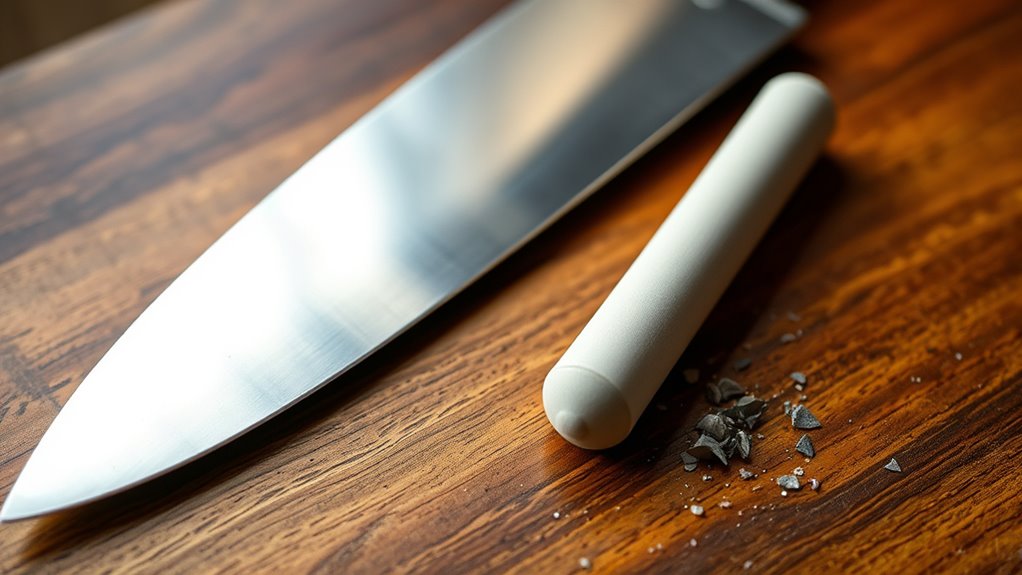
Honing is typically done with a honing steel or rod, which realigns the microscopic teeth of the blade. It’s a quick, easy process that you can incorporate into your daily or weekly routine. Using a honing steel involves holding the rod at an angle and running the blade down its length, alternating sides. This action straightens the edge and keeps your knife performing effectively. Because honing doesn’t remove metal, it doesn’t substantially change the blade’s shape or length, making it a gentle way to maintain blade integrity over time. When done regularly, honing minimizes the need for frequent sharpening, saving you money and extending the lifespan of your cutlery. Additionally, proper honing can help maintain the edge alignment, ensuring consistent cutting performance. Sharpening, in contrast, involves grinding away metal to reshape a dull or damaged edge. This process can be done with a sharpening stone, electric sharpener, or professional service. Sharpening should be performed less frequently—typically when honing no longer restores the blade’s sharpness. It’s more invasive and requires a bit more skill to avoid damaging the blade or creating an uneven edge. Proper sharpening restores your knife’s cutting ability, making it safer and more efficient to use. Remember, a sharp knife isn’t just about performance; it’s a vital element of kitchen safety. Dull blades demand more force, increasing the risk of slips that can lead to cuts or other injuries.

Utopia Kitchen Knife Sharpener Rod 12 Inch, Professional Honing Rod for Knife Sharpening with Hanging Hook, Black
Premium Steel Construction – The steel rod is made of carbon steel and plated with nickel-chrome; the fine…
As an affiliate, we earn on qualifying purchases.
As an affiliate, we earn on qualifying purchases.
Frequently Asked Questions
How Often Should I Hone or Sharpen My Kitchen Knives?
You should hone your kitchen knives every 1-2 weeks to maintain their edge and guarantee safe cutting technique. Sharpen them when honing no longer restores the blade’s sharpness, usually every few months depending on use. Proper knife maintenance includes regular honing to realign the edge and occasional sharpening for a truly sharp blade. This keeps your knives performing well and helps you cut safely and efficiently in the kitchen.
What Tools Are Best for Honing a Knife at Home?
Did you know that 60% of home cooks prefer electric sharpeners for ease? For honing at home, a manual honing rod is ideal, especially a steel one for durability. Electric sharpeners are quick, but ceramic honing rods are gentler and best for routine maintenance, while steel rods provide a more precise edge. Choose based on your comfort and knife type to keep your blades sharp and safe.
Can Honing Damage a Knife if Done Too Frequently?
Honing your knife too often can cause metal fatigue, which may weaken the blade’s edge over time. While honing helps maintain edge alignment and improves durability, excessive honing can reduce edge durability and lead to faster dulling. To avoid damage, hone only when needed, typically after several uses, and verify you’re using a proper honing steel. This balanced approach keeps your knife sharp without risking long-term damage.
Is Professional Sharpening Necessary for High-Quality Knives?
If you have high-quality blades, professional sharpening is often necessary to maintain their ideal performance and longevity. While honing keeps your knives aligned, it doesn’t restore a dull edge. Regular professional sharpening ensures your blades stay sharp and effective, preventing damage from improper use. Investing in expert sharpening preserves your high-quality knives, making them safer and more efficient for all your culinary tasks.
How Do I Know When My Knife Needs Sharpening?
You’ll notice your knife needs sharpening when it starts to drag or cut unevenly, despite regular honing. Don’t fall for sharpening myths that suggest you can’t tell; instead, trust your senses. Proper knife maintenance involves paying attention to how your knife performs. If it struggles with slicing or shows dullness, it’s time to sharpen. Regular checks keep your blades sharp and help avoid unnecessary professional sharpening.

Dawnstar Electric Knife Sharpener, Precise 20° Diamond Knife Sharpener for Kitchen Knives, Quick Repairing in 40 Seconds, with Metal Dust Collection Box & Special Port for Scissors, Black
Professional 3 Stages Sharpening System – Dawnstar S808 Electric Knife Sharpener features a complete 3 stages sharpening system…
As an affiliate, we earn on qualifying purchases.
As an affiliate, we earn on qualifying purchases.
Conclusion
Remember, whether you’re honing or sharpening, your knife’s performance depends on your practice. Honing helps keep your blade smooth and straight, maintaining perfect precision day after day. Sharpening, however, restores that cutting edge when it’s dull and dulling. So, stay sharp, stay savvy—regularly refine your skills, and your knives will always be ready to perform perfectly. Mastering the art of maintenance means more marvelous, memorable moments in your kitchen!
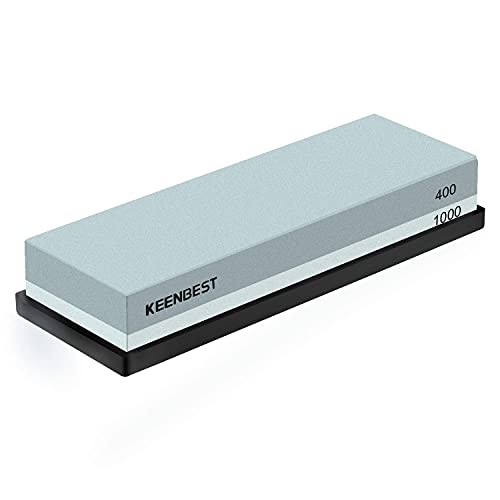
KEENBEST Actual Grit Premium Material Sharpening Stone 2 Side 400 1000 Whetstone Set Kitchen Knife Sharpener Stone Wet Stones for Sharping Knives Kit with Non-slip Rubber Base
Made with superior silicon carbide, the 400 grit side is suitable for any daily sharpening, such as repairing…
As an affiliate, we earn on qualifying purchases.
As an affiliate, we earn on qualifying purchases.

Intelitopia Complete Knife Sharpening Stone Set – Dual Grit Whetstone 400/1000 3000/8000 Knife Sharpener with Leather Strop, Flattening Stone, Bamboo Base, 3 Non-slip Rubber Bases & Angle Guide
【Complete Knife Sharpening Stone Kit】You don't need to be a Pro to sharpen your blades, all you need…
As an affiliate, we earn on qualifying purchases.
As an affiliate, we earn on qualifying purchases.