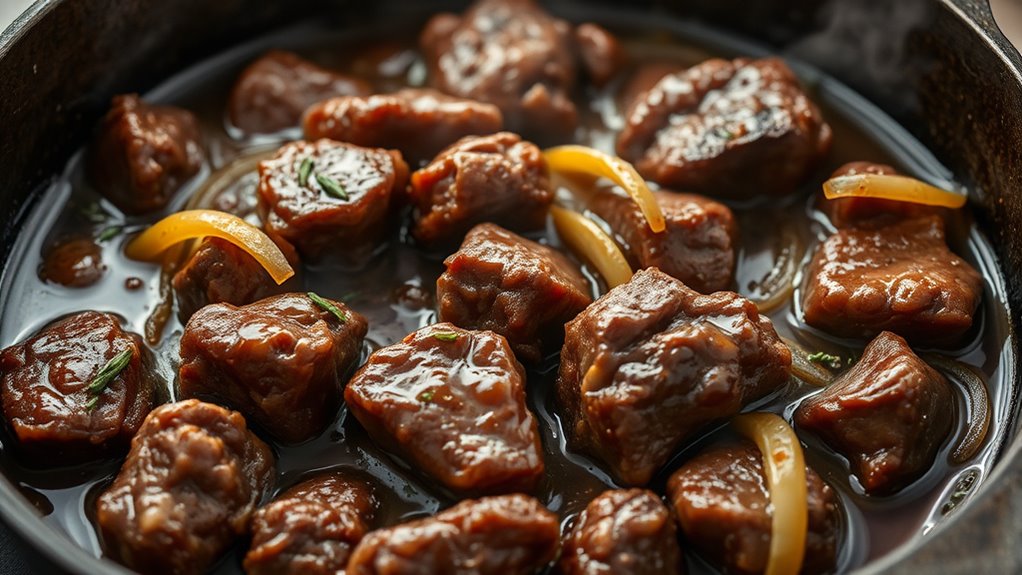

To achieve tender, flavorful meats through braising, choose cuts with plenty of connective tissue like beef chuck, brisket, or pork shoulder, which break down into deliciousness during slow cooking. Sear the meat first, then add enough liquid to cover half, and keep it covered at a low temperature for 2 to 4 hours. Controlling heat and cooking time guarantees perfect tenderness. Stick with it, and you’ll discover how simple ingredients turn into hearty comfort food.

Get kitchen staples and gadgets delivered free with Prime
- Fast, free delivery on millions of items
- Prime Video, Amazon Music and more included
- Member-only deals all year
Key Takeaways
- Choose cuts with connective tissue like beef chuck, brisket, or pork shoulder for optimal tenderness through braising.
- Sear meat first to develop flavor, then add enough liquid to cover halfway, and keep it covered during slow cooking.
- Maintain low, gentle heat (around 300°F or simmer) for 2–4 hours to break down collagen and tenderize the meat.
- Avoid high temperatures and rushing; slow, consistent heat ensures moist, tender, flavorful results.
- Enhance flavor by adding vegetables, herbs, or spices early in cooking for a rich, savory braised dish.
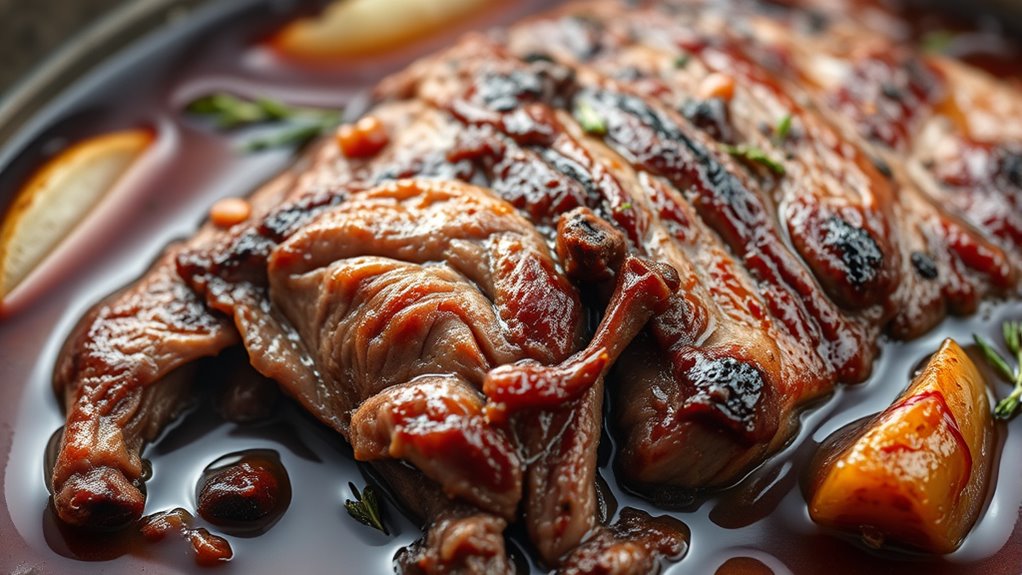
Have you ever wondered how to turn tough cuts of meat into tender, flavorful dishes? The secret lies in choosing the right meat selection and mastering the best cooking techniques. When it comes to braising, your goal is to break down connective tissues slowly and evenly, transforming less expensive, tougher cuts into melt-in-your-mouth meals. So, start by selecting meat cuts that are ideal for braising—think beef chuck, brisket, short ribs, pork shoulder, or chicken thighs. These cuts contain more connective tissue and collagen, which, when cooked properly, dissolve into rich, savory flavors and tender textures. Avoid lean, tender cuts like tenderloin or sirloin, as they don’t benefit from long, slow cooking and can become dry or tough if overcooked.
Once you’ve picked the right meat, focus on the cooking techniques that make braising so effective. The process typically involves searing the meat first to develop a deep, caramelized crust that enhances flavor. After searing, you add a small amount of liquid—such as broth, wine, or even water—enough to come about halfway up the meat. Then, cover the pot tightly and cook at a low temperature. Whether you choose to braise on the stovetop, in the oven, or in a slow cooker, the key is maintaining gentle, consistent heat. This slow, moist heat allows collagen to break down gradually, tenderizing the meat without drying it out.
A common mistake is cooking too hot or too quickly, which can toughen the meat or cause uneven results. Instead, keep the temperature low—around 300°F (150°C) in the oven or a gentle simmer on the stovetop—and give the meat plenty of time. Braising isn’t a quick process; it can take anywhere from two to four hours depending on the cut. During this time, the meat absorbs the flavors from the cooking liquid and becomes increasingly tender. Some recipes benefit from adding vegetables, herbs, or spices early in the process to infuse more flavor.
As an affiliate, we earn on qualifying purchases.
Frequently Asked Questions
Can I Braise Vegetables Instead of Meat?
Yes, you can braise vegetables instead of meat. Vegetable braising works well for creating flavorful, tender plant-based stews, especially when you want to develop deep flavors. Use hearty vegetables like carrots, potatoes, or squash, and cook them slowly with broth, herbs, and spices. This method allows the flavors to meld beautifully, resulting in rich, comforting dishes perfect for a plant-based meal.
What Are the Best Cuts of Meat for Braising?
You should choose tougher cuts of meat like chuck roast, brisket, short ribs, or pork shoulder for braising. These cuts have more connective tissue, which breaks down during slow cooking, ensuring meat tenderness and flavor enhancement. By braising, you transform these affordable, tough cuts into melt-in-your-mouth dishes with rich, deep flavors, making them ideal for hearty, satisfying meals.
How Long Should I Braise Different Types of Meat?
For different meats, cooking times vary to achieve ideal meat tenderness. Usually, beef brisket needs about 2.5 to 3 hours, while tougher cuts like pork shoulder take around 2.5 to 4 hours. Chicken thighs typically braise for 1.5 to 2 hours. Keep an eye on the meat’s tenderness; it should easily pull apart when done. Adapt the time accordingly to guarantee perfectly tender, flavorful results.
Can I Cook Braised Dishes in a Slow Cooker?
Yes, you can cook braised dishes in a slow cooker. It’s a convenient way to apply braising techniques, similar to sous vide, where low, slow heat softens the meat. Just follow your recipe’s instructions, set the slow cooker to low, and cook for the recommended time. This method guarantees your meat becomes tender and flavorful, making it perfect for hearty, slow-cooked meals.
What Are Common Mistakes to Avoid While Braising?
If you ignore common braising mistakes, your meal could turn into a disaster! Overcooking meat makes it tougher than leather, and insufficient liquid leaves your dish dry and flavorless. Always keep an eye on the temperature and guarantee there’s enough liquid to cover at least halfway. Avoid rushing the process—patience is key to tender, flavorful results. Don’t let these mistakes ruin your slow-cooked masterpiece!
Conclusion
Now that you’ve mastered braising, think of it as tending a slow-burning fire inside you. As the meat becomes tender and flavorful, so do your skills and patience. Like a candle melting into a steady glow, your confidence grows with each dish. Embrace the process, letting it symbolize the warmth and perseverance that shape both your cooking and your character. With each meal, you’re crafting more than food—you’re nurturing resilience and craftsmanship.
Halloween Picks
halloween
As an affiliate, we earn on qualifying purchases.