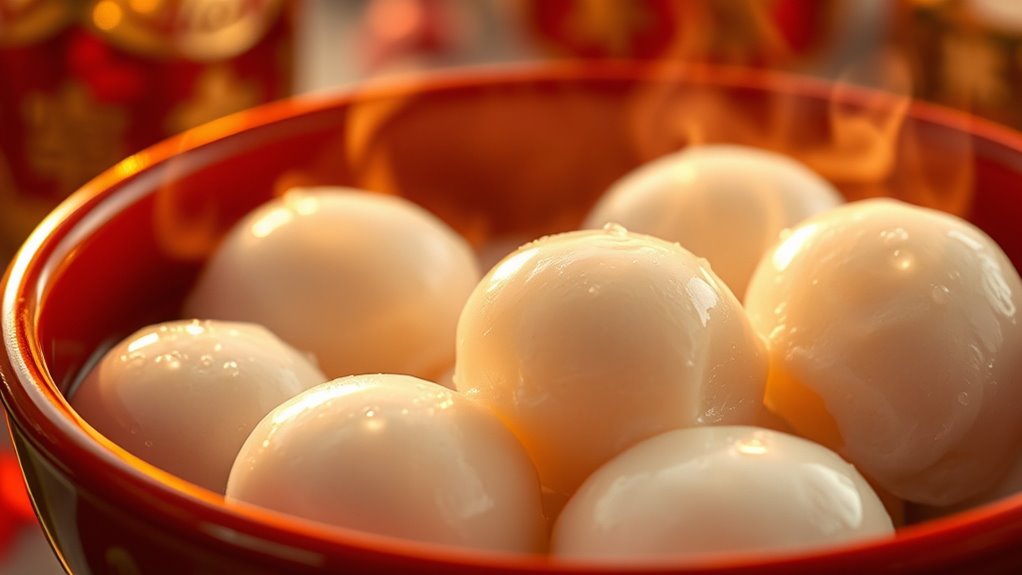

During the Chinese Winter Solstice, or Dongzhi, you gather with family to make and enjoy tangyuan, which are glutinous rice balls symbolizing unity and harmony. You can mix ingredients like rice flour and water to form the dough, then add fillings such as sesame or red bean. These tender, chewy balls are usually served in a sweet ginger broth, enhancing warmth and togetherness. If you’re curious about how this tradition connects to cultural values, keep exploring this special celebration.
Key Takeaways
- Dongzhi marks the Chinese Winter Solstice, emphasizing family unity and warmth through the tradition of making and eating tangyuan.
- Tangyuan are glutinous rice balls with fillings like sesame or red bean, symbolizing harmony and togetherness.
- The preparation involves mixing rice flour with water, shaping, filling, and boiling until they float.
- Traditionally served in sweet ginger-sugar broth, with variations in flavors and colors for festive preferences.
- Participating in making tangyuan enhances cultural connection, family bonding, and seasonal celebration during Dongzhi.
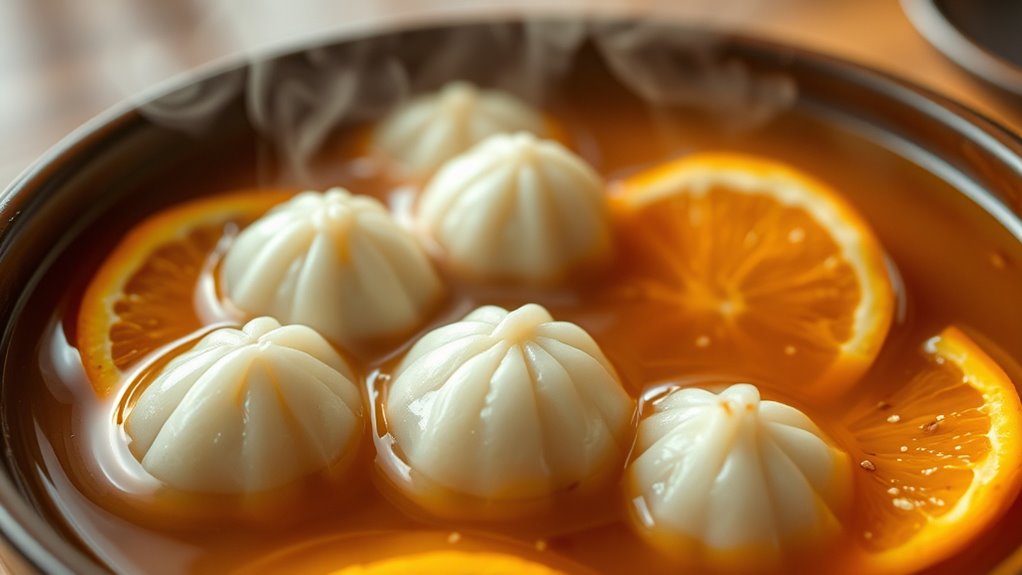
The Chinese Winter Solstice, known as Dongzhi, is a time when families gather to enjoy tangyuan—sweet glutinous rice balls symbolizing unity and harmony. During this festival, you’ll notice that the focus isn’t just on the cold winter days but on celebrating togetherness and the warmth of family bonds. This tradition has been passed down for generations, and you can participate by preparing and sharing tangyuan, which holds deep cultural significance. The act of making and eating these rice balls embodies the hope for a future filled with happiness and unity, making Dongzhi a meaningful occasion for everyone. Additionally, the process of shaping and cooking tangyuan can be a meaningful family activity that brings loved ones closer together. As you explore winter solstice traditions, you’ll find that food plays a central role, especially tangyuan. These rice balls are usually round, representing completeness and harmony. Many families have their own unique tang yuan recipes, but common ingredients include glutinous rice flour, water, and sometimes filling options like sesame paste, red bean paste, or peanut butter. Making tangyuan yourself allows you to connect with this cherished tradition, and it’s simple enough to try at home. You mix the rice flour with water until it forms a smooth dough, then roll it into small balls, adding fillings if you prefer. Once shaped, you boil the tangyuan until they float, signaling they’re ready to serve. You can customize your tangyuan recipes by adding flavors or colors to match your personal taste or festive mood. Some people include a hint of ginger in the broth, while others opt for colorful food dyes to make the dish more visually appealing. Serving these rice balls in a light, sweet ginger-sugar broth is traditional, but you can also enjoy them in a clear, sweet soup or with a splash of honey. The key is to make them tender and chewy, so pay attention to the boiling process. When you bite into a tangyuan, you’ll experience a soft, sticky texture that’s both comforting and satisfying. Participating in winter solstice traditions like making tangyuan not only connects you with Chinese culture but also turns the holiday into an opportunity for bonding. Whether you keep it simple with basic recipes or get creative with fillings and flavors, sharing tangyuan helps reinforce the themes of unity and harmony that define Dongzhi. So, gather your ingredients, follow a trusted tang yuan recipe, and enjoy the warmth and meaning behind each bite. In doing so, you’ll be carrying on a beautiful tradition that celebrates family, culture, and the joy of the winter season.
Top picks for "chinese winter solstice"
Open Amazon search results for this keyword.
As an affiliate, we earn on qualifying purchases.
Frequently Asked Questions
What Are the Origins of Tang Yuan Tradition?
You might find that the tradition of making tang yuan has deep historical significance and rich cultural symbolism. It dates back over a thousand years, representing family unity and harmony. During the Winter Solstice, eating these sweet, glutinous rice balls symbolizes reunion and good fortune. This practice has been passed down through generations, highlighting the importance of togetherness and cultural heritage in Chinese society.
Are There Regional Variations in Tang Yuan Recipes?
You’ll find regional variations in tang yuan recipes, each like a different brushstroke on a cultural canvas. In some areas, the fillings symbolize harmony, like sesame or peanut, while others prefer sweet red bean or lotus seed. Cooking techniques also differ—some regions boil gently for a smooth texture, others fry for a crispy bite. These variations reflect local tastes and traditions, creating a rich tapestry of flavors and symbolism across China.
How Long Does It Take to Prepare Tang Yuan?
Preparing tang yuan typically takes about 30 to 45 minutes, depending on your cooking process. You start by mixing glutinous rice flour with water, then shaping the dough into small balls. Boil these balls in water until they float, which usually takes around 5-10 minutes. The entire process involves mixing, shaping, and boiling, making it a quick and enjoyable activity for celebrating the winter solstice.
Can Tang Yuan Be Made Vegan or Gluten-Free?
Like a master craftsman shaping tradition, you can make Tang Yuan vegan or gluten-free. Use vegan alternatives such as plant-based glutinous rice or rice flour, and choose fillings like sweetened bean paste or fruit preserves. For gluten-free options, verify all ingredients are certified gluten-free, avoiding wheat-based additives. With these adjustments, you create a delicious, inclusive treat that honors cultural roots while embracing dietary needs.
What Are the Health Benefits of Eating Tang Yuan?
Eating tang yuan offers notable nutritional benefits, including providing energy from the glutinous rice, which can support your daily activities. The chewy texture stimulates your digestion, aiding digestive health. Additionally, if you choose fillings like sesame or peanuts, you get healthy fats and protein. These benefits make tang yuan a nourishing treat, especially during winter when your body needs warmth and extra energy.
Conclusion
As you savor the warm, tender tang yuan, think of it as a tiny moon orbiting the winter sky—bringing light and warmth amid the cold. This tradition isn’t just about food; it’s a comforting reminder that even in the darkest days of winter, unity and hope can shine brightly. Embrace the spirit of Dongzhi, letting each bite remind you that, like the season, life’s warmth returns in time.