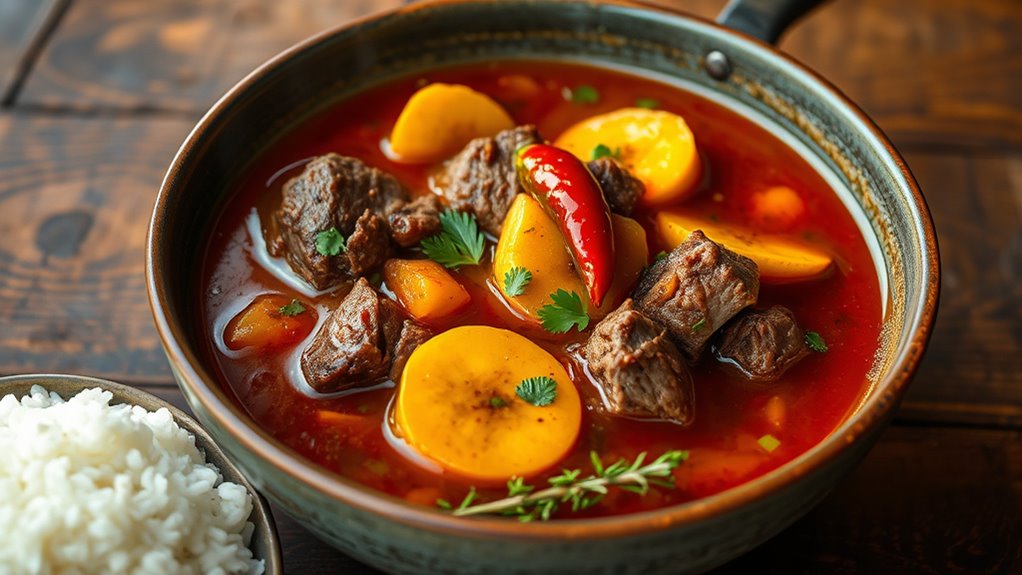

To prepare Trinidad’s Pepperpot Stew, start by browning salted meats like beef or pork to deepen flavor, then add root vegetables and aromatic herbs such as thyme and bay leaves. Incorporate spices like cinnamon, cloves, allspice, and hot peppers to bring warmth and heat, simmering everything slowly to meld flavors and tenderize tough cuts. The process builds layered, comforting flavors rooted in Caribbean tradition—keep exploring to discover the full technique and cultural significance behind this hearty dish.
Key Takeaways
- Trinidad Pepperpot Stew features salted meats like beef or pork, simmered with root vegetables and aromatic herbs for rich flavor.
- Proper browning and searing of meats enhance depth through the Maillard reaction before slow cooking.
- A blend of spices such as cinnamon, cloves, allspice, and hot peppers creates warmth and a signature Caribbean heat.
- Herbs like thyme and bay leaves are added during simmering to develop complex, layered flavors.
- The stew embodies Caribbean culinary tradition, transforming tough cuts into a comforting, flavorful dish celebrated for its cultural significance.

Have you ever tasted the rich, warming flavors of Caribbean Pepperpot Stew? If not, you’re missing out on a dish that embodies comfort and tradition. When preparing this hearty stew, you’ll find that mastering specific cooking techniques and spice blending is key to capturing its authentic taste. The process begins with choosing the right ingredients—usually a mix of salted meats like beef, pork, or smoked sausage, complemented by root vegetables and aromatic herbs. But the real magic lies in how you handle those ingredients.
To start, you’ll want to employ proper cooking techniques to develop deep, layered flavors. Browning the salted meats is essential; it not only enhances taste but also creates a richer base for the stew. As you sear the meat, the Maillard reaction occurs, adding complexity and a caramelized depth. Once browned, you’ll add water or broth, bringing everything to a simmer. Slow cooking allows the flavors to meld seamlessly, transforming tough cuts into tender bites. This process takes patience but rewards you with a stew that’s both flavorful and satisfying.
Browning meats builds rich, layered flavors through the Maillard reaction, transforming tough cuts into tender, flavorful stew.
Spice blending is where Caribbean Pepperpot Stew truly shines. It’s not just about tossing in a handful of spices; it’s about balancing bold flavors. Traditionally, you’ll use spices like cinnamon, cloves, allspice, and hot peppers, which create that signature warmth and heat. Combining these spices requires a keen sense of harmony—too much of one can overpower the dish, so you’ll want to incorporate them in measured amounts. Some cooks prefer to grind whole spices fresh for maximum aroma, while others use pre-ground blends. The key is to add your spices at the right stage—usually during the initial simmer—so they infuse the broth with their distinctive aroma.
Additionally, blending spices in the Caribbean tradition often involves a bit of intuition. You might taste and adjust, adding more pepper or cinnamon until the stew hits your perfect flavor balance. Using local herbs like thyme and bay leaves further enhances the complexity. Remember, the goal is to create a stew that’s robust yet balanced, where each spice contributes to a symphony of flavors.
In the end, preparing Trinidad Pepperpot Stew is about combining technique with skillful spice blending. When you follow these steps, you’ll discover that each spoonful offers a cozy, flavorful experience that’s rooted in centuries of Caribbean culinary tradition. It’s more than just a meal—it’s a celebration of heritage, patience, and the art of perfect seasoning.
Top picks for "caribbean comfort trinidad"
Open Amazon search results for this keyword.
As an affiliate, we earn on qualifying purchases.
Frequently Asked Questions
What Are the Traditional Side Dishes Served With Pepperpot Stew?
You typically serve pepperpot stew with traditional rice dishes like steamed rice or rice and peas to soak up the flavorful sauce. Plantain side dishes are also popular, whether fried, boiled, or baked, adding a touch of sweetness to balance the savory stew. These sides complement the rich, spiced flavors perfectly, making your meal more satisfying and authentic. Enjoy your meal with these classic accompaniments for a true Caribbean experience.
How Long Can I Store Leftover Pepperpot Stew Safely?
You can store leftover pepperpot stew safely in the refrigerator for up to 3-4 days. To maximize freshness, transfer it to an airtight container. When reheating, do so thoroughly until steaming hot to kill bacteria. Avoid leaving it at room temperature for too long. For longer storage, freeze the stew for up to 2 months, and reheat it evenly, stirring occasionally to ensure it heats through properly.
Can I Make Caribbean Pepperpot Stew Vegetarian?
Ever wondered if you can enjoy a vegetarian version of Caribbean pepperpot stew? Absolutely! You can substitute traditional meats with hearty vegetables like eggplant, zucchini, or mushrooms, and add plant-based proteins like beans or lentils. To enhance flavor, incorporate bold spices, herbs, and a splash of coconut milk. This creates a rich, satisfying stew that captures the authentic Caribbean essence while catering to vegetarian preferences.
What Are the Key Spices That Define Its Unique Flavor?
You’ll want to use key spices like cinnamon, cloves, allspice, and hot peppers to define its unique flavor. These spice blends create the rich, warming flavor profiles that make the stew special. Don’t forget to add garlic, ginger, and thyme to deepen the aroma and taste. These ingredients come together to give the dish its characteristic spiced, savory, and slightly sweet flavor, making it truly Caribbean.
Is Pepperpot Stew Suitable for Gluten-Free Diets?
Think of your grandma’s vintage cast iron pot simmering slowly—pepperpot stew can be gluten-free if you use the right gluten-free ingredients, like gluten-free flour or cornmeal. Just watch out for cross contamination risks, especially if it’s prepared in shared kitchens. You’ll want to double-check all ingredients to verify they’re gluten-free. When prepared carefully, pepperpot stew fits into a gluten-free diet and offers rich, comforting flavors.
Conclusion
Now that you’ve learned about Caribbean Pepperpot Stew, it’s clear why it’s a beloved dish across Trinidad. Did you know that Trinidad and Tobago has over 1.3 million residents, many of whom enjoy this hearty stew as a weekly tradition? Whether you’re cooking it yourself or tasting it at a local event, this dish connects you to the island’s rich culture and history. Immerse yourself and experience a taste of Caribbean comfort like no other.