If your bakeware shows signs like warping, scratches, or cracks, it’s probably holding back your results. Discoloration, stains, or coating wear indicate deterioration that affects heat transfer and baking performance. Uneven surfaces can cause uneven rising or browning, while warped edges may lead to batter spills. If your bakeware no longer heats evenly or shows visible damage, it’s time for an upgrade. Keep going to discover more ways to spot worn-out bakeware before it ruins your bakes.
Key Takeaways
- Visible scratches, cracks, or chips indicate material deterioration that can affect performance.
- Warping or uneven surfaces lead to inconsistent heat distribution and baking results.
- Discoloration or stubborn stains suggest coating wear or material breakdown.
- Reduced heat conduction causes uneven browning and undercooked areas.
- Signs of corrosion or coating peeling compromise safety and baking quality.
As an affiliate, we earn on qualifying purchases.
Why Your Bakeware Wears Out and How It Affects Baking
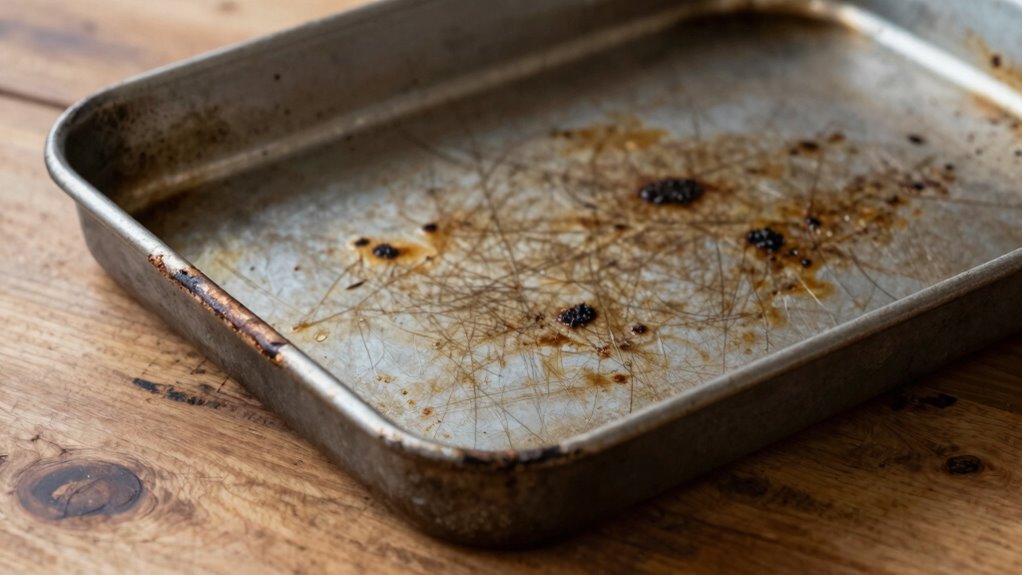
Over time, bakeware naturally wears out due to frequent use and exposure to high temperatures. As this happens, it can impact your baking results, especially if your baking techniques rely on consistent heat distribution. Worn bakeware may develop scratches, warping, or uneven surfaces, which can cause hot spots and uneven baking. Additionally, the deterioration affects how ingredients behave; for example, poor heat conduction can alter baking times and texture. Ingredient quality also plays a role—using high-quality ingredients won’t compensate for damaged bakeware. Over time, the wear and tear alter the bakeware’s ability to perform, making your baked goods less uniform and less appealing. Recognizing this wear helps you understand how it influences your baking outcomes, especially considering how material deterioration can impact heat transfer and baking consistency. Proper maintenance and timely replacement are essential to maintain optimal baking results and prevent issues caused by damaged bakeware. Regular inspection and understanding of heat conduction properties can help you identify when it’s time to replace your bakeware before it adversely affects your baking. Being aware of the wear patterns that develop on your bakeware can also aid in early detection of potential problems. Incorporating professional-grade materials can also extend the lifespan and performance of your bakeware.
Signs Your Bakeware Is Worn Out or Damaged
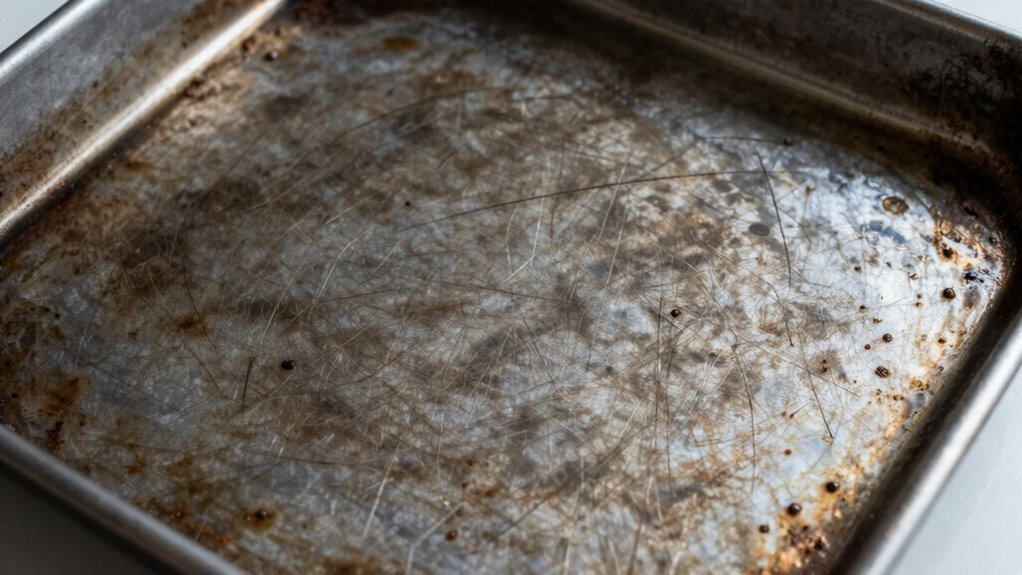
It’s important to recognize the signs that your bakeware is worn out or damaged before it affects your baking results. Over time, even durable materials can show wear, reducing their material longevity and compromising bakeware durability. Look for cracks, chips, or warping—these are clear signs it’s time to replace your pieces. Discoloration or stubborn stains can also indicate deterioration and uneven heat distribution. A worn-out bakeware may also develop sticky spots or warped edges, affecting baking consistency. Being aware of material longevity can help you better gauge when your bakeware needs replacing.
How Warped or Damaged Bakeware Impacts Your Bakes

Warped or damaged bakeware can considerably disrupt your baking process, leading to uneven heat distribution and inconsistent results. When your bakeware isn’t flat, the baking temperature isn’t evenly transferred, causing some areas to overheat while others remain undercooked. This affects ingredient interaction, making batters rise unevenly or toppings burn before the center is done. This can also increase the risk of heat retention issues, which further impacts baking performance. Warped surfaces can also cause batter to pool or spill, altering the expected texture and appearance. Over time, damaged edges or warped pans lose their ability to hold heat properly, resulting in less predictable baking conditions. Proper maintenance and bakeware care are essential for ensuring consistent results. Using environmentally friendly materials for your bakeware can also help reduce environmental impact and promote sustainability in your baking practices. Additionally, choosing durable bakeware made from quality materials can prolong the lifespan of your pans and maintain their performance over time. As a result, your baked goods may not develop the proper rise, crust, or moisture levels. Keeping your bakeware in good shape guarantees consistent heat transfer, improving overall baking performance. Utilizing high-quality, well-maintained bakeware can also support better heat distribution and more reliable results.
Why Using the Wrong Bakeware Materials Can Prevent Proper Rise
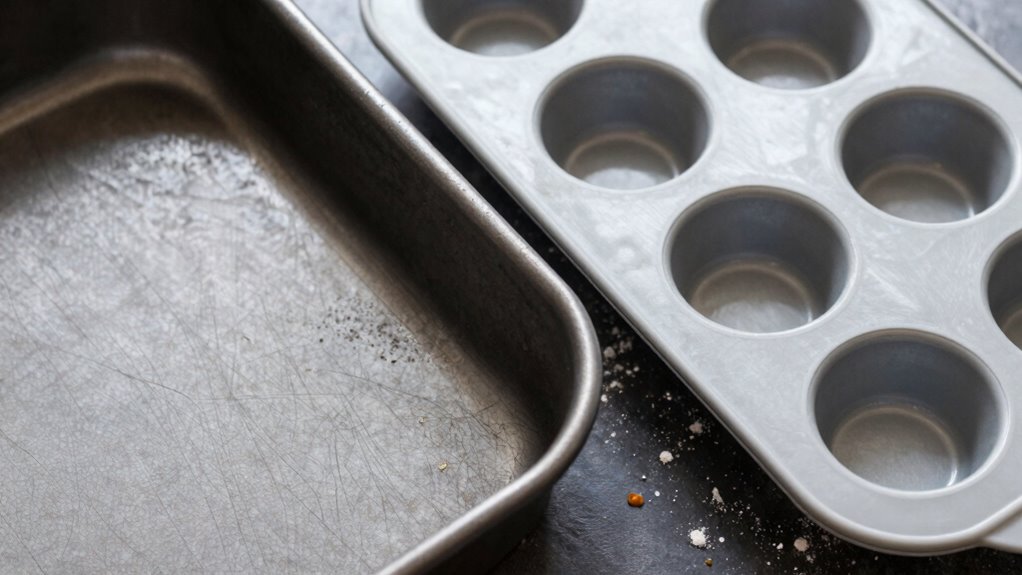
Using the right bakeware materials is key to guaranteeing your baked goods rise properly. Material compatibility and heat conduction directly influence how well your treats expand. If you choose the wrong material, you risk uneven heat distribution, which can prevent proper rise. For example:
- Thin aluminum pans heat quickly but may cause uneven rising due to inconsistent heat conduction.
- Glass bakeware heats slowly and retains heat longer, risking over-baking or collapsing batter.
- Dark-colored pans absorb more heat, potentially causing premature crust formation that hampers rising.
- Non-stick coatings can sometimes inhibit proper heat transfer, affecting even expansion.
- Understanding heat conduction properties helps in selecting the best bakeware for consistent results. Additionally, knowing the material properties can help you choose bakeware that distributes heat more evenly, leading to better rise and texture. If you’re unsure, testing different bakeware materials can help determine which provides the most reliable results for your specific recipes. Being aware of heat transfer efficiency can also guide you in making better choices for consistent baking outcomes. Moreover, considering the thermal mass of the bakeware can influence how evenly heat is distributed during baking.
Visible Damage: Cracks, Discoloration, and Coating Wear

Visible damage like cracks, discoloration, and coating wear can considerably impact the performance and safety of your bakeware. Cracks weaken the structure, risking breakage or uneven baking. Discoloration may signal overheating or deterioration, affecting bakeware aesthetics. Coating wear can cause sticking, uneven heat distribution, and potential health concerns. Regularly inspect your bakeware for these signs and replace damaged pieces promptly. Proper storage solutions, like stacking carefully or using protective liners, can prevent damage and preserve appearance. Damage prevention through careful handling and storage is key to maintaining your bakeware’s longevity. Keeping your bakeware in good condition is essential for consistent results and safety. Being aware of damage signs can help you take proactive steps to maintain your bakeware’s longevity and safety. Additionally, understanding the material durability of different bakeware types can guide you in selecting options that last longer and perform better over time.
When to Replace Your Bakeware for Perfect Results

Ever wonder when it’s time to replace your bakeware for the best baking results? If your pans are affecting your baking techniques or ingredient substitutions, it’s a sign you need new ones. Consider replacing your bakeware if:
Replace your bakeware if it impacts your baking techniques or ingredient substitutions for better results.
- You notice persistent warping or uneven heat distribution, impacting your baked goods.
- The non-stick coating is peeling, reducing release efficiency and safety.
- Your pans have deep scratches or stains that can’t be cleaned, affecting both hygiene and performance.
- You’re using older materials like aluminum or non-coated metal that no longer deliver consistent results.
- Over time, bakeware deterioration can compromise heat conduction, leading to less predictable baking outcomes. Regularly inspecting your pans helps prevent unsafe conditions and ensures optimal performance. Additionally, improper maintenance or prolonged use can accelerate material degradation, further diminishing your results.
- Additionally, changes in material quality over the years can impact your baked goods’ appearance and texture. Being aware of wear and tear can help you decide when to upgrade for better results.
Upgrading bakeware guarantees even heat, better browning, and reliable results, especially when trying new ingredient substitutions or advanced baking techniques. Don’t let worn-out pans hold back your baking perfection.
Frequently Asked Questions
How Can I Tell if My Bakeware Is Still Safe to Use?
To tell if your bakeware is still safe to use, check for cracks, warping, or significant scratches, especially if it’s made from metal, glass, or ceramic. If you notice rust or corrosion, it’s time to replace it, even with rust prevention measures. Older or damaged bakeware can affect your food’s safety and quality. Always prioritize safety by inspecting your bakeware regularly and replacing any that shows signs of wear or damage.
Are There Specific Cleaning Methods to Extend Bakeware Lifespan?
Think of your bakeware as a trusty sidekick—you want it to stay sharp and ready for action. To extend its lifespan, use gentle cleaning techniques like warm soapy water and non-abrasive sponges. Avoid harsh chemicals and metal scrubbers to protect the baking surface. Proper baking surface maintenance, like avoiding sudden temperature changes, keeps your bakeware in top shape, ensuring it continues to deliver perfect results batch after batch.
Can Using Damaged Bakeware Affect Food Safety?
Using damaged bakeware can definitely affect food safety. Cracks, chips, or warping may harbor bacteria and make it harder to clean thoroughly, increasing contamination risks. This can lead to foodborne illnesses if harmful bacteria survive and transfer to your food. Always inspect your bakeware before use, and replace damaged pieces to guarantee safe cooking and baking. Properly maintained bakeware helps protect you and your family from potential health hazards.
What Are the Best Storage Practices for Baking Pans?
To keep your baking pans in top shape, focus on good pan organization by stacking them carefully or using storage containers designed for bakeware. Store pans in a dry, cool place away from humidity to prevent rust. Use protective liners or padding between pans to avoid scratches. Proper storage helps maintain non-stick coatings and guarantees your bakeware stays in excellent condition, ready for your next delicious creation.
How Do Different Bakeware Coatings Influence Baking Results?
Different bakeware coatings greatly influence your baking results. Non-stick durability guarantees your baked goods release easily and last longer, making cleanup simpler. Ceramic coatings provide even heat distribution and are often more eco-friendly, but they may wear faster. Metal bakeware heats quickly and offers excellent durability. Choosing between ceramic and metal depends on your baking needs; ceramic excels for delicate items, while metal is better for high-temperature baking.
Conclusion
Think of your bakeware as the foundation of a great cake—if it’s cracked or warped, your baking suffers. I once ignored a scratched pan, only to find my brownies sticking terribly. Regularly inspecting and replacing worn bakeware guarantees your baked goods rise perfectly and come out flawless. Remember, a sturdy base makes all the difference—so don’t wait until cracks crack wider. Keep your bakeware in check, and your desserts will always shine.