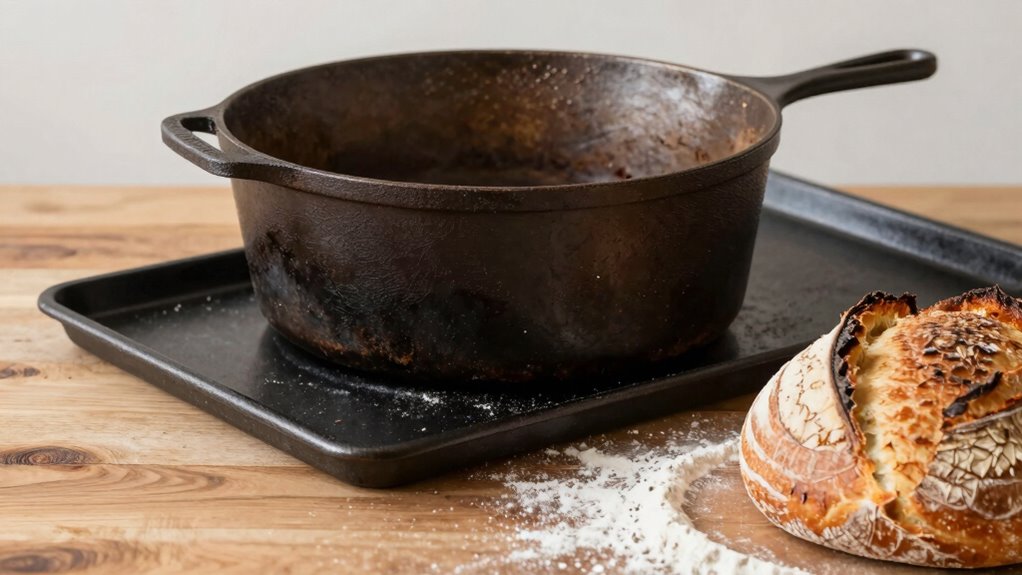

Sourdough bakers swear by Dutch ovens and baking steels because these tools help you achieve a perfect crust and even bake. Dutch ovens trap steam during baking, creating a humid environment that boosts oven spring and shiny, crackly crusts. Baking steels provide quick, consistent heat, ensuring the bread rises evenly without hot spots. Both tools improve your results, making your bread look and taste amazing. Keep exploring to discover how to get the most out of them.

Get kitchen staples and gadgets delivered free with Prime
- Fast, free delivery on millions of items
- Prime Video, Amazon Music and more included
- Member-only deals all year
Key Takeaways
- Dutch ovens trap steam during baking, creating ideal conditions for a crusty, glossy loaf.
- Baking steels provide rapid, consistent heat for even crust and crumb development.
- Both tools enhance oven spring and prevent crust dullness by optimizing heat transfer.
- Dutch ovens are space-efficient and excellent for maintaining moisture; steels offer quick, high heat.
- Proper preheating and shaping techniques maximize each tool’s baking performance and crust quality.
As an affiliate, we earn on qualifying purchases.
How Do Dutch Ovens Help You Achieve a Better Sourdough Crust?
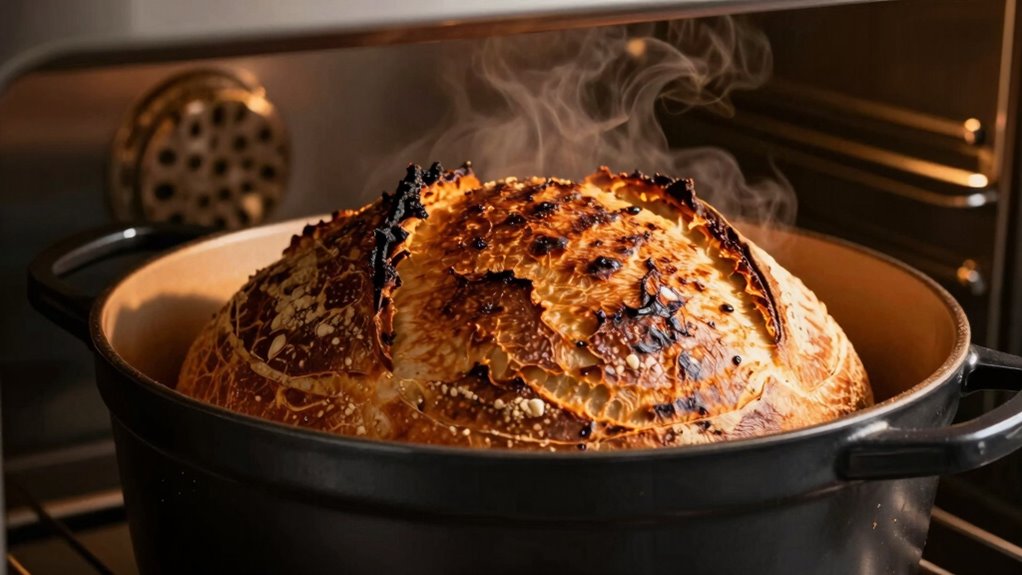
Using a Dutch oven transforms your sourdough baking by creating a mini oven environment that traps steam. This trapped steam helps your dough develop a better crust by allowing the surface to stay moist during the initial baking phase. Proper oven preheating guarantees the Dutch oven reaches the right temperature, which is vital for a crisp crust. Adjusting dough hydration is also essential—higher hydration doughs benefit more from this environment, as they produce a more open crumb and a shiny, crackly crust. When you place your shaped dough into the preheated Dutch oven, the steam released during baking keeps the crust soft enough to expand fully. As the moisture escapes, it crisps up, giving you that beautiful, bakery-quality crust every time. Additionally, the temperature stability of the Dutch oven ensures consistent heat distribution, which is crucial for achieving an even, well-developed crust.
Why Baking Steels Ensure Even Heat for Perfect Bread
Baking steels provide a consistent and direct heat source that guarantees your bread bakes evenly from the crust to the crumb. This even heat distribution helps develop a uniform crust and thorough interior. Your choice of fermentation techniques impacts how the dough responds to this heat, influencing oven spring and crumb structure. Additionally, flour selection plays a vital role; high-protein flours retain heat better, enhancing browning and texture. Unlike other materials, steels quickly absorb and transfer heat, maintaining a stable temperature throughout the bake. This stability minimizes hot spots, ensuring your bread develops a consistent rise and crust. By combining effective fermentation, ideal flour, and a baking steel, you set the stage for bakery-quality loaves with perfect evenness every time. Heat transfer properties of steels are a key factor in achieving consistent baking results. Furthermore, the durability of baking steels ensures they will withstand frequent use without warping or degrading, making them a long-term investment for serious bakers. Properly preheated steels also help improve oven spring, resulting in better loaf expansion during baking. Additionally, the thermal mass of steels helps maintain steady heat even when opening the oven door, supporting even baking. Understanding the heat conductivity of different materials can help bakers optimize their baking setup for the best results.
How Trapping Steam During Baking Improves Your Loaves
When you trap steam during baking, it creates a humid environment that considerably enhances the quality of your bread. Steam retention keeps the outer dough surface moist, preventing it from forming a tough crust too early. This allows the bread to expand fully before the crust sets, resulting in better oven spring and a lighter crumb. Additionally, the retained steam promotes crust development, making it glossy, crisp, and beautifully caramelized. Without enough steam, your crust might be dull or thick, compromising texture and appearance. By effectively trapping steam, you give your loaf the ideal environment to develop a professional-quality crust while maintaining a tender interior. Proper steam retention is an essential technique that can greatly elevate your sourdough baking results. Incorporating emerging trends in digital publishing can also help you discover innovative methods and share your baking journey with a broader community. Understanding the role of steam in baking can further help you refine your technique for consistently excellent loaves. Recognizing the importance of proper oven temperature can also ensure optimal steam generation and crust formation. Mastering steam trapping techniques can lead to more consistent and impressive baking outcomes.
Which Sourdough Baking Tool Is Right for You: Dutch Ovens or Baking Steels?
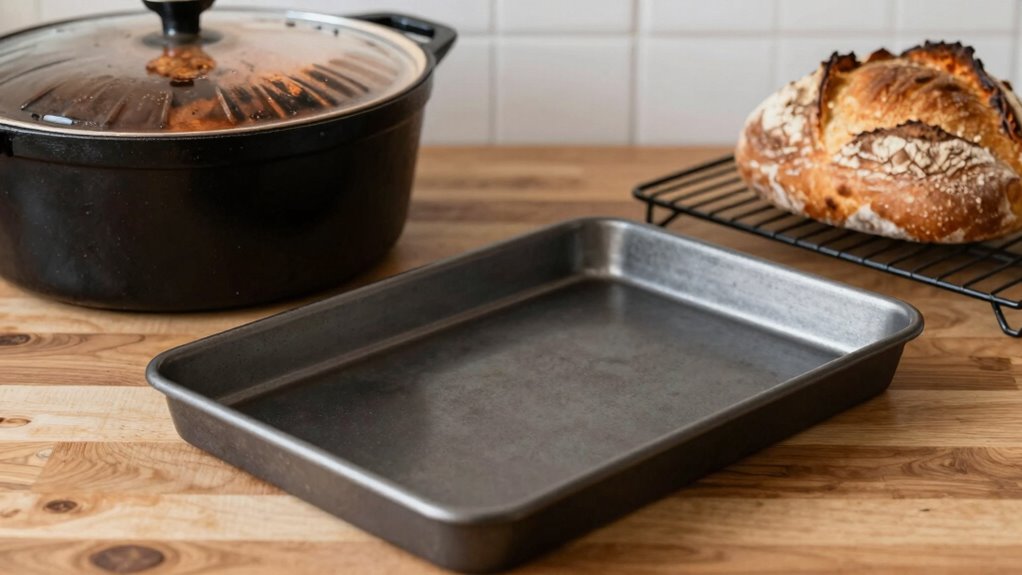
Choosing between a Dutch oven and a baking steel depends on your baking style, space, and preferences. Dutch ovens excel at trapping steam, ideal for bread shaping and creating a crusty loaf, especially if you’re short on space. Baking steels heat quickly and provide high, consistent heat for a crisp crust, but require careful flour selection to prevent sticking. Consider the table below to match your needs:
| Feature | Dutch Oven | Baking Steel | Best For |
|---|---|---|---|
| Steam Retention | Excellent | Limited | Crust development |
| Heating Time | Slow to heat | Fast | Quick bake sessions |
| Bread Shaping | Easier with Dutch oven | Requires more flour to prevent sticking | High-heat, crispy crusts |
| Space Needed | Compact | Larger | Kitchen size considerations |
| Flour Selection | Less critical | Vital to prevent sticking | Consistent results |
Choosing the right tool also involves understanding heat transfer, which plays a crucial role in achieving the perfect loaf. Developing a good understanding of thermal properties of baking materials can help optimize baking results and improve crust quality. Additionally, knowing how different materials influence moisture retention during baking can further enhance your bread’s texture and crust. A deeper knowledge of baking science can help you troubleshoot and refine your techniques for better results.
Tips to Use Dutch Ovens and Baking Steels to Elevate Your Baking Game
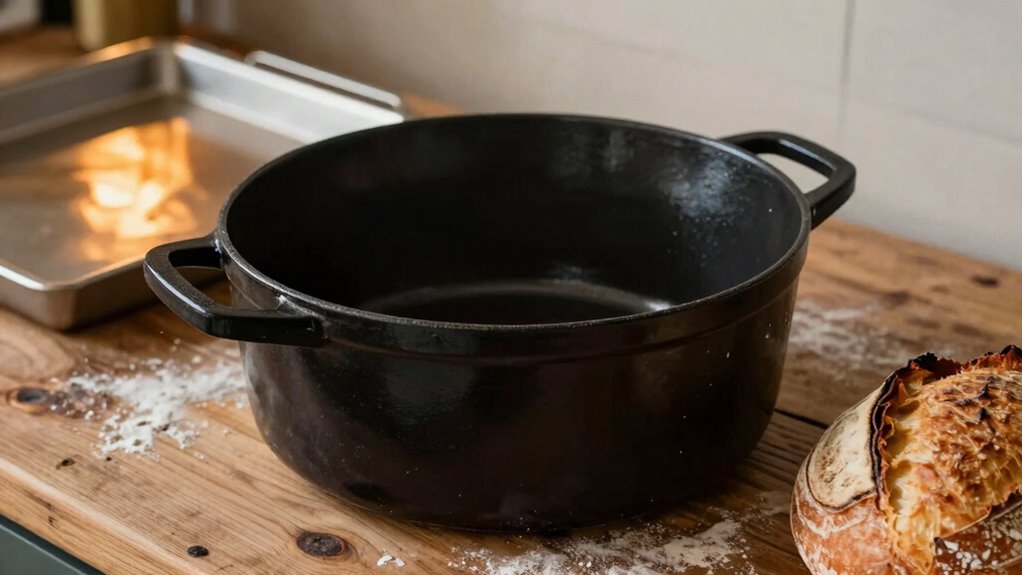
Mastering how to use your Dutch oven or steel effectively can dramatically improve your sourdough results. To optimize sourdough fermentation, preheat your Dutch oven or steel thoroughly—aim for at least 30 minutes—to create a consistent, high-temperature environment that promotes oven spring. When it’s time to bake, use proper bread shaping techniques to develop surface tension, which helps the loaf hold its shape and form a beautiful crust. Score your dough just before baking to control expansion and prevent bursting. Keep the lid on during initial baking to trap steam, then remove it for a crisp crust. Additionally, understanding heat buffering can help you manage heat loss and maintain an even baking environment throughout the process. This knowledge of thermal properties can make a significant difference in achieving a perfect bake. Proper ash disposal techniques can also ensure your baking setup remains safe and efficient, especially when using charcoal or other outdoor heat sources. Recognizing the importance of consistent heat can further refine your baking process, leading to more reliable results. Being aware of heat distribution can help you troubleshoot uneven baking and achieve more uniform loaves. By combining these tips, you’ll enhance both the rise and texture of your sourdough, making your baking game truly exceptional.
Frequently Asked Questions
Can You Use Any Type of Dutch Oven for Sourdough Baking?
You can’t use just any Dutch oven for sourdough baking; it needs to withstand high heat and retain moisture. Cast iron Dutch ovens are ideal because they hold heat well, helping with dough hydration and achieving that perfect crust. Always preheat your oven and Dutch oven together to guarantee even heat distribution. Avoid non-enameled or thin-walled pots, as they may crack or fail to maintain consistent temperatures needed for great sourdough.
How Do Baking Steels Compare to Cast Iron Dutch Ovens?
Baking steels offer a great alternative to cast iron Dutch ovens because they heat faster and provide superior heat retention. Their durability means you can use them repeatedly without warping, unlike some cast iron options. While cast iron Dutch ovens are versatile and excellent for trapping moisture, baking steels excel at providing even, intense heat for a crisp crust. Choose based on your baking style and preference for durability and heat performance.
What Size Dutch Oven Is Best for Standard Sourdough Loaves?
For standard sourdough loaves, a 5 to 6-quart Dutch oven works best. This size provides enough room for your dough to expand without crowding, ensuring a good oven spring. The Dutch oven size affects baking performance, but a 5-6 quart offers great versatility for various recipes. Its size complements baking steel versatility, allowing you to bake everything from small loaves to larger breads with consistent results.
How Do You Clean and Maintain Baking Steels?
To keep your baking steel pristine, practice proper cleaning techniques and maintenance tips. After baking, let it cool and then wipe off residue with a damp cloth—avoid soap, which can strip seasoning. For stubborn spots, lightly scrub with steel wool. Occasionally, season your steel by applying a thin oil layer and heating it. This routine preserves its performance, prolongs its lifespan, and prevents rust, ensuring your baking steel remains a reliable, resilient baking partner.
Are There Safety Concerns When Using High-Temperature Baking Steels?
Yes, there are safety concerns when using high-temperature baking steels. You should always prioritize oven safety, ensuring your steel is heat-resistant and properly handled. Steel durability means it can withstand high temperatures, but avoid sudden temperature changes that could cause cracking or warping. Always use oven mitts and avoid touching the hot steel directly. Regularly inspect your steel for damage, and follow manufacturer instructions to keep your baking environment safe.
Conclusion
Choosing between a Dutch oven and a baking steel depends on your baking style, but both elevate your sourdough. Imagine launching your loaf into a preheated Dutch oven’s hot enclosure or placing your dough directly on a steel for crisp edges. If you’re worried about handling heavy equipment, start with a Dutch oven; it’s like a cozy cocoon for your bread. Either way, these tools help you achieve bakery-quality crusts right in your home oven.
Fall Picks
fall essentials
As an affiliate, we earn on qualifying purchases.