
TL;DR
Bakery experts recommend keeping bread at room temperature in a paper bag and freezing it if it will not be eaten within a few days. Refrigeration speeds staling, while reheating can briefly restore the texture of older bread.
Bakery experts say bread keeps best at room temperature in a paper bag, while the refrigerator can make it stale faster. For loaves that will not be eaten within a few days, they recommend freezing bread, either sliced for convenient portions or whole.
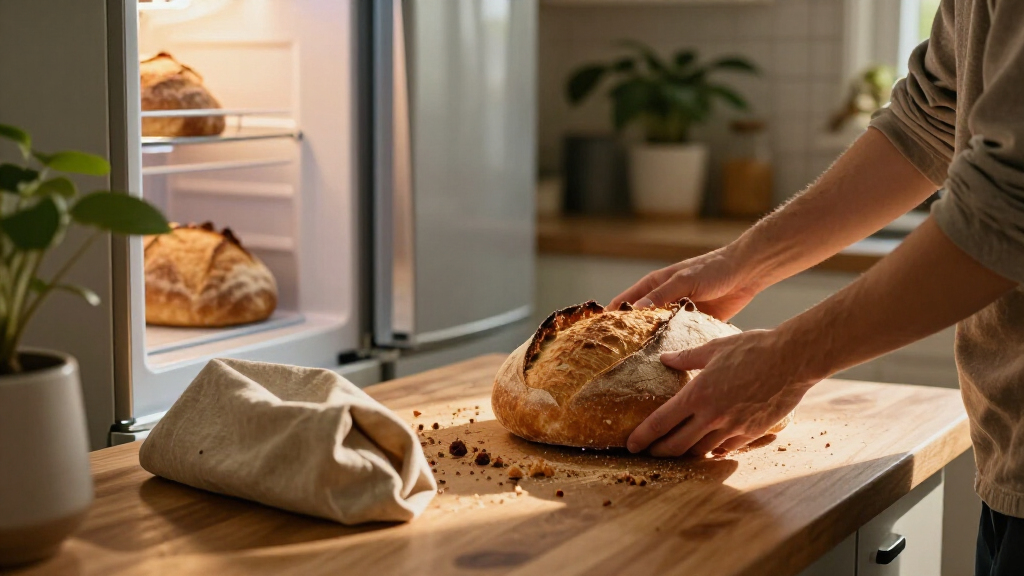
Sophia Handschuh, co-founder of London bakery Sourdough Sophia, says bread begins to dry as soon as it leaves the oven because its starch does not do well when exposed to air. She stores loaves in the greaseproof paper bag used to bring them home. Beeswax wrap can also be used, she says, but buying it specifically for bread storage may be an unnecessary expense.
Rachel Morgan, co-founder of Edinburgh bakery Twelve Triangles, also prefers paper and advises against a bread bin. She says trapped moisture can soften the crust and encourage mould. Florin Grama of north London’s Tarn Bakery says refrigeration is a poor choice because bread stales quickly in the fridge.
For bread that is already a couple of days old, Handschuh recommends warming it in the oven for five to 10 minutes. She says reheating lets water evaporate and allows the starch to reactivate, which can make the bread seem fresh for another day or two. This is a short-term fix; the experts recommend freezing when a loaf needs to be kept longer.
Kitchen science · Bread storage
Fridge Or Not?
What’s The Best Way To Store Bread?
Bakery experts recommend a paper bag at room temperature for everyday storage. Freeze bread when you need it to last longer; the fridge can speed staling.
01 / Choose your storage
Where the loaf lives matters
Bread loses moisture and changes texture after baking. For quality, the experts favor room-temperature storage in paper, then freezing if the loaf will not be eaten within a few days.
Paper at room temperature
Keep the loaf in its bakery paper bag. Paper helps limit exposure to air while avoiding the damp, enclosed conditions that can soften a crust.
Refrigerator or bread bin
Experts say bread stales faster in the fridge. A bread bin can trap moisture, making the crust soft and potentially encouraging mould.
Freeze what you won’t use
Freeze slices for easy portions or keep the loaf whole. The recommendations preserve quality; they do not set a universal shelf life.
02 / Why the fridge loses
Staling is a texture change
As bread cools and sits, starch and water changes make the crumb feel dry and firm. Exposure to air contributes to the loss of freshness.
46°F / 7°C
86°F / 30°C
Comparison cited by baker Florin Grama from Harold McGee’s experiment in On Food & Cooking. It describes those specific temperatures, not every loaf or home refrigerator.
03 / Keep it for later
Two practical ways to freeze bread
Choose portions for convenience or freeze the loaf whole. Either way, freezing is the experts’ recommendation when bread will not be eaten soon.
Slice, wrap, freeze
Wrap slices tightly and freeze them. Toast slices straight from frozen whenever you need one.
Freeze the whole loaf
Freeze it intact, thaw it, then warm it through in a low oven at about 160°C.
04 / Refresh or reuse
Older bread still has a place
Warming bread for five to 10 minutes may briefly improve its texture. For a longer-term use, turn stale slices or ends into something new.
Tear bread into pieces. Toss with olive oil, flaky salt, garlic and fresh thyme, then bake for 10–20 minutes until browned. Or dry thin slices into crisps and keep ends for breadcrumbs.
Reheating can improve texture for a short time. It does not reverse mould or make mouldy bread safe to eat.
At a glance / Key questions
Quick answers from the bakers
Should bread go in the fridge?
The experts advise against refrigeration because they say bread stales faster there. Their comparison is based on a specific experiment, not a universal timeline.
What’s best for a few days?
Keep the loaf at room temperature in its paper bag. Avoid a damp, enclosed space that can soften the crust.
How should I freeze it?
Freeze tightly wrapped slices for toasting, or freeze the whole loaf and warm it after thawing.
Can stale bread be refreshed?
Try warming it in the oven for five to 10 minutes. You can also make croutons, crisps or breadcrumbs.
These tips address bread quality, not a precise safety window. Discard bread with mould.
Storage Choices Shape Freshness
Choosing where to keep a loaf affects how quickly its texture changes and whether it remains pleasant to eat. Room-temperature storage in paper is the experts’ practical everyday recommendation, while the fridge may speed staling and a damp container can soften the crust. Freezing provides a way to preserve bread when it will not be eaten soon, helping households avoid letting an entire loaf go stale.
The advice also distinguishes freshness from food safety. Reheating may improve the texture of older bread, but it does not reverse mould or make mouldy bread suitable to eat. The experts’ suggestions focus on quality and ways to use bread before it is wasted.
As an affiliate, we earn on qualifying purchases.
Why Bread Stales Quickly
When bread bakes, starch in the flour expands and absorbs water, producing a soft crumb. Handschuh says the bread starts drying when it comes into contact with a surface after baking, and exposure to air contributes to staling. That explanation underpins the recommendation to keep a loaf in its paper bag at room temperature.
Food writer Harold McGee’s experiment, described in his book On Food & Cooking, offers a comparison cited by Grama: bread kept at 46F (7C) in a refrigerator staled as much in one day as bread held at 86F (30C) did in six days. The comparison concerns staling under those conditions; it does not describe every bread or every home refrigerator.
““That’s probably the best way – no plastic.””
— Sophia Handschuh, co-founder of Sourdough Sophia
How Long Each Loaf Keeps
The advice does not set a precise shelf life for bread stored in paper, and the time before staling or mould appears will depend on the loaf and its storage conditions. The cited refrigerator experiment gives results for specific temperatures, not a universal timetable for every fridge. The recommendations concern bread quality; they do not establish a safety window for bread that has developed mould.
Freeze or Use Older Bread
If a loaf will not be eaten within a few days, Grama recommends slicing it, wrapping it tightly and freezing it, then toasting slices straight from frozen. Handschuh suggests freezing a whole loaf intact, thawing it and warming it through at a low oven temperature of about 160C.
Older bread can also be turned into croutons: tear it into pieces, toss with olive oil, flaky salt, garlic and fresh thyme, then bake for 10 to 20 minutes until browned. Other suggestions include drying thin slices into crisps, keeping stale ends for breadcrumbs, or refreshing a loaf with water and filling it with herby garlic butter and perhaps cheese. The article does not specify storage times for these preparations.
Source: Guardian Life
Key Questions
Should bread be stored in the fridge?
The bakery experts advise against refrigeration because they say bread stales faster in the fridge. Grama cites an experiment in which bread at 46F (7C) staled as much in one day as bread at 86F (30C) did in six days.
What is the best way to store bread for a few days?
Handschuh and Morgan recommend keeping bread at room temperature in its paper bag. Morgan cautions that a bread bin can trap moisture, which may soften the crust and encourage mould.
How should bread be frozen?
For slices that can be toasted as needed, Grama recommends slicing the loaf, wrapping it tightly and freezing it. Handschuh says a loaf can also be frozen whole, then thawed and warmed in a low oven at about 160C.
Can stale bread be made fresh again?
Handschuh recommends warming bread in the oven for five to 10 minutes; she says it may seem fresh for another day or two. The experts also suggest using older bread for croutons, crisps or breadcrumbs.
Source: Guardian Life