TL;DR
A dehumidifier size calculator helps you match the unit’s capacity to your room’s needs. It considers room size, humidity, and climate for the best moisture control. Proper sizing reduces energy use and prolongs your device’s lifespan.
If you’ve ever bought a dehumidifier that’s either too small or too large for your space, you know the frustration. A tiny unit struggles to keep the air dry, while an oversized one wastes energy and wears out faster. The secret to a perfect setup? Using a dehumidifier size calculator.
This handy tool matches your room’s unique needs with the right capacity—saving you money and hassle. Whether you’re dealing with a damp basement or a humid bedroom, understanding how to choose the right size makes all the difference. Let’s break down how these calculators work and how to get the most accurate recommendation.
Always measure your room accurately—square footage, ceiling height, and moisture sources matter.
Use a dehumidifier size calculator to match capacity with your space’s needs—think pint ratings like 30, 50, or 70.
Proper sizing saves energy, cuts costs, and extends your unit’s lifespan.
Climate zone influences capacity—humid areas need bigger units, dry ones need smaller.
Consider additional features like auto-drain and smart controls alongside capacity for maximum convenience.
What a dehumidifier size calculator actually does for you
A dehumidifier size calculator is a simple online or app-based tool that figures out how much moisture your space needs removed each day. It considers your room size, humidity levels, and even your climate zone. But why does this matter? Because selecting the right size directly impacts the effectiveness and efficiency of your dehumidifier. An undersized unit will run constantly without fully drying the air, leading to persistent dampness and mold risk. Conversely, an oversized unit may cycle on and off frequently, wasting energy and decreasing the device’s lifespan due to excessive wear.
Understanding the core function of the calculator helps you appreciate its importance: it’s not just about numbers but about balancing energy consumption, comfort, and durability. Proper sizing ensures your home stays comfortably dry without unnecessary power use or premature equipment failure. Think of it as setting the perfect thermostat—precision matters for optimal comfort and savings.
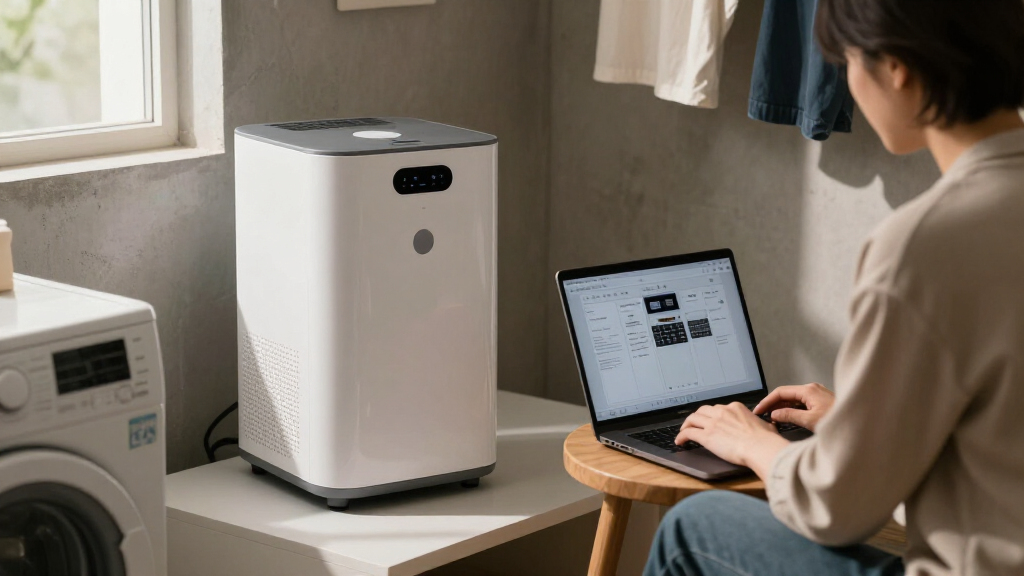
dehumidifier with 50 pint capacity
As an affiliate, we earn on qualifying purchases.
As an affiliate, we earn on qualifying purchases.
How a dehumidifier size calculator works step-by-step
- Measure your room’s square footage or cubic footage—consider high ceilings or open spaces, as these increase the moisture load and require a larger capacity.
- Assess your humidity level—use a hygrometer to determine if your space is mildly damp or highly humid. This step is crucial because high humidity demands a more robust dehumidifier to achieve comfort efficiently. Ignoring humidity can lead to choosing a unit that either struggles to dry the air or wastes energy by oversizing.
- Input your climate zone—humid subtropical, arid desert, or cold mountain area. Climate influences the ambient moisture levels, so a humid environment will typically require a larger capacity than a dry one.
- The calculator processes these inputs and recommends a capacity—like 30, 50, or 70 pints per day—balancing space size, humidity, and climate. This recommendation aims to optimize moisture removal while minimizing energy consumption and wear.
For example, a 400 sq ft living room with high humidity may need a 50-pint unit because the moisture load is significant, and the space requires more drying power. Conversely, a small, dry guest room might only need a 30-pint model, conserving energy and reducing costs. Recognizing these distinctions helps you avoid the pitfalls of over- or under-sizing, ensuring your dehumidifier performs at peak efficiency.
Matching room size to pint capacity: what do the numbers mean?
Understanding capacity ratings involves more than just matching numbers to room sizes. It’s about recognizing the tradeoffs between size, energy efficiency, and moisture removal speed. Larger units (e.g., 70 pints) can handle high humidity or larger spaces more quickly, reducing running time, but they might consume more power if not properly matched to the space. Smaller units (e.g., 20-30 pints) are more energy-efficient for smaller, less humid spaces but may struggle in damp environments, leading to persistent dampness and potential mold growth.
Think of capacity as a tool that must match the specific moisture load of your space. An oversized dehumidifier cycles less often, which can be good for energy savings but may cause unnecessary wear if it’s too large for your needs. Conversely, a unit that’s too small will run constantly, increasing energy costs and possibly failing to maintain desired humidity levels. The key is to find a balance where the unit can dry the air efficiently without excessive cycling or energy waste. Proper understanding of these ratings helps you choose a unit that not only fits your room size but also aligns with your moisture control goals and energy considerations.
Frequently Asked Questions
How do I measure my room for the calculator?
Use a tape measure to get the length and width. For high ceilings, multiply the square footage by the ceiling height to get cubic footage. Include moisture sources like bathrooms or kitchens in your assessment.
What size dehumidifier do I need for a damp basement?
Most damp basements need a 60-70 pint dehumidifier, especially if moisture is persistent. Use a calculator with your room’s size and humidity level for a precise recommendation.
Can I use a bigger or smaller unit than the calculator suggests?
Yes, but with caveats. A larger unit may cycle less often but consume more energy; a smaller one might struggle with high humidity. The key is balancing capacity with efficiency for your specific needs.
How does climate zone affect my size choice?
Humid climates require larger units—think 50-70 pints—while dry climates might get by with 20-30 pints. Adjust your expectations based on seasonal humidity variations too.
Are there apps to help me calculate on the go?
Yes, many brands offer mobile apps and online tools that guide you through measurements and recommend sizes in real-time, making it easy to plan during home projects.
Conclusion
Picking the right dehumidifier isn’t about guessing. It’s about matching your space’s moisture load with a calculator that considers size, humidity, and climate. Your wallet, and your air quality, will thank you.
Remember: a properly sized dehumidifier dries faster, costs less to run, and lasts longer. Think of it as giving your home the perfect pair of shoes—comfort, support, and efficiency all in one.
Dehumidifier Size Calculator
Estimate daily pint capacity from room size and how damp the space feels.
Your room likely starts in the 20 to 30 pint range. Compare compact dehumidifiers for smaller spaces.
See compact dehumidifier matchesYour room points to a 35 to 40 pint unit. Compare mid-size dehumidifiers and check drainage options.
See mid-size dehumidifier matchesYour conditions call for a 50 pint or larger unit. Compare larger dehumidifiers and confirm room moisture sources.
See larger dehumidifier matchesEstimate only. Check product specs, local rates, and site conditions before buying or planning around these numbers.