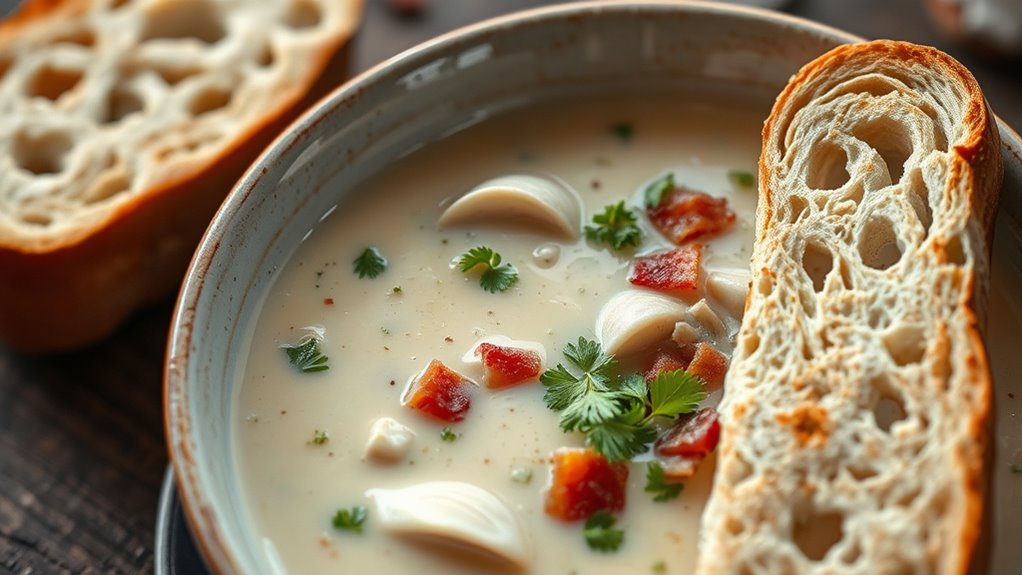

On your global soup tour, your journey through New England clam chowder reveals a dish rooted in centuries of maritime history. This creamy, hearty soup features local clams, potatoes, onions, and salt pork, reflecting the region’s seafood traditions and cultural blending. Its evolution from simple preservation to regional delicacy showcases New England’s rich culinary heritage. Keep exploring to uncover more about how this iconic soup connects communities and history across generations.
Key Takeaways
- New England clam chowder is a historic regional dish originating from colonial New England, showcasing local seafood and culinary traditions.
- It embodies the region’s coastal identity, using fresh clams, potatoes, onions, and cream to create a hearty, creamy soup.
- The recipe evolved from simple preservation methods to a refined, widely recognized comfort food with regional variations.
- Clam harvesting is central to New England’s seafood culture, supporting local economies and emphasizing sustainable practices.
- As a symbol of regional pride, clam chowder connects modern audiences worldwide to New England’s rich culinary heritage.

Ever wondered what makes New England clam chowder a beloved culinary icon? The answer lies in its deep-rooted seafood traditions and rich culinary history that have shaped it into a regional staple. When you taste this creamy, hearty soup, you’re not just enjoying a meal—you’re experiencing a piece of New England’s cultural fabric, woven through generations of fishermen, cooks, and communities. Its origins date back to the early colonial period, when settlers relied heavily on the abundant New England coastline for sustenance. Clams, along with other local seafood, became a cornerstone of the regional diet, and over time, inventive cooks began turning these ingredients into what we now recognize as clam chowder.
New England clam chowder reflects centuries of seafood traditions and cultural stories woven into every hearty spoonful.
The seafood traditions of New England are integral to the soup’s identity. The area’s cold, nutrient-rich waters produce some of the world’s best clams, which are harvested commercially and recreationally. These clams are central to the region’s culinary identity, celebrated in dishes that highlight their natural flavors. Clam chowder emerged from these local practices, blending fresh seafood with simple ingredients like potatoes, onions, and salt pork. Over centuries, these traditions evolved, influenced by various cultural groups, including Native Americans and early European settlers, each adding their own touch to the recipe.
Understanding the culinary history of clam chowder helps you appreciate its significance. Originally, fishermen would prepare a straightforward chowder using what was available—clams, salt, and whatever else could be preserved or sourced locally. As towns grew and trade expanded, ingredients diversified, and recipes became more refined. By the 19th century, New England clam chowder had cemented itself as a regional specialty, with establishments proudly serving their own variations. Today, it’s a symbol of local pride, served in seafood shacks, fine dining restaurants, and family kitchens alike.
When you indulge in a bowl of New England clam chowder, you’re connecting with centuries of tradition. It’s a dish that tells stories of coastal communities relying on their environment, respecting their seafood resources, and passing down recipes through generations. Its culinary history reflects a blending of indigenous practices and immigrant influences, resulting in a timeless comfort food that’s celebrated far beyond New England’s borders. The soup’s creamy texture and briny flavor encapsulate a proud seafood heritage, inviting you to taste not just the ingredients but the history and traditions that have made this iconic dish a true culinary treasure.

Amazon Kitchen, Clam Chowder New England-Style Soup, 24 oz
- Contains tender clams and potatoes: Tender clams, salt pork, diced potatoes, sautéed onions in creamy chowder
- Easy to heat and serve: Heat in microwave or stove for quick serving
As an affiliate, we earn on qualifying purchases.
As an affiliate, we earn on qualifying purchases.
Frequently Asked Questions
What Are the Origins of New England Clam Chowder?
You might be surprised to learn that New England clam chowder originates from early seafood sustainability practices, using local, fresh ingredients. This beloved dish evolved from historical recipes brought by European settlers, who combined clams, salt pork, and potatoes to create hearty meals. Over time, it became a regional staple, reflecting the area’s maritime culture and commitment to sustainable seafood harvesting, which continues to influence its traditional preparation today.
How Do Regional Ingredients Influence the Flavor?
You’ll find regional ingredients turn your clam chowder into a true local masterpiece. Seasonal produce adds fresh, vibrant flavors that change with the harvest, while local seafood delivers that unmistakable briny punch. Ignoring these ingredients is like serving canned soup at a gourmet dinner—blasphemy! So, embrace the regional bounty, and let those fresh, local flavors elevate your chowder from bland to legendary.
What Are Common Variations of Clam Chowder?
You’ll find clam chowder has many variations, like the creamy New England style, the tomato-based Manhattan, and the clear, broth-like Rhode Island version. These differ in ingredients, seafood pairings, and flavor profiles. Typically, bread accompaniments like crusty rolls or oyster crackers complement each variation. You can customize your chowder with herbs or spices, making each bowl unique while still enjoying classic seafood and bread pairings.
How Should Clam Chowder Be Stored and Reheated?
To store clam chowder properly, transfer it to an airtight container and keep it in the fridge for up to 3 days. For reheating, use gentle methods like stovetop heat over low to medium, stirring occasionally, or microwave in short bursts, stirring in between. Storage tips help maintain freshness, and reheating methods prevent curdling or overcooking, ensuring your chowder stays delicious and creamy.
Are There Health Benefits Associated With Clam Chowder?
Think of clam chowder as a bowl of nourishment, symbolizing warmth and comfort. It offers nutritional content like protein, vitamins, and minerals that support your overall health. The omega-3 fatty acids from clams may boost immune support, helping your body defend against illness. Enjoy this hearty soup knowing it can contribute to your well-being, making each spoonful a small act of self-care.
Conclusion
Now that you’ve tasted the creamy, hearty magic of New England clam chowder, your taste buds are forever transformed. This iconic soup is more than just a dish—it’s a flavor explosion that could turn anyone into a clam connoisseur overnight. So, next time you’re craving comfort in a bowl, remember this tour and plunge into a bowl that’s so delicious, it might just rewrite your culinary universe. Trust me, you won’t want to miss out!