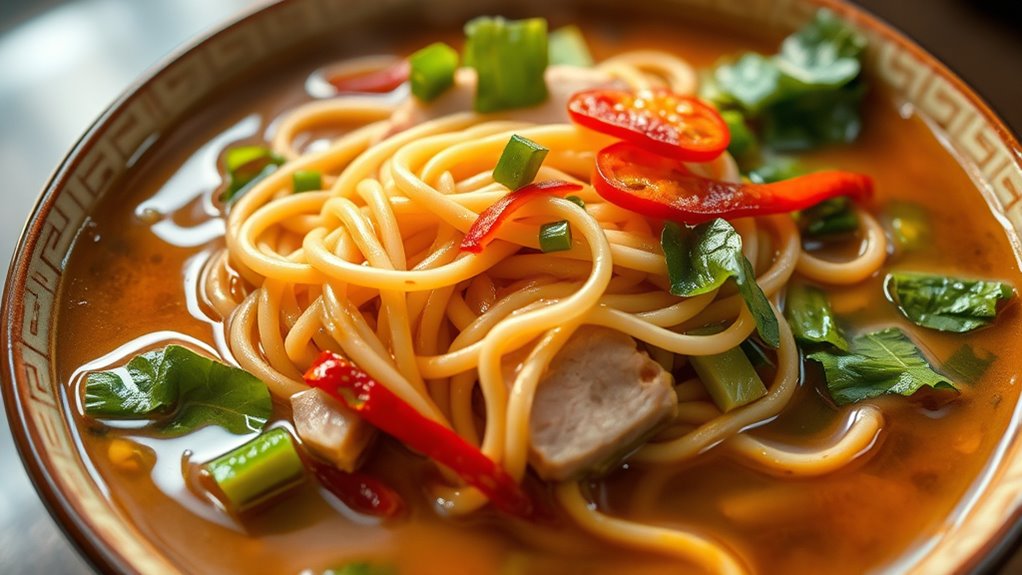

On your global soup tour, Chinese longevity noodles soup stands out as more than just a meal; it’s rich in tradition, symbolizing health, longevity, and good fortune. Crafted with carefully prepared ingredients like long noodles and flavorful broth, it connects you to centuries-old customs and cultural heritage. Every bowl honors history and shared hopes, making the experience meaningful. To understand the deep significance behind its ingredients and rituals, discover what makes this dish so cherished across generations.
Key Takeaways
- Chinese longevity noodles symbolize health, long life, and good fortune, often served during celebrations like Lunar New Year.
- The dish features long, unbroken wheat or rice noodles and a flavorful broth, reflecting traditional culinary craftsmanship.
- Preparation involves slow-simmered broth and deliberate ingredient choices to honor cultural customs and heritage recipes.
- Consuming longevity noodles connects diners to Chinese history, emphasizing cultural rituals and shared hopes for longevity.
- As a cultural emblem, the dish celebrates life and tradition, embodying Chinese culinary heritage across generations worldwide.
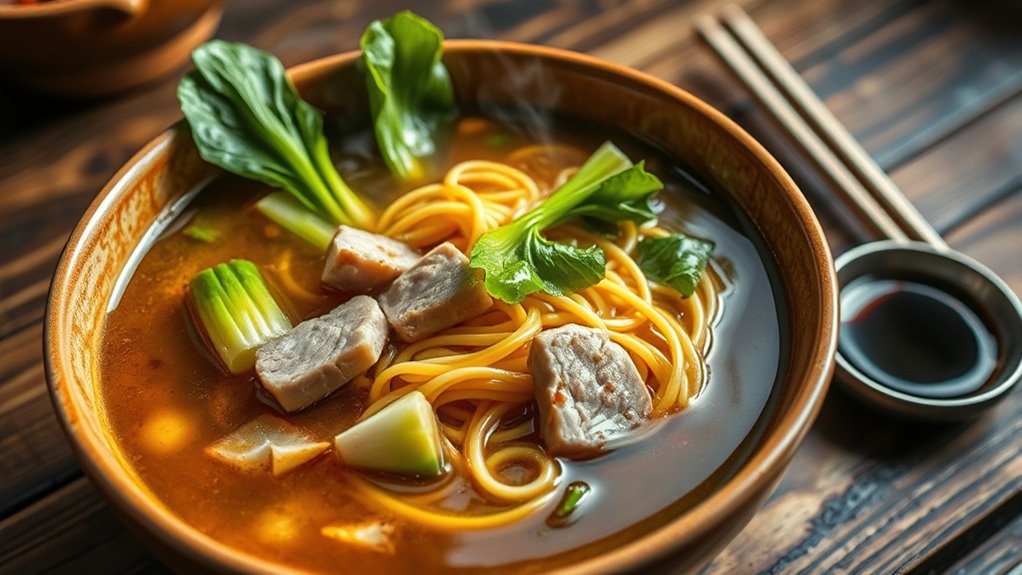
Ever wondered what makes a perfect bowl of soup? It’s not just about the ingredients; it’s about the stories, traditions, and heritage recipes that bring each spoonful to life. When you taste Chinese longevity noodles soup, you’re experiencing more than just a meal—you’re immersing yourself in a culinary tradition that spans centuries. This dish embodies the essence of Chinese heritage recipes, passed down through generations to symbolize health, longevity, and good fortune.
A delicious journey into Chinese culture, celebrating health, longevity, and centuries-old culinary traditions with every bowl.
The roots of longevity noodles go deep into Chinese culture. Traditionally, these noodles are served during celebrations like birthdays or Lunar New Year, emphasizing the importance of family and well-being. The noodles themselves are a culinary tradition, crafted with care to ensure they’re long enough to symbolize a wish for a long life. When you prepare or enjoy this soup, you connect with these age-old customs, making your experience richer than just eating. It’s a way to honor history, respect heritage recipes, and embrace cultural values. The ingredients are simple—often just wheat or rice noodles, broth, vegetables, and sometimes meat or seafood—but each element is chosen deliberately to uphold tradition. The broth, typically simmered for hours, captures the soul of the dish, blending flavors that have been perfected over centuries.
Making longevity noodles soup isn’t just about following a recipe; it’s about respecting and preserving a culinary tradition. You’ll find that each family or region might have slight variations, but the core idea remains the same: a dish that celebrates life and longevity. This cultural significance enhances the eating experience, turning a simple bowl into a meaningful ritual. As you lift the noodles, long and unbroken, you’re symbolically embracing a wish for continued health and happiness. It’s this deep connection to heritage recipes that elevates the dish beyond nourishment to a cultural expression. Additionally, cultural significance plays a vital role in how this dish is appreciated and passed down through generations.
In essence, enjoying Chinese longevity noodles soup is a journey through history, a taste of heritage recipes that have stood the test of time. It reminds you that food isn’t just sustenance—it’s a vessel for stories, traditions, and shared hopes. Each bowl invites you to partake in a centuries-old culinary tradition, making every meal a celebration of life and cultural continuity. So, next time you indulge in this soup, remember you’re not just eating; you’re honoring a rich heritage that continues to thrive through generations.
Top picks for "soup global tour"
Open Amazon search results for this keyword.
As an affiliate, we earn on qualifying purchases.
Frequently Asked Questions
What Are the Origins of Chinese Longevity Noodles?
You’ll find that Chinese longevity noodles have deep cultural symbolism rooted in tradition and history. Their origins trace back centuries, making them an essential part of Chinese culinary history. You might notice that these long, uncut noodles symbolize long life and good health during celebrations like birthdays. By eating them, you honor cultural beliefs, connecting with centuries-old customs that value longevity and prosperity through these symbolic dishes.
Are There Regional Variations in Longevity Noodle Recipes?
Imagine a river winding through diverse landscapes—your longevity noodles follow the same path. You’ll find regional flavor profiles shaping each bowl, from spicy Sichuan to savory Cantonese. Ingredient substitutions like different meats or vegetables add unique twists, making each version a personal signature. This culinary journey lets you explore how local tastes influence the traditional recipe, creating a tapestry of regional variations that celebrate China’s rich cultural diversity.
How Do Longevity Noodles Symbolize Health and Longevity?
You understand that the symbolism of noodles in many cultures represents health and longevity because their length signifies a wish for a long life. The cultural significance is deep, often shared during birthdays or special celebrations, emphasizing vitality and good fortune. By eating these noodles, you’re embracing a tradition that highlights the importance of well-being and enduring happiness, making the act of consuming them a meaningful gesture toward a healthier, longer life.
What Are Traditional Toppings Used in Chinese Longevity Noodle Soup?
A picture is worth a thousand words, especially in festive occasions where traditional toppings shine. You might add sliced boiled eggs for fertility, green onions for vigor, and mushrooms for longevity. These ingredient symbolism choices are believed to boost health and celebrate long life. You’re encouraged to savor these toppings as part of the rich cultural tapestry that makes Chinese longevity noodle soup a symbol of well-being and happiness.
Can Longevity Noodle Recipes Be Adapted for Dietary Restrictions?
Absolutely, you can adapt longevity noodle recipes for dietary restrictions. For gluten-free options, swap traditional wheat noodles with rice or buckwheat noodles. To make it vegetarian, replace meat-based broths with vegetable broth and add tofu or mushrooms for protein. You can also incorporate various vegetables to enhance flavor and texture. These adjustments let you enjoy a delicious, personalized longevity noodle soup that suits your dietary needs without sacrificing tradition.
Conclusion
As you take a sip of the steaming, fragrant broth, imagine the countless generations that have savored this timeless soup. Each slurp carries whispers of tradition, resilience, and energy, like a gentle river flowing through history. Let the warmth seep into your soul, reminding you that nourishment isn’t just about the body but also about connection and heritage. Embrace this moment, and carry the spirit of longevity with you, long after the last spoonful.