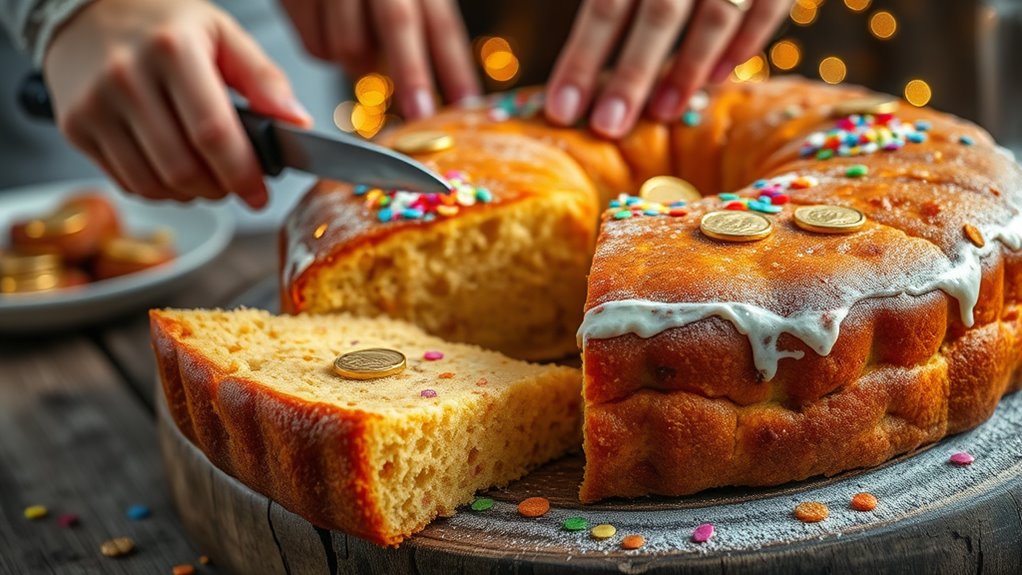

The Greek Vasilopita is a special tradition celebrated on New Year’s Day, honoring Saint Basil. You bake a round cake, often with modern flavors, hiding a coin inside for good luck. The first slice goes to the family head, then everyone else shares in the spirit of unity and generosity. This custom fosters hope and community, blending history with modern touches. If you want to discover more about this meaningful tradition, keep exploring its history and customs.
Key Takeaways
- Vasilopita is a traditional Greek cake baked to celebrate Saint Basil’s feast day on January 1st.
- The cake contains a hidden coin or small object believed to bring good luck.
- Slices are distributed starting with the household head, symbolizing sharing and community.
- The tradition signifies unity, prosperity, and goodwill for the new year.
- Modern variations include diverse flavors and personalized decorations, blending tradition with contemporary customs.
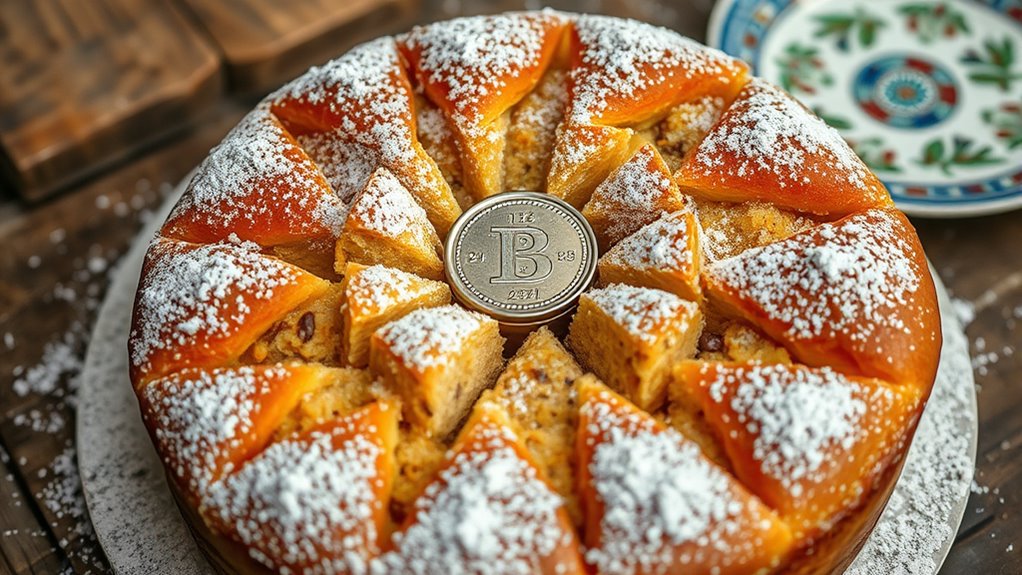
The Greek Vasilopita tradition is a cherished New Year’s custom that brings families together to celebrate and welcome the year ahead. This special occasion revolves around baking a cake, known as Vasilopita, which is often decorated simply and contains a hidden coin or small object. The roots of this tradition date back centuries, with origins tied to Saint Basil the Great, a revered figure in Greek Orthodox Christianity. Historically, the custom started as a way to honor Saint Basil on his feast day, January 1st, but over time, it became a widespread New Year’s celebration in Greece and among Greek communities worldwide. Today, the tradition has evolved but still retains its core meaning: bringing luck and blessings for the coming year.
Celebrated across Greece, Vasilopita honors Saint Basil and welcomes luck and blessings for the New Year.
In modern customs, the Vasilopita is baked with love and care, often in a round shape symbolizing unity and eternity. Families gather on New Year’s morning, and the cake is sliced with a special prayer or blessing. The first slice is traditionally given to the head of the household, and then the slices are distributed among family members, friends, and neighbors. It’s common to hide a coin or small trinket inside the cake, and whoever finds it is believed to be especially blessed with good fortune for the year ahead. This simple act fosters a sense of community and hope, making the celebration more meaningful.
Additionally, many families emphasize the importance of goal setting and positive intentions as part of the tradition, reinforcing the hopeful spirit of the holiday. During the preparation, many families incorporate modern customs, such as baking Vasilopita in different flavors like chocolate or lemon, to add a contemporary twist to this ancient tradition. Some also include decorative motifs or personalized touches to reflect the family’s personality or regional influences. The act of sharing the cake signifies unity and generosity, reinforcing the importance of family bonds and goodwill. As the slices are served, it’s customary to make wishes for health, happiness, and prosperity, infusing the celebration with optimism and positivity.
The history origins of the Vasilopita blend religious significance with cultural practices, but its enduring popularity hinges on its ability to adapt to modern customs while preserving its traditional essence. Whether you’re celebrating in Greece or in a Greek community abroad, this tradition offers a warm reminder of heritage, hope, and togetherness. It’s a simple yet meaningful way to start the year, embracing both history and modernity with every slice of the cake.

HUAKENER 8 Inch Cake Pan – Set of 3 Round Cake Pans with 100 Pieces Parchment Paper, Non-stick Cake Baking Pans, Dishwasher Safe
Healthy and Durable: HUAKENER cake baking pans are made from heavy-weight carbon steel for superior heat conduction and…
As an affiliate, we earn on qualifying purchases.
As an affiliate, we earn on qualifying purchases.
Frequently Asked Questions
How Did the Tradition Originate Historically?
You might find that the tradition has mythical origins rooted in ancient customs honoring Saint Basil. Historically, people believed that offering a special cake with a coin inside brought good luck and blessings for the new year. This practice evolved from older customs of sharing bread and celebrating communal prosperity. Over time, it became a cherished way to connect with heritage, blending mythology and tradition into a joyful New Year’s ritual.
Are There Regional Variations in the Recipe?
Did you know that regional variations in Vasilopita recipes are quite common across Greece? You’ll find differences in ingredients, like adding orange zest in Crete or almonds in Thessaly. These recipe differences reflect local tastes and traditions. So, when you make your Vasilopita, consider exploring regional variations to add a unique touch. It’s a delicious way to celebrate and appreciate Greece’s diverse culinary heritage.
Who Is Traditionally Responsible for Cutting the Cake?
You are usually responsible for cutting the cake, as it’s part of the family roles and ceremonial customs. Traditionally, the head of the family or a respected elder performs this task, symbolizing good luck and blessings for the year ahead. By doing so, you uphold the tradition and guarantee everyone’s share, especially the one who finds the coin, which is believed to bring prosperity and happiness.
Can Vasilopita Be Made With Different Types of Coins?
You can definitely make vasilopita with different types of coins, especially if you’re doing coin substitution or cultural adaptations. While traditional coins are often used, some people choose symbolic or meaningful coins to suit their customs. Just confirm the coins are clean and safe, and consider explaining the change to guests. This flexibility lets you personalize the cake while keeping the tradition alive in your own way.
How Has the Tradition Evolved in Modern Greece?
Like a river flowing through time, the tradition of Vasilopita has adapted in modern Greece to include lively gatherings and social media sharing. Today, it’s more than just a cake; it’s a symbol of hope and community. Families and friends celebrate with joy, emphasizing the social significance of unity. Modern celebrations keep the spirit alive, blending age-old customs with contemporary festivities that strengthen bonds and bring new meaning to an ancient tradition.
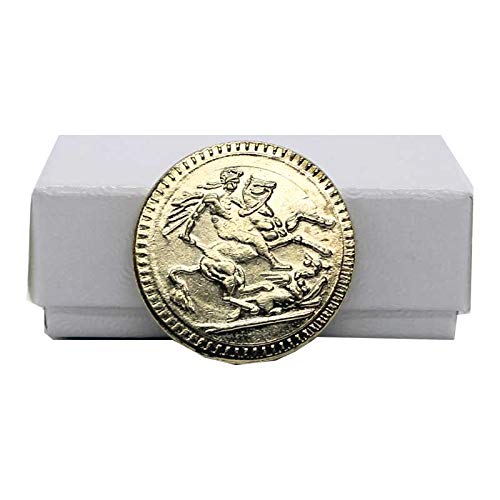
Vasilopita Traditional Greek New Year's Cake Coin – "Flouri", Decorative coin replica
Greek Coin Replica for use with the Greek New Years Bread (Vasilopita)
As an affiliate, we earn on qualifying purchases.
As an affiliate, we earn on qualifying purchases.
Conclusion
So, as you cut into your Vasilopita, remember you’re not just hunting for the hidden coin—you’re chasing a slice of Greek history, luck, and a dash of chaos. With each piece, you partake in a centuries-old ritual that promises prosperity, or at least a good story for next year’s dinner table. After all, what’s life without a little unpredictability—unless it’s your coin, of course, hidden in the cake. Cheers to tradition and sweet surprises!

Novery 9.5" Non-stick Cake Pan, Heavy Duty Carbon Steel Fluted Tube Round Baking Pan,Buntz Pound Cake Pan Mold,Tube Bakeware,Baking Mold for Jello,Gelatin,Chocoflan,Flan
PRACTICAL SIZE: The round cake pan features a 9.5” outer diameter,9” inner diameter, and a 3” height, making…
As an affiliate, we earn on qualifying purchases.
As an affiliate, we earn on qualifying purchases.

King David Kosher Easy Melt Non Dairy White Baking Chocolate Flavored Coins 12.34-ounce Jars (Pack of 3)
CAUTION! IN HOT WEATHERS THE CHIPS COULD MELT WILE TRANSIT PLEASE "DO NOT" ORDER IF YOU DON'T WANT…
As an affiliate, we earn on qualifying purchases.
As an affiliate, we earn on qualifying purchases.