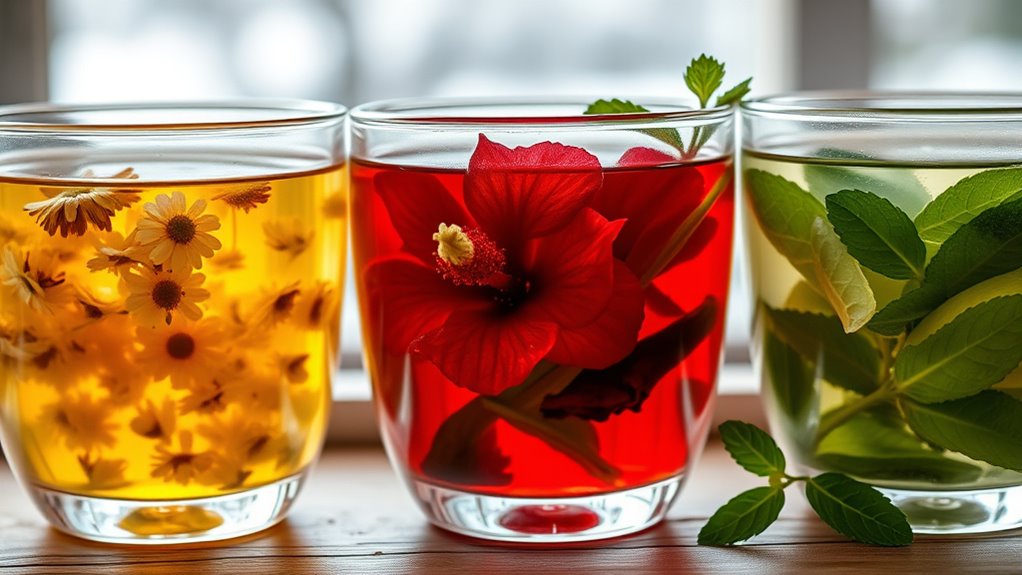

During winter, herbal teas like chamomile, peppermint, and hibiscus can boost your wellness. Chamomile helps you relax and sleep better, while peppermint relieves headaches and congestion. Hibiscus provides antioxidants and supports overall health with its tart flavor. To get the best benefits, brew these herbs properly and store them in airtight containers. Discover more tips to maximize your herbal tea experience and enjoy winter wellness by exploring further.
Key Takeaways
- Chamomile promotes relaxation and eases stress, helping you unwind during cold winter evenings.
- Peppermint revitalizes, relieves headaches, congestion, and stomach discomfort, boosting winter immunity.
- Hibiscus offers antioxidants, supports overall health, and provides a tart, warming flavor ideal for winter.
- Proper brewing with fresh herbs and correct steeping enhances their medicinal benefits and flavor.
- Store herbs in airtight containers away from light to preserve their potency and wellness properties.
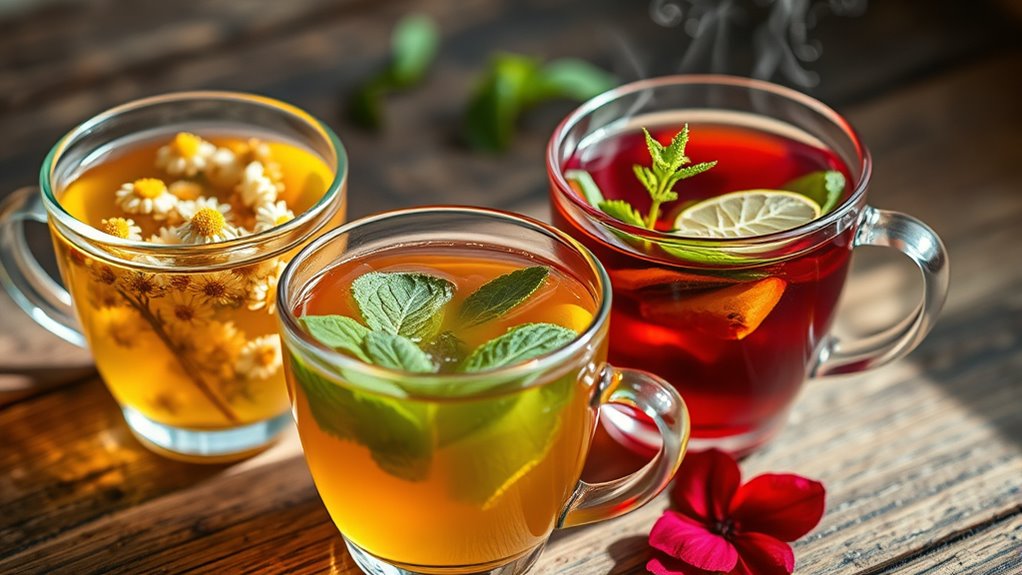
As winter settles in, herbal teas become your cozy allies for maintaining wellness and warmth. When you’re preparing these comforting drinks, mastering tea brewing techniques makes a significant difference in flavor and effectiveness. For the best results, start with fresh, quality herbs or dried leaves. Use a clean teapot or mug, and heat your water to the right temperature—just below boiling for most herbs like chamomile and hibiscus, or a gentle simmer for peppermint. Steeping times are vital; typically, 5 to 7 minutes work well, allowing the herbs to release their full aroma and medicinal properties without becoming bitter. If you prefer a stronger infusion, you can extend the steeping time slightly, but be mindful not to overdo it. Once brewed, strain out the herbs, and enjoy your tea while it’s warm for maximum warmth and health benefits. Proper herbal tea storage is fundamental to preserve freshness and potency. Keep dried herbs in airtight containers, preferably glass jars with tight-fitting lids, and store them in a cool, dark place away from sunlight and moisture. This prevents the herbs from losing their flavor and medicinal qualities over time. If you buy loose herbs in bulk, portion them into smaller containers to avoid frequent exposure to air, which can degrade their potency. For pre-packaged tea bags, ensure they remain sealed until use. When you’re ready to brew, measure the right amount of herbs or tea bags—usually one to two teaspoons per cup—to get a balanced flavor and therapeutic effect. Proper storage not only keeps your herbal teas fresh but also guarantees each cup delivers the maximum wellness benefits during the cold months. Additionally, understanding the offensive and defensive tactics involved in herbal medicine preparation can help you make more informed choices about which herbs to use and how to combine them for enhanced benefits. In winter, herbal teas like chamomile, peppermint, and hibiscus can do more than just warm you up—they support your immune system, soothe digestion, and promote relaxation. Chamomile is renowned for its calming effects, helping you unwind after a long day. Peppermint offers a revitalizing burst that can ease headaches, congestion, and stomach discomfort. Hibiscus, rich in antioxidants, adds a tart, vibrant flavor while supporting your overall health. To maximize their benefits, prepare each tea with care, using the right brewing techniques and storing your herbs properly. This way, every cup becomes a small ritual of self-care, nourishing your body and calming your mind as winter winds blow outside. By paying attention to how you brew and store your herbal teas, you guarantee they remain a reliable source of comfort and wellness throughout the cold season.
Frequently Asked Questions
Are Herbal Teas Safe for Children During Winter?
Herbal teas can be safe for children during winter if you choose age-appropriate options and use them in moderation. Prioritize herbal tea safety by avoiding ingredients that may cause allergies or discomfort. These teas can support children’s immune health, but always consult a pediatrician first. Offer lightly sweetened or plain teas, and make certain they’re served at a suitable temperature to prevent burns. Always monitor your child’s reaction to new herbal remedies.
Can Herbal Teas Replace Traditional Cold Remedies?
Imagine offering your child chamomile tea when they’re coughing; it soothes, but it can’t replace a doctor’s treatment. Herbal teas may help ease symptoms, but they aren’t as effective as traditional cold remedies like medication or fluids. You should view herbal teas as complementary, not substitutes. Their effectiveness is limited, especially for serious illnesses. Always consult a healthcare professional for proper diagnosis and treatment, as teas can’t address underlying infections.
How Long Should I Steep Herbal Teas for Optimal Benefits?
For ideal brewing, you should steep herbal teas for 5 to 10 minutes, depending on the herb. Chamomile benefits from around 7 minutes, while peppermint needs about 5 minutes for a strong flavor. Hibiscus can steep for 10 minutes to release its vibrant color and rich antioxidants. Keep an eye on steeping times to avoid bitterness and maximize the calming, digestive, or immune-boosting benefits your herbal teas offer.
Are There Any Herbal Teas That Help With Winter Allergies?
You can find herbal teas that offer serious seasonal allergy relief with the right herbal tea formulations. For example, teas infused with nettle, ginger, or chamomile can substantially reduce allergy symptoms by soothing your nasal passages and acting as natural antihistamines. These powerful ingredients work together to combat winter allergies. Incorporate such teas into your daily routine, and you’ll be amazed at how effectively they can help you breathe easier during allergy season.
Can Herbal Teas Interfere With Medications?
Herbal teas can interfere with medications due to potential drug interactions, so you should be cautious. Some herbs may affect how your body processes certain drugs, leading to reduced effectiveness or increased side effects. Always consider dosage considerations and consult your healthcare provider before adding herbal teas to your routine, especially if you’re on medication. Staying informed helps prevent unintended interactions and keeps you safe while enjoying herbal benefits.
Conclusion
As winter’s chill wraps around you like a cozy blanket, let herbal teas be your warm, fragrant sanctuary. Sip chamomile’s calming embrace, invigorate with peppermint’s revitalizing burst, or enjoy hibiscus’s vibrant hue—each cup a glowing ember in the cold. These teas aren’t just drinks; they’re your winter shield, lighting up your days with soothing comfort and vibrant vitality, turning frosty moments into warm, fragrant memories you’ll cherish all season long.