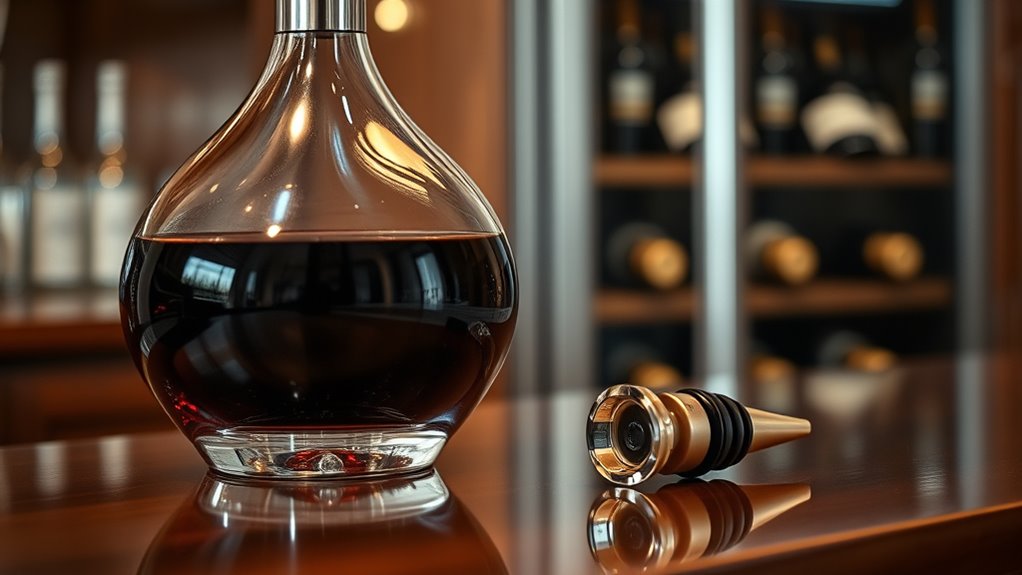

To demonstrate proper hosting etiquette for leftover wine, guarantee you store it correctly by sealing the bottle tightly, keeping it upright in a cool, dark place. Use appropriate closures like a wine stopper or vacuum pump to slow oxidation. Handle glasses carefully by the stem, and pour at a gentle angle to prevent splashing. Proper storage and handling help preserve the wine’s freshness and flavor, showing your guests your respect and attention to detail. Keep going to discover more tips for perfecting your wine service.
Key Takeaways
- Use appropriate wine stoppers or vacuum pumps to preserve freshness after serving.
- Store leftover wine upright in a cool, dark place to reduce oxidation.
- Handle glassware by the stem to maintain cleanliness and enhance presentation.
- Clean and dry glasses thoroughly to prevent residue and improve the guest experience.
- Demonstrate attentiveness by properly storing leftovers and handling glasses with care.
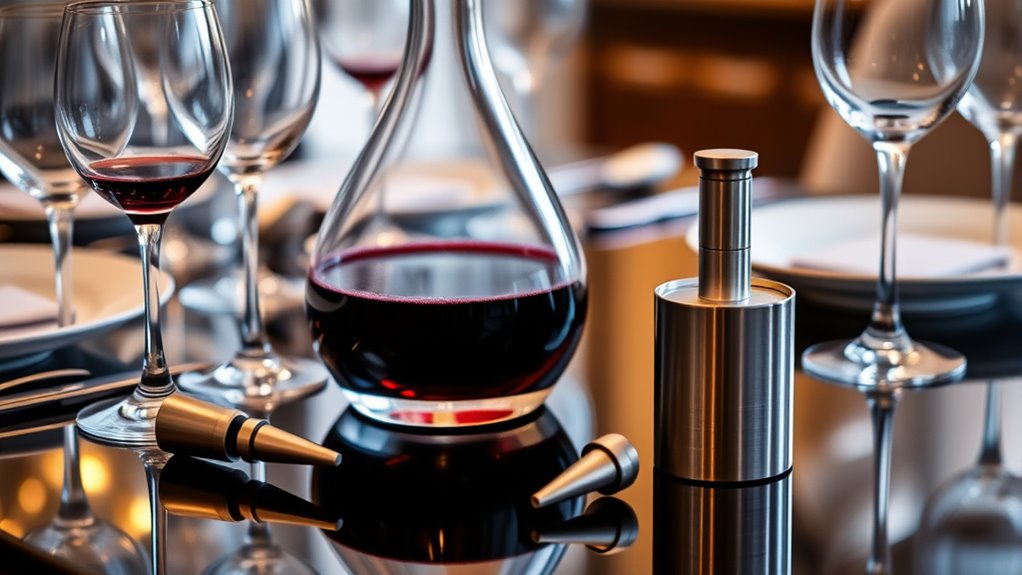
Ever wondered what it takes to be a gracious host? One of the key aspects is knowing how to properly handle leftover wine and guarantee it stays fresh for later enjoyment. When serving wine, your first priority should be to preserve its quality, which involves understanding the basics of wine preservation. Once your guests have sipped their fill, you might find yourself with remaining wine in the bottle. Instead of pouring it down the drain or leaving it open to spoil, you can take simple steps to extend its lifespan. Using a wine stopper or vacuum pump can considerably slow down oxidation, maintaining the wine’s flavors and aromas for days. Keeping the bottle upright minimizes surface exposure to oxygen, further helping to preserve it. Remember, storing leftover wine in a cool, dark place is ideal—avoid areas exposed to heat or sunlight, as these can accelerate spoilage.
Handling glassware correctly is equally important in hosting etiquette. Your guests will notice whether you treat their glasses with care or handle them roughly. Always hold glassware by the stem or base rather than the bowl itself; this prevents fingerprints and reduces the transfer of heat from your hand, which can affect the wine’s temperature. When pouring, do so gently and at an angle to avoid splashing or overfilling. Proper glassware handling not only shows your attentiveness but also preserves the integrity of the wine, ensuring it tastes as intended. When you understand the importance of proper storage, you can better appreciate how temperature and environment influence wine freshness and quality. After your guests leave, clean your glasses thoroughly, using warm water and a gentle detergent, and dry them with a lint-free cloth to prevent water spots. Well-maintained glassware enhances the presentation and experience of wine, elevating your hosting game.
Incorporating good wine preservation habits and careful glassware handling demonstrates your respect for your guests and their experience. These small details contribute notably to the overall ambiance and impression you leave. When serving, store leftover wine properly with suitable closures, and never underestimate the power of proper glass handling in maintaining the aesthetics and quality of your wine service. Being attentive to these details shows you’ve put thought into your hosting, making everyone feel welcomed and valued. Whether it’s a casual gathering or an elegant dinner, mastering wine preservation and glassware handling ensures you’re always ready to impress, even with leftovers. Ultimately, these practices reflect your knowledge and dedication, turning a simple gathering into a memorable occasion.
Frequently Asked Questions
How Long Can I Keep Leftover Wine Unopened?
You can usually keep unopened wine for 1-3 years, but it depends on the type. To preserve it longer, store it in a cool, dark place away from sunlight. When you open wine, aeration helps bring out flavors, so decanting can enhance your experience. Always clean your glassware thoroughly before pouring, and if you notice any change in aroma or taste, it’s best to discard it to maintain quality.
What’s the Best Way to Re-Cork Opened Wine?
Think of your wine like a delicate garden; it needs the right cover to stay fresh. To re-cork opened wine, gently insert the cork back in with the side that touched the wine, using cork preservation techniques to keep it airtight. If the cork is damaged, consider replacing it with a wine stopper or vacuum pump. This keeps oxygen out, preserving the wine’s flavor and aroma for longer.
Can Leftover Wine Be Frozen for Later Use?
Yes, you can freeze leftover wine for later use. For wine preservation, use freezing techniques like pouring the wine into ice cube trays, then transferring the frozen cubes to a sealed bag or container. This method helps you preserve the wine’s flavor for cooking or small drinks later. Just remember, freezing alters the texture, so it’s best for recipes or adding to sauces rather than drinking straight.
Are There Special Storage Tips for Sparkling Wine?
Did you know sparkling wine loses its bubbles within a day if not stored properly? To keep it fizzy, make sure you use a sparkling wine stopper and store it upright. For cork preservation, avoid laying the bottle on its side, as it can dry out the cork and reduce pressure. Proper sparkling wine storage helps maintain its carbonation and flavor, making your next sip just as delightful as the first.
How Do I Know if Leftover Wine Has Spoiled?
You can tell if leftover wine has spoiled by checking for wine oxidation and spoilage indicators. If the wine smells sour, vinegary, or has a dull, flat taste, it’s a sign it’s gone bad. Look for a change in color or cloudy appearance. If you notice bubbles or fizz in a still wine, it might be spoiled or contaminated. Trust your senses—if it smells or tastes off, it’s best to discard it.
Conclusion
Remember, handling leftover wine thoughtfully shows your guests you’re considerate. Proper serving and storage prevent waste and keep your wine fresh for later enjoyment. Did you know that nearly 40% of opened wine goes to waste each year? By following these etiquette tips, you can reduce that waste and make your hosting more sustainable. So, next time, store your wine properly or share it with friends—your guests will appreciate your effort and your wine’s quality will stay intact.