When you marinate meat, flavors infuse through molecular diffusion as the marinade seeps into the tissue over time, especially at controlled temperatures. Enzymes from fruits like pineapple or kiwi break down proteins, tenderizing the meat. Acidic ingredients denature proteins, helping flavors penetrate more deeply. By understanding these scientific processes, you can enhance tenderness and flavor even before your first bite. If you want to master these techniques, keep exploring how science transforms marinating into an art.

Get kitchen staples and gadgets delivered free with Prime
- Fast, free delivery on millions of items
- Prime Video, Amazon Music and more included
- Member-only deals all year
Key Takeaways
- Marinades infuse flavor through molecular diffusion, where liquids penetrate meat tissue over time.
- Enzymes like bromelain and papain break down proteins, enhancing meat tenderness.
- Temperature controls enzymatic activity and molecular movement, optimizing flavor infusion and texture.
- Acidic ingredients denature proteins, making them more receptive to flavor and tenderization.
- Proper marinating science balances time, temperature, and ingredients for flavorful, tender meat.
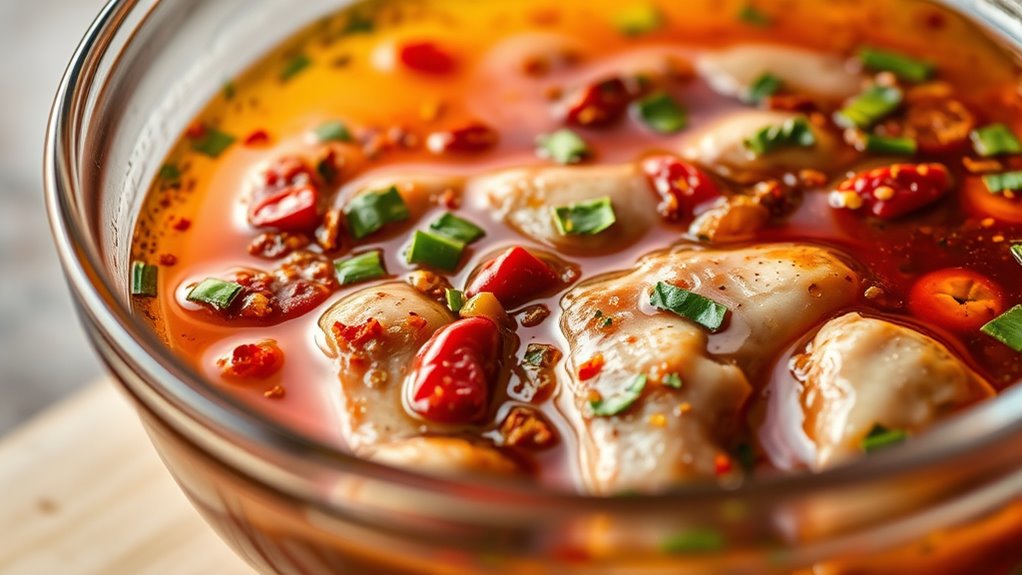
Marinades are more than just flavorful liquids; they rely on scientific principles to enhance your dishes. When you soak meat in a marinade, you’re not just adding surface flavor—you’re initiating processes that allow the marinade to penetrate deeper into the meat. This molecular penetration occurs as the liquid interacts with the muscle fibers, gradually diffusing through the tissue. The effectiveness depends on factors like time, temperature, and the composition of the marinade itself. As the liquid seeps in, it can alter the texture and flavor profile of the meat, making each bite more flavorful and tender.
Marinades deepen flavor and tenderize by molecularly interacting with muscle fibers over time.
A key component of this process involves enzymatic reactions that happen when certain ingredients are present in your marinade. For example, fruits like pineapple, papaya, or kiwi contain enzymes—bromelain, papain, and actinidin, respectively—that break down proteins in the meat. These enzymatic reactions essentially tenderize the meat by cleaving the complex protein structures into smaller, softer components. When you marinate with these ingredients, you activate these natural enzymes, which accelerate the breakdown of tough muscle fibers, resulting in a more tender final product. The duration of marination is critical here; too long, and the meat can become mushy because the enzymes continue breaking down proteins past the ideal point.
Temperature also plays a crucial role in these processes. Marinating in the refrigerator slows down enzymatic activity, giving you more control over the tenderization process. If you leave meat at room temperature, enzymatic reactions happen faster, but this can also increase the risk of bacterial growth. Consequently, keeping your marinating meat cold ensures safety while still allowing the enzymatic reactions to occur efficiently.
The pH level of your marinade influences molecular penetration and enzymatic activity as well. Acidic marinades, containing vinegar or citrus juice, help break down muscle fibers on a molecular level. The acids denature proteins, making it easier for the marinade to seep into the meat. This also enhances the enzymatic reactions by making proteins more accessible to enzymes like bromelain or papain. As a result, the combination of acidity and enzymes can markedly improve tenderness and flavor infusion, especially when timed correctly.
In essence, understanding these scientific principles empowers you to craft marinades that do more than just flavor meat—they transform its texture and juiciness through controlled molecular interactions and enzymatic reactions. By paying attention to ingredients, timing, and temperature, you harness the power of science to elevate your cooking from ordinary to extraordinary.
Frequently Asked Questions
How Long Should I Marinate Different Types of Meat?
You should marinate different types of meat based on their thickness and cut. For chicken breasts, aim for 30 minutes to 2 hours to maximize meat absorption without breaking down the fibers. Beef steaks can marinate for 1 to 24 hours, depending on desired tenderness, while tougher cuts like brisket benefit from 12 to 24 hours. Keep marination timing in mind to enhance flavor infusion without compromising texture.
Can Marinades Tenderize Tough Cuts Effectively?
Yes, marinades can tenderize tough cuts effectively by breaking down meat fiber. The acidity or enzymes in your marinade promote meat fiber breakdown, making the meat softer. To maximize marinade penetration depth, guarantee you pierce or score the meat and marinate for the right amount of time. This allows flavors to seep in and improves tenderness, especially for tougher cuts like brisket or flank steak.
Are There Any Marinades That Add Extra Nutrients?
Did you know that some marinades can boost your meal’s nutrition? Yes, certain nutrient-rich ingredients like herbs, garlic, and citrus add extra vitamins and minerals, while antioxidant-packed marinades help combat free radicals. By choosing these options, you enhance flavor and health benefits. So, next time you marinate, pick ingredients that not only taste great but also contribute valuable nutrients to your dish.
How Does Acidity in Marinades Affect Meat Texture?
Acidity in marinades affects meat texture by breaking down proteins through acidic enzymes, which tenderizes the meat. When you use an acidic marinade, it lowers the meat pH balance, making it more tender and juicy. However, if you marinate too long, the acidity can over-soften the meat, resulting in a mushy texture. Keep the marinating time moderate to achieve ideal tenderness without compromising quality.
Can I Reuse Marinade Safely After Use?
Reusing marinade is like recycling a sponge—potentially risky. You shouldn’t reuse marinade after it’s touched raw meat because of marinade contamination, which can harbor bacteria. If you want to reuse it safely, boil it thoroughly for at least five minutes to kill any bacteria. This step ensures reusing marinade is safe and prevents foodborne illnesses, making your cooking both delicious and safe.
Conclusion
As you watch the marinade gently seep into the meat, it’s like witnessing a secret dance of science and flavor, perfectly timed and naturally occurring. Just as a drop of marinade finds its way into every crevice, your understanding deepens, revealing how science transforms simple ingredients into a delicious masterpiece. So next time you marinade, remember—you’re orchestrating a tiny miracle, where flavor and science meet in perfect harmony, turning raw meat into a savory work of art.
Halloween Picks
halloween
As an affiliate, we earn on qualifying purchases.