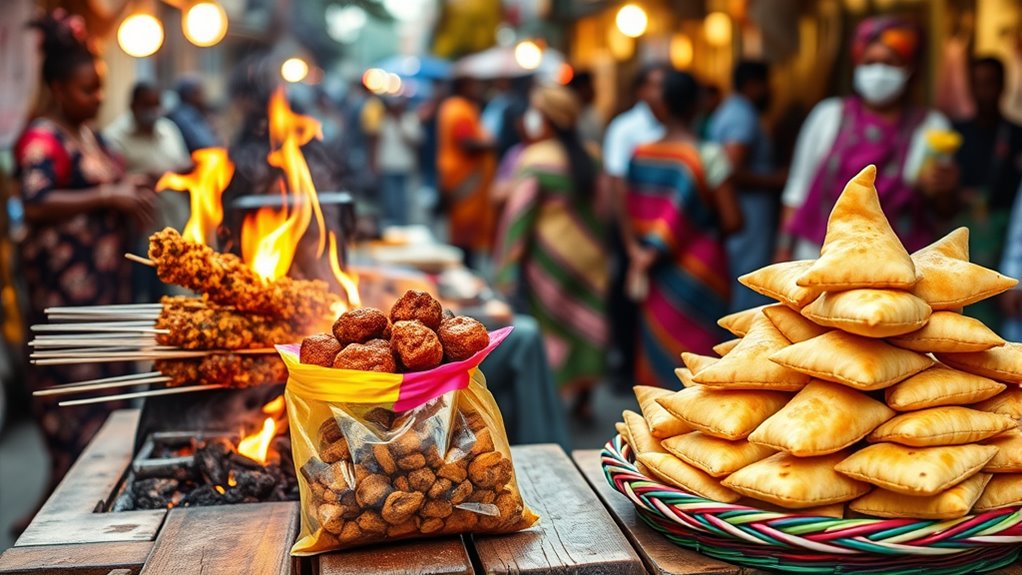

Begin a street food tour through Africa and taste vibrant flavors like suya, bunny chow, and samosas. You’ll experience the bold, spicy skewers of West Africa, the multicultural curry-filled bread from Durban, and the crispy pastries enjoyed across the continent. These dishes reveal local traditions, history, and community bonds. Keep exploring to discover the rich stories and cultural significance behind each tasty bite.
Key Takeaways
- Experience diverse African street foods like suya, bunny chow, and samosas, each rich in cultural history and regional flavors.
- Suya, from Nigeria, features spicy grilled meats seasoned with peanuts and chili, symbolizing community bonding and bold flavors.
- Bunny chow, originating in Durban’s Indian community, is a spicy curry served inside hollowed bread, reflecting multicultural influences.
- Samosas, adopted across Africa, are triangular pastries filled with vegetables or meat, showcasing regional ingredient adaptations.
- Street food tours offer immersive insights into local traditions, social practices, and the vibrant culinary diversity across Africa.
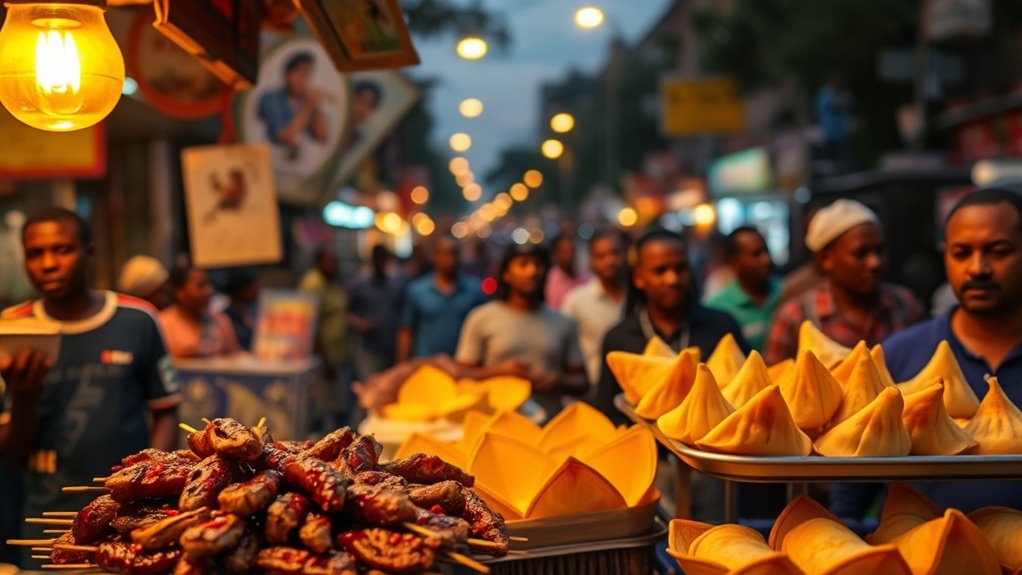
Beginning a street food tour is one of the most exciting ways to experience a city’s unique flavors and vibrant culture. When you immerse yourself in African street foods like suya, bunny chow, and samosas, you’re not just tasting delicious dishes—you’re immersing yourself in the rich cultural significance behind each bite. These foods reflect regional variations that tell stories of history, migration, and local traditions, offering you a deeper connection with the places you visit. As you stroll through bustling markets or side streets, you’ll notice how each dish embodies its community’s identity, making your culinary journey both flavorful and meaningful.
Suya, a popular West African street snack, is a perfect example of this. Originating from Nigeria and northern Nigeria in particular, suya is skewered, spicy grilled meat—usually beef, chicken, or ram, seasoned with a blend of peanuts, chili pepper, ginger, and other local spices. The cultural significance of suya goes beyond its savory taste; it’s a social dish often shared among friends or during community gatherings, symbolizing hospitality and unity. Regional variations exist even within Nigeria, with some areas adding more chili or incorporating local herbs to create distinct flavors. As you taste suya, you’re experiencing a culinary tradition that has been passed down through generations, reflecting the region’s love for bold, fiery flavors. Additionally, understanding the cultural and emotional significance of these dishes enhances appreciation for their role in community bonding and cultural expression.
Bunny chow, on the other hand, hails from South Africa, specifically Durban. It’s a hearty dish consisting of a hollowed-out loaf of bread filled with spicy curry, usually made with chicken, beef, or vegetables. The name “bunny chow” might sound playful, but it carries cultural weight, representing the city’s diverse, multicultural roots. Originating from the Indian community in Durban, bunny chow showcases how regional variations developed through migration and urban influence. Some versions include extra toppings like chutney or pickles, emphasizing regional tastes. When you eat bunny chow, you’re engaging with a dish that’s deeply intertwined with South Africa’s history of migration, labor, and community resilience.
Samosas, though originally from the Indian subcontinent, have become a staple across many African countries, especially in East and North Africa. These triangular pastries filled with spiced vegetables, meat, or lentils are a street food favorite. Their popularity highlights regional variations, with different fillings and seasoning profiles depending on local tastes. In Kenya or Egypt, you might find samosas spiced with local herbs or served alongside regional dips, showcasing how a simple recipe adapts to local ingredients and cultural preferences. Eating samosas offers a glimpse into how culinary traditions evolve and merge across continents, making them a symbol of Africa’s diverse culinary landscape.
Top picks for "street food tour"
As an affiliate, we earn on qualifying purchases.
Frequently Asked Questions
What Are the Origins of Suya and Its Cultural Significance?
You might find that suya’s origins trace back to Nigeria, where historical influences from various West African cultures shaped its spicy, grilled meat tradition. Its cultural symbolism goes beyond flavor, representing community gatherings and shared identity. When you enjoy suya, you’re experiencing a dish rooted in history and cultural pride, highlighting its significance in African social life and culinary heritage.
How Is Bunny Chow Traditionally Prepared and Served?
Bunny chow, like a hearty story in a bread bowl, is traditionally prepared with a hollowed-out loaf of white bread filled with flavorful curry. Its history traces back to Durban, South Africa, where it’s a beloved fast food. You’ll find it served as a street snack, with the bread acting as both container and utensil. To enjoy it, simply scoop up the spicy curry, savoring each bite of cultural heritage.
What Are Common Variations of Samosas Across Africa?
You’ll find samosas across Africa with diverse filling variations and regional pastry styles. In East Africa, they often feature spiced beef or lentils, while West African versions might include vegetables or fish. North African samosas are typically baked with a crispy, flaky pastry, resembling Moroccan pastilla. Each region adapts the pastry and filling to local flavors, making samosas a versatile and beloved street food across the continent.
Are There Specific Ingredients Unique to African Street Foods?
You’ll find African street foods feature unique spices, traditional ingredients, and vibrant flavors. These dishes often incorporate ingredients like millet, yams, and cassava alongside spices such as berbere, harissa, or peri-peri. The use of these traditional ingredients and unique spices creates bold, memorable tastes that reflect Africa’s rich culinary heritage. Embrace these flavors to experience the authentic essence of African street cuisine, where each bite tells a story.
How Do Street Food Vendors Ensure Food Safety and Hygiene?
You can trust street food vendors to guarantee food safety by strictly following food handling protocols and maintaining high vendor hygiene practices. They often wear clean gloves, use sanitized utensils, and keep ingredients at proper temperatures. Vendors also regularly wash their hands and keep their stall surfaces clean. These steps help prevent contamination, ensuring that the delicious African street foods you enjoy are safe and hygienic.
Conclusion
As you savor these vibrant African street foods, imagine yourself strolling through a bustling market where flavors dance like colorful beads on a string. Each bite tells a story, a tapestry woven with spices and tradition, inviting you to taste the heartbeat of the continent. Let these dishes be your passport to adventure, turning every street corner into a feast for your senses. Embrace the journey, and let your palate wander freely through Africa’s rich culinary tapestry.