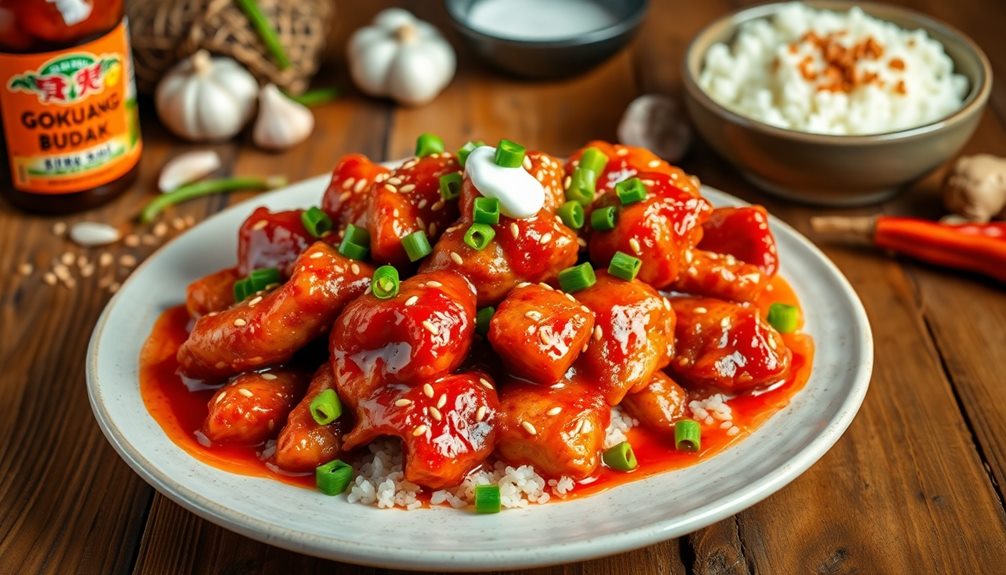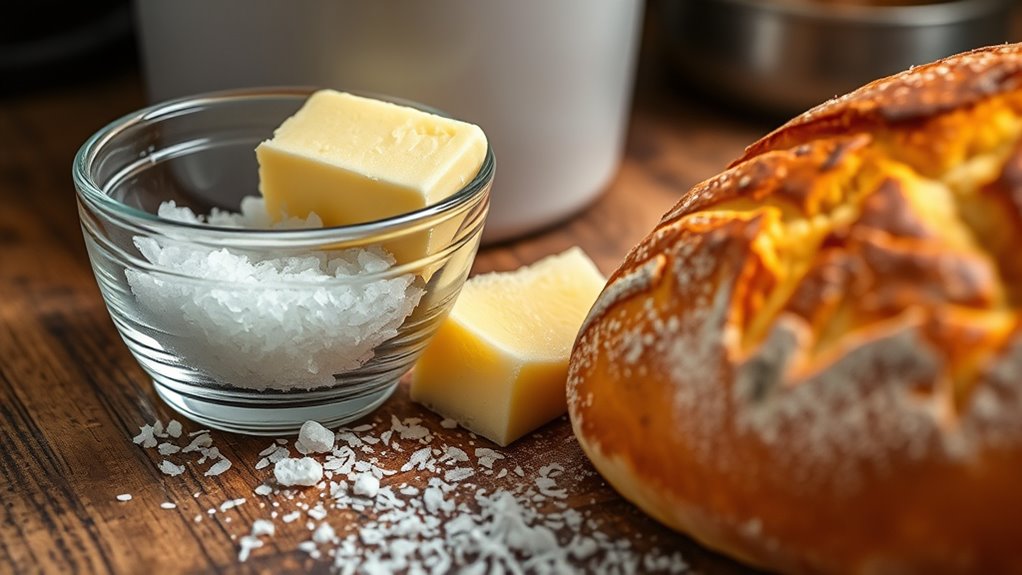

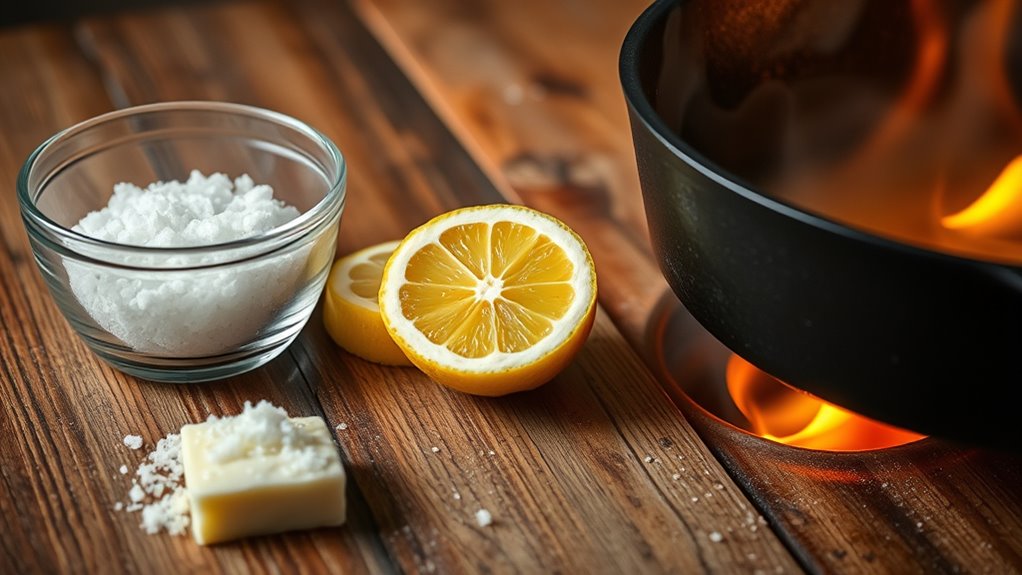
In baking, salt enhances flavor and strengthens gluten, helping dough develop properly, while fat adds moisture, tenderness, and richness. Acid balances pH, tenderizes baked goods, and can improve leavening. Heat is the key driver of chemical reactions, causing dough to rise, proteins to set, and flavors to develop fully. Understanding how these elements interact guarantees your baked goods turn out perfect every time. Keep exploring to discover how mastering these components can elevate your baking skills.
Key Takeaways
- Salt enhances flavor, regulates yeast activity, and strengthens gluten structure for better dough elasticity.
- Fat tenderizes baked goods, adds moisture, and creates a desirable crumb and crust texture.
- Acid balances pH, improves leavening, and can strengthen gluten or tenderize the crumb.
- Heat causes dough expansion, activates enzymes, and sets the structure during baking.
- Proper interaction of salt, fat, acid, and heat ensures optimal flavor, texture, and rise in baked products.
Ever wondered what makes your baked goods rise perfectly or turn out just right? It all comes down to understanding the science behind baking, especially how ingredients like yeast and gluten work together. When you start a bread dough, yeast activation is the first essential step. Yeast, a tiny living organism, feeds on sugars in the dough, producing carbon dioxide and alcohol. This carbon dioxide creates the bubbles that make your bread rise, giving it that light, airy texture. To guarantee proper yeast activation, you need the right conditions—warmth, moisture, and time. If it’s too cold, the yeast becomes sluggish, and your dough won’t rise well. Too hot, and you risk killing the yeast altogether. Once activated, the yeast begins to produce gas, which stretches and expands the gluten network in your dough.
Gluten development is another indispensable part of baking science. Gluten is a protein formed when you mix flour with water, creating a stretchy, elastic matrix. As you knead your dough, gluten strands align and strengthen, giving your baked goods structure and chewiness. Proper gluten development is essential for trapping the carbon dioxide produced by yeast, ensuring your bread or rolls rise uniformly. Over-kneading, however, can make the gluten too tight, resulting in a dense texture, while under-kneading leaves the dough weak and unable to hold the gas bubbles effectively. Achieving the right balance in gluten development ensures your baked item isn’t just fluffy but also has a satisfying chew and good structure.
Temperature and timing play critical roles in these processes. Warm environments speed up yeast activation and gluten formation, but too much heat can cause overproofing or kill the yeast prematurely. Conversely, cooler conditions slow everything down, requiring longer fermentation times. As you work through your recipe, paying attention to these factors helps you control the rise and texture. If you notice your dough isn’t rising well, it might be a sign that your yeast wasn’t properly activated or that gluten development needs more attention. Properly managing these elements leads to consistently excellent results, making each bake a testament to your understanding of baking science. Additionally, understanding catering and delivery trends can help you plan and serve baked goods more effectively for commercial purposes. So, next time you’re mixing dough, remember that a little patience with yeast activation and mindful gluten development can elevate your baking from good to outstanding.
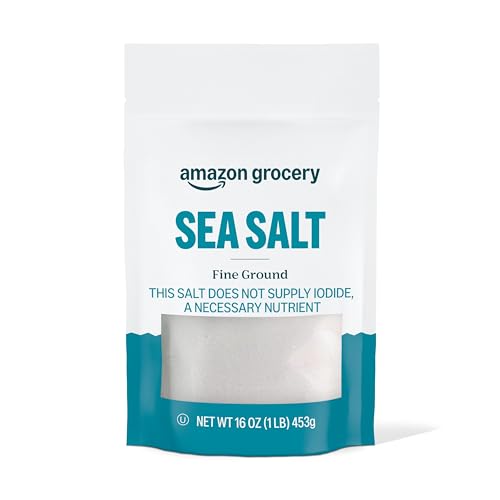
Amazon Grocery, Sea Salt, Fine Ground, 16 Oz
One 16 ounce resealable bag of Fine Ground Sea Salt
As an affiliate, we earn on qualifying purchases.
As an affiliate, we earn on qualifying purchases.
Frequently Asked Questions
How Does Altitude Affect Baking With Salt, Fat, Acid, and Heat?
At high altitudes, you need to make adjustments with salt, fat, acid, and heat to guarantee your baked goods turn out right. You should increase baking vessel size or choose lighter pans to prevent overbaking, and tweak ingredient ratios to compensate for faster rising or drying. Adjusting your recipes for high altitude involves reducing leavening agents and adding moisture, so your baked treats stay balanced and delicious despite the altitude challenges.
Can Altering Salt Levels Change the Texture of Baked Goods?
Yes, altering salt levels can change the texture of baked goods. Salt influences gluten development and moisture retention, leading to texture modification. If you increase salt, you might notice a firmer, denser crumb, while reducing it can create a softer, more tender product. Keep in mind that balancing salt is vital, as it also affects flavor. Adjust gradually and observe how the texture responds to find your ideal outcome.
What Are Common Mistakes When Balancing Acid and Alkaline in Baking?
Balancing acid and alkaline can feel like walking a tightrope, and a common mistake is pH miscalculations that throw everything off. You might also fall into the trap of incorrect titration, which skews your acidity levels. Always measure carefully and double-check your pH levels. Avoid guessing, because even small errors can turn your perfect bake into a soggy mess or a flat disaster. Precision is key!
How Do Different Types of Fats Influence Baking Outcomes?
Different fats markedly influence baking outcomes by affecting textures and flavor. For example, butter provides richness and contributes to browning, while oils create tender, moist baked goods. When substituting fats, consider their impact on texture and flavor; using applesauce or yogurt can reduce fat but alter consistency. Choose the right fat type based on your desired baking texture and flavor impact, ensuring your baked goods come out just right.
What Role Does Temperature Play in the Chemical Reactions During Baking?
Did you know that baking at the right temperature can make your bread rise 30% better? Temperature influences chemical reactions like thermal expansion and caramelization. When you heat your ingredients, gases expand, helping baked goods rise and develop texture. Proper heat also triggers caramelization, giving your treats that rich, golden color and complex flavor. So, controlling temperature ensures ideal reactions, resulting in delicious, perfectly baked goodies every time.

Low Carb High Fat Baking: Over 40 Gluten- and Sugar-Free Recipes for Pastries, Desserts, and Delicious Treats
As an affiliate, we earn on qualifying purchases.
As an affiliate, we earn on qualifying purchases.
Conclusion
Understanding how salt, fat, acid, and heat work together transforms your baking. Did you know that adding just a pinch of salt can enhance sweetness by up to 10%? By mastering these elements, you’ll craft more flavorful, perfectly textured baked goods every time. So, next time you bake, remember that a little science goes a long way. With this knowledge, you’ll boost your baking skills and impress everyone with your delicious creations.

GranAroma Citric Acid, Food Preservative, Baking & Cleaning (7.3 Ounce)
GranAroma Citric Acid
As an affiliate, we earn on qualifying purchases.
As an affiliate, we earn on qualifying purchases.

AcuRite 00620A2 Stainless Steel Oven Thermometer (150°F to 600°F)
Oven and grill safe for leave-in use while cooking
As an affiliate, we earn on qualifying purchases.
As an affiliate, we earn on qualifying purchases.