
Emulsions like mayonnaise and hollandaise combine oil and water-based ingredients into a stable mixture by using natural or added emulsifiers such as egg yolks. You need to add oil gradually while whisking vigorously to allow tiny droplets to be coated and stabilized. Temperature and technique are key—keeping ingredients at room temperature and blending slowly helps form a smooth, cohesive sauce. Continue exploring, and you’ll uncover the secrets to perfect emulsions every time.

Get kitchen staples and gadgets delivered free with Prime
- Fast, free delivery on millions of items
- Prime Video, Amazon Music and more included
- Member-only deals all year
Key Takeaways
- Mayonnaise and hollandaise are stable emulsions formed by mixing oil with water-based ingredients like vinegar or lemon juice.
- Egg yolks act as natural emulsifiers, helping oil droplets stay dispersed evenly in the water phase.
- Proper technique involves gradually adding oil while continuously whisking, allowing emulsifiers to coat droplets and prevent separation.
- Temperature control is crucial; ingredients should be at room temperature to ensure proteins don’t coagulate and break the emulsion.
- Rushing or adding oil too quickly causes instability, leading to a thin or broken sauce instead of a smooth, cohesive emulsion.
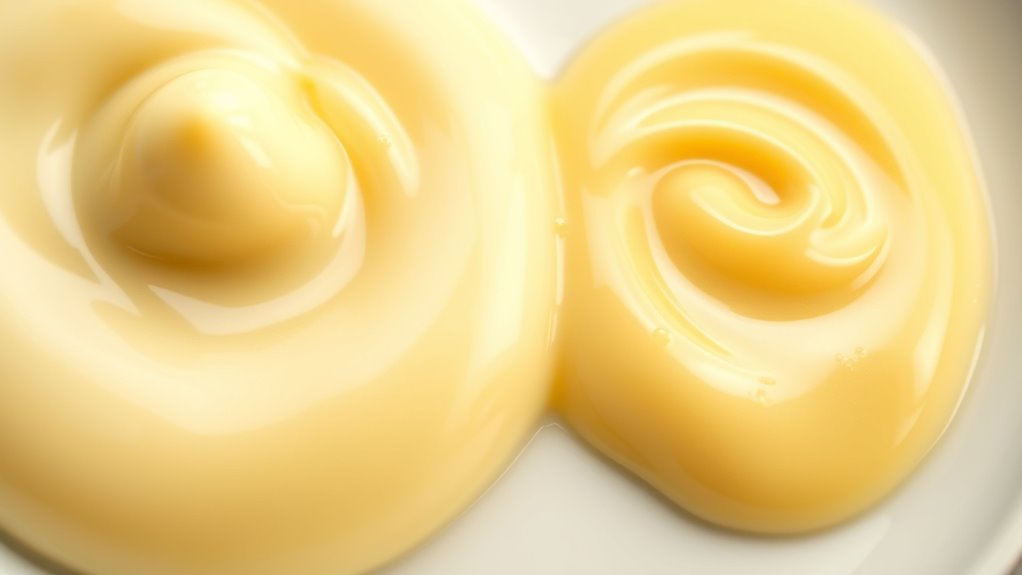
Emulsions are mixtures where two immiscible liquids, like oil and water, are combined so that they stay evenly dispersed. When making sauces such as mayonnaise or hollandaise, understanding what influences an emulsion’s stability is key. Stability factors include the type of emulsifier used, the temperature, the ratio of ingredients, and how you incorporate the liquids. For example, egg yolks act as natural emulsifiers in both mayonnaise and hollandaise, helping to keep the oil and water phases from separating. If you neglect these factors, your emulsion can quickly break, resulting in a runny or separated sauce.
One common mistake is adding the oil too quickly or all at once. When you pour oil in a slow, steady stream while whisking vigorously, you give the emulsifier time to coat the oil droplets, creating a stable mixture. Pouring too fast overwhelms the emulsifier, leading to separation. Another mistake is not using fresh eggs or improper temperature control. Cold ingredients can cause the emulsion to seize, while overly warm ingredients may cause the sauce to break or become greasy. Additionally, not whisking enough or applying uneven heat can destabilize the mixture.
You also need to be mindful of the order in which you add ingredients. Starting with a properly mixed base, such as lemon juice or vinegar, helps create a good foundation. Then, slowly incorporate the oil while continuously whisking. This gradual process allows the emulsifier in the yolks to effectively surround the oil droplets, keeping them suspended. If you rush this step, the emulsion might not form properly, resulting in a thin or separated sauce.
Temperature plays a vital role in stability. Too hot, and the proteins in the eggs can coagulate too quickly, causing the emulsion to break. Too cold, and the mixture may not emulsify well. To avoid this, keep ingredients at room temperature and add oil gradually. Also, using the right equipment matters; a whisk provides better control than a spoon, and a double boiler can help moderate heat when needed. Moreover, understanding the emulsification process allows you to troubleshoot and achieve perfect sauces every time.
As an affiliate, we earn on qualifying purchases.
Frequently Asked Questions
Can Emulsions Be Made Using Plant-Based Ingredients?
Yes, you can make emulsions using plant-based ingredients. By using plant-based alternatives like aquafaba, silken tofu, or nut butters, you can achieve creamy textures. Apply emulsification techniques such as slow oil incorporation while whisking or blending to create stable plant-based emulsions. These methods work well for vegan mayonnaise, dressings, or sauces, allowing you to enjoy delicious, dairy-free options without sacrificing flavor or consistency.
How Long Can an Emulsion Be Stored Safely?
You can enjoy your emulsion for about 3 to 4 days if stored properly in the fridge, helping you savor its freshness longer. To prevent spoilage, keep it tightly covered and at a consistent cold temperature. While the storage lifespan varies, always trust your senses—discard it if it smells or looks off. Proper storage plays a key role in spoilage prevention, ensuring your delicious creation stays safe to enjoy.
What Are Common Mistakes to Avoid When Making Emulsions?
When making emulsions, avoid common mistakes like improper whisking, which prevents the mixture from coming together smoothly. Be careful not to add oil too quickly, as this can cause oil separation, making your emulsion break. Maintain steady, vigorous whisking to help the ingredients blend properly. Also, guarantee the liquids are at the right temperature; too cold or hot can hinder emulsification. These steps help you achieve a stable, creamy result.
Do All Emulsions Require Constant Mixing?
Did you know that proper mixing techniques can double the stability of an emulsion? Not all emulsions require constant mixing, but maintaining consistent agitation helps prevent separation. Stability factors like temperature, ingredient ratios, and acid levels influence whether you need continuous stirring. For delicate emulsions, gentle, steady mixing is best, while thicker ones may need more frequent agitation to stay unified. Keep an eye on these factors for perfect results every time.
How Do Temperature Changes Affect Emulsion Stability?
Temperature changes can markedly impact emulsion stability. Thermal fluctuations cause viscosity impact, making the mixture either too thin or too thick, which can lead to separation. When it gets too hot, fats may melt or weaken the emulsion, while cooler temperatures help maintain stability. To keep your emulsion stable, avoid abrupt temperature shifts and store it at a consistent, moderate temperature, ensuring the viscosity remains ideal for a smooth, cohesive mixture.
Conclusion
Now that you understand how emulsions like mayonnaise and hollandaise work, you can appreciate the science behind these delicious sauces. Did you know that mayonnaise contains about 70% oil, yet stays stable thanks to the egg yolk’s lecithin? Next time you make or enjoy these condiments, you’ll see it’s not just about flavor—it’s a fascinating blend of chemistry and culinary art that transforms simple ingredients into something extraordinary.
Halloween Picks
halloween
As an affiliate, we earn on qualifying purchases.