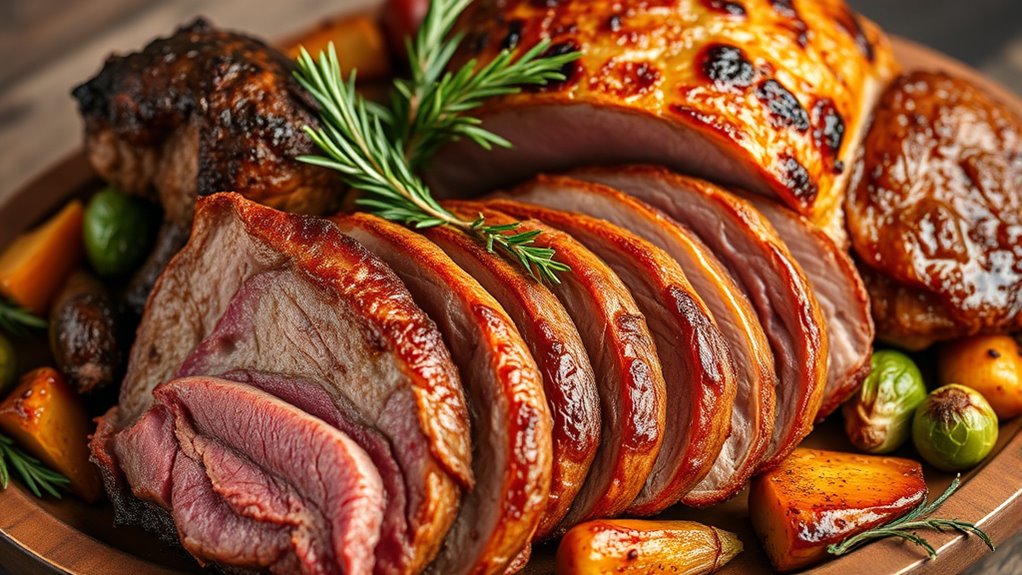
Choosing between beef, ham, or lamb for your holiday roast depends on your flavor preferences and presentation style. Beef offers a rich, hearty taste with versatile seasoning options. Ham gives you a sweet, savory flavor with easy glazing, perfect for a festive look. Lamb provides a unique, slightly gamey profile ideal for special occasions. Each core choice can be enhanced with proper seasoning, roasting, and carving techniques—if you want to master all the details, keep exploring below.
Key Takeaways
- Choose the meat based on flavor preferences and desired level of tenderness for a memorable holiday feast.
- Proper seasoning with herbs and spices enhances the natural flavors of beef, ham, or lamb.
- Use a meat thermometer to ensure perfect doneness and rest the roast for optimal tenderness.
- Carve against the grain for beef or follow bone-in carving tips for ham and lamb for cleaner slices.
- Present the roast attractively to elevate your holiday table and create a lasting impression.

Preparing a perfect holiday roast can set the tone for a memorable celebration, and with a little planning, it’s easier than you might think. Whether you’re choosing beef, ham, or lamb, the key to impressing your guests starts with how you season and carve your roast. Seasoning tips are essential because they enhance the natural flavors and create a mouthwatering crust. A simple yet effective approach involves rubbing the meat with salt, pepper, garlic, and herbs like rosemary or thyme. For beef, consider adding a touch of paprika or mustard powder to give it a deeper flavor profile, while ham benefits from a glaze of honey or brown sugar combined with Dijon mustard for a sweet-savory contrast. Lamb pairs beautifully with mint or rosemary, so incorporating those into your seasoning mix will elevate its aroma and taste.
Once seasoned, the roasting process itself is pivotal for a perfectly cooked holiday roast. Use a meat thermometer to guarantee your meat reaches the ideal internal temperature—around 125°F for rare, 135°F for medium-rare, or 145°F for medium, depending on your preference. Resting the meat after roasting allows the juices to redistribute, resulting in a tender, flavorful piece of meat. But before serving, mastering carving techniques will make your presentation elegant and guarantee each slice is just right. For beef, carve against the grain to maximize tenderness, using a sharp carving knife to make clean, even slices. For ham, follow the grain and carve along the bone if it’s bone-in, which makes slicing easier and neater. Lamb should be sliced across the grain as well, and if it’s a roast leg, hold it steady with a fork and slice thinly for supreme tenderness.
Pay attention to your carving posture—hold the meat firmly, use a smooth, steady motion, and avoid sawing back and forth, which can tear the meat apart. Proper carving not only improves presentation but also enhances each bite’s flavor and texture. Including protective styling techniques can help keep your roast looking its best throughout your celebration. Remember, the first few slices set the stage for how your guests will enjoy the rest of the meal. With good seasoning tips and refined carving techniques, you’ll serve a roast that’s both visually stunning and delicious. Whether it’s beef, ham, or lamb, a well-prepared roast becomes the centerpiece of your holiday feast, creating lasting memories for everyone gathered around your table.
Frequently Asked Questions
What Wine Pairs Best With Each Type of Holiday Roast?
For beef, opt for bold reds like Cabernet Sauvignon or Malbec to enhance its rich flavors. With ham, go for slightly sweeter wines like Riesling or a light Pinot Noir to balance the saltiness. Lamb pairs beautifully with robust reds such as Syrah or Bordeaux blends, which elevate its gamey taste. These wine pairings help with flavor enhancement, making your holiday feast even more enjoyable.
How Do I Store Leftovers Safely After the Holiday Feast?
You might think leftovers last forever, but proper leftover storage is vital for food safety. To keep them safe, refrigerate leftovers within two hours of the meal, using airtight containers. Label them with the date, and consume within three to four days. For longer storage, freeze leftovers. This ensures your holiday feast remains delicious and safe for future enjoyment.
What Are Some Alternative Cooking Methods for a Tender Roast?
You can try sous vide techniques to cook your roast for ultimate tenderness; it involves vacuum-sealing the meat and simmering it in a water bath at a precise temperature. For flavor, experiment with alternative seasonings like herbs, spices, or marinades. This method guarantees even cooking and juicy results, making your holiday roast a standout. Plus, it’s a great way to customize flavors and achieve perfect tenderness every time.
How Can I Accommodate Guests With Dietary Restrictions?
You can accommodate guests with dietary restrictions by offering gluten-free sides like roasted vegetables or quinoa salads, ensuring they have delicious options. Include vegetarian options such as stuffed peppers or mushroom wellingtons to cater to non-meat eaters. Clearly label dishes, communicate with your guests beforehand, and prepare a variety of flavorful, inclusive dishes so everyone feels welcomed and satisfied during your holiday feast.
What Are Common Mistakes to Avoid When Roasting Beef, Ham, or Lamb?
You want a perfectly roasted centerpiece, so avoid common mistakes like ignoring cooking temperature—overcooking turns juicy meat into a dry, tough bite. Don’t skimp on seasoning; too little leaves blandness, too much overwhelms. Remember, a steady oven heat and proper resting time keep the meat tender and flavorful. Picture a golden crust forming, juices locking in—these tips help you avoid errors and craft a memorable holiday feast.
Conclusion
No matter which roast you choose, your holiday gathering will be unforgettable. Don’t worry if you’re new to roasting—just follow the basics, and your centerpiece will turn out deliciously juicy and tender. Imagine the smile on everyone’s face as they savor your perfectly cooked beef, ham, or lamb. With a little confidence and some simple tips, you’ll create a memorable feast that everyone will rave about. Your holiday table is about to become the highlight of the season!

Chloe is the go-to for classic Southern comfort food. From buttery biscuits to crispy fried chicken, Chloe knows how to whip up soul-warming meals that make you feel at home. She also loves hosting outdoor barbecues and picnics, bringing a touch of Southern hospitality to every dish.