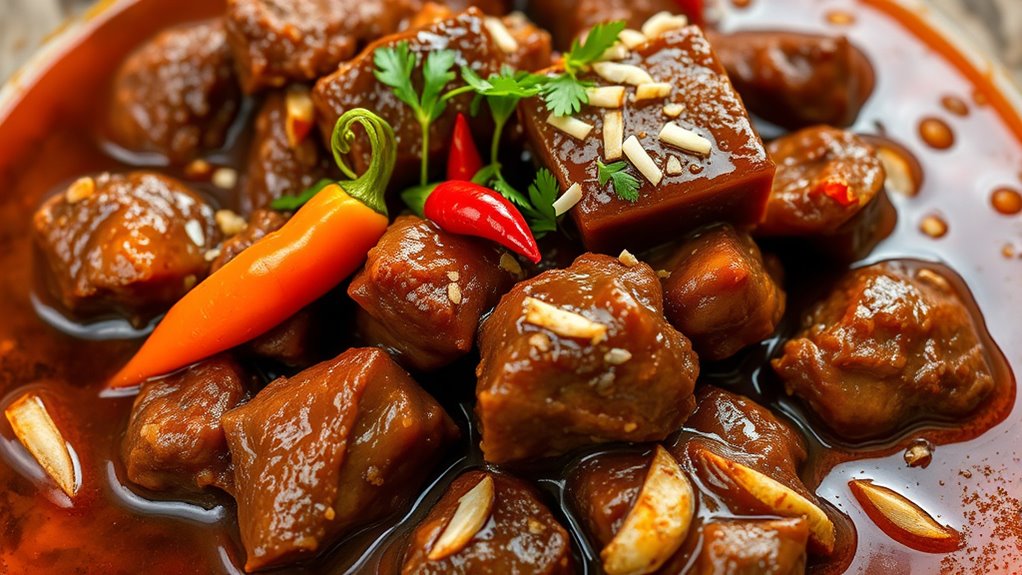

To master Malaysian or Indonesian beef rendang, focus on creating a fragrant spice paste from toasted turmeric, coriander, cumin, lemongrass, and galangal, then slowly simmer beef in coconut milk until tender and the sauce thickens. Patience is key, as slow cooking allows flavors to deepen and develop that rich, caramelized aroma. If you want to learn the secrets to achieving authentic, melt-in-your-mouth rendang, keep exploring further.
Key Takeaways
- The authentic rendang starts with toasted spices blended into a fragrant paste, forming the flavorful base.
- Slow simmering coconut milk with beef allows flavors to meld and meat to become tender over several hours.
- Properly sautéing the spice paste until fragrant is essential for developing deep, layered flavors.
- Maintaining low heat prevents burning, ensuring a rich, caramelized sauce that thickens and clings to the beef.
- The final dish features tender beef in a thick, aromatic sauce, showcasing the importance of patience and precise technique.
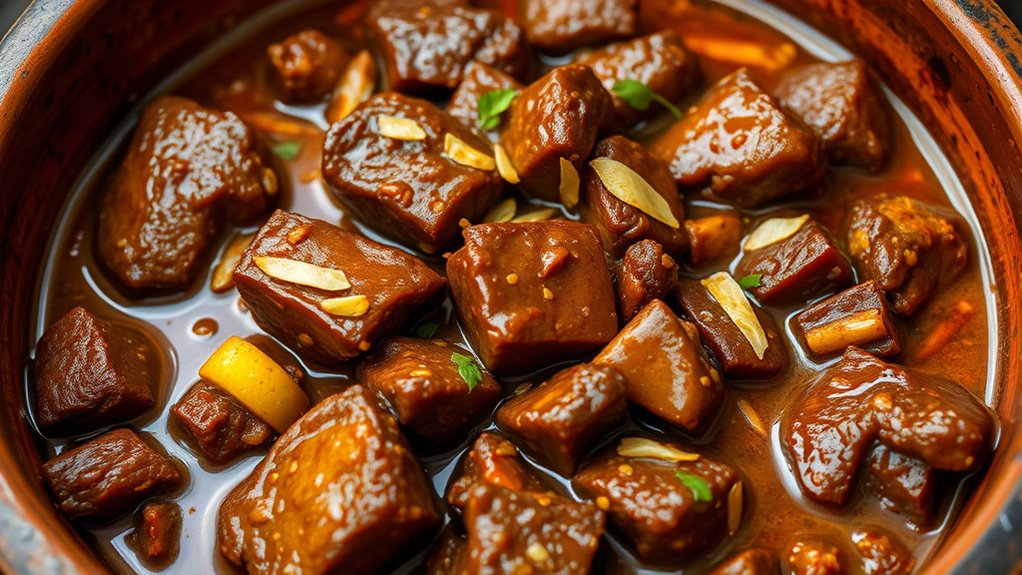
Beef rendang is a rich, flavorful Indonesian dish that transforms simple ingredients into a culinary masterpiece through slow cooking. To achieve its complex taste, you need to pay close attention to the spice blend you use. The traditional rendang spice mix combines ingredients like turmeric, coriander, cumin, lemongrass, galangal, and kaffir lime leaves. These spices are carefully toasted and ground to create a fragrant, aromatic paste that forms the foundation of the dish. When preparing your spice blend, you’ll want to toast the spices first to release their essential oils, enhancing their flavor. This step is essential because it develops the depth and richness that define authentic rendang. Once the spice paste is prepared, the key to mastering rendang lies in your cooking techniques. Slow simmering is indispensable; it allows the flavors to meld and the meat to absorb the spices fully. You start by sautéing the spice paste until fragrant, then add the beef chunks, stirring to coat them evenly. After that, you simmer the mixture on low heat, adding coconut milk gradually and allowing the liquid to reduce slowly. This process takes time—often several hours—but it’s critical for tenderizing the beef and intensifying the dish’s flavors. Patience is your best friend here, as rushing the process can result in a watery sauce and less developed taste. During simmering, you’ll notice the sauce thickening and clinging to the meat, which is a sign that the flavors are concentrating. You should also keep an eye on the heat; too high, and the spices may burn, turning bitter, while too low, and the cooking will take forever. The technique of slow cooking isn’t just about tender meat; it’s about extracting every ounce of flavor from the spices and coconut milk, creating a rich, almost caramelized sauce. As you cook, stir occasionally to prevent sticking and ensure even cooking. The end result is a dish with tender beef enveloped in a thick, aromatic sauce that has deep, layered flavors. This meticulous process highlights the importance of your cooking techniques and spice blend, which combined, elevate beef rendang from simple comfort food to a true culinary art. With patience and attention to detail, you’ll enjoy a dish that’s worth every hour of slow cooking, offering a taste of Indonesia’s rich culinary tradition in every bite. Additionally, understanding the significance of halal practices can ensure the dish aligns with dietary requirements while maintaining its authentic flavor.

bamboe – RENDANG – INDONESIAN DRY CURRY PASTE – INDONESIAN INSTANT SPICES – 6 x 1.2 OZ /36 g – Product of Indonesia by Bamboe
- Authentic Padang Flavor: True Indonesian rendang taste with aromatic ingredients
- Easy Preparation: Sauté, add beef and coconut milk, simmer
- Clear Instructions: Step-by-step guidance for consistent results
As an affiliate, we earn on qualifying purchases.
As an affiliate, we earn on qualifying purchases.
Frequently Asked Questions
What Is the History Behind Beef Rendang?
You might find it fascinating that beef rendang has roots in Indonesian and Malaysian history, where it was traditionally a celebration dish. You’ll see it prepared with rich coconut milk and complex spice blends, which help tenderize the meat and develop its deep flavors. Its slow-cooking method evolved over centuries, allowing flavors to meld perfectly, making rendang a symbol of cultural pride and culinary artistry in the region.
Can Beef Rendang Be Made Vegetarian?
You can absolutely make beef rendang vegetarian, turning it into a plant-based masterpiece. Think of it as a garden in your bowl, bursting with flavor. Use hearty vegetarian alternatives like jackfruit, mushrooms, or tempeh, and tweak the spices for rich flavor. You might need to adjust cooking times slightly, but the result will still be a slow-cooked, savory dish that captures the essence of rendang.
How Long Does Beef Rendang Last in the Fridge?
You can store beef rendang in the fridge for up to 3 to 4 days. To prevent spoilage, make certain you use proper food storage by keeping it in airtight containers. Reheat thoroughly before eating, and always check for any signs of spoilage like sour smells or mold. Proper storage and timely consumption help prevent spoilage and keep your rendang delicious and safe to eat.
What Variations of Beef Rendang Exist Across Regions?
You’ll find regional variations of beef rendang that showcase diverse spice blends and cooking techniques. In Malaysia, it’s often richer and creamier, while Indonesian rendang leans toward a drier, more caramelized finish. In Sumatra, they use different herbs, and in Minangkabau, they employ unique cooking methods. Each region adapts the dish to local ingredients, resulting in a flavorful spectrum that highlights the cultural diversity of this beloved dish.
Can I Freeze Beef Rendang for Later Use?
Yes, you can freeze beef rendang for later use. To do so, follow freezing tips like letting it cool completely before storing it in airtight containers or freezer bags. Label your containers with the date, and aim for a storage duration of up to 3-4 months for maximum freshness. When you’re ready to enjoy it, thaw in the refrigerator and reheat thoroughly for safe, delicious leftovers.
Conclusion
Once you taste the rich, tender beef rendang, it’s like savoring a masterpiece that’s been years in the making. Imagine a slow-burning fire, transforming simple ingredients into a symphony of flavors—each bite melting and lingering like a warm sunset. Just as a master craftsman perfects their art, this dish rewards your patience with layers of complexity. So, take your time, let the flavors deepen, and enjoy every last, unforgettable morsel.