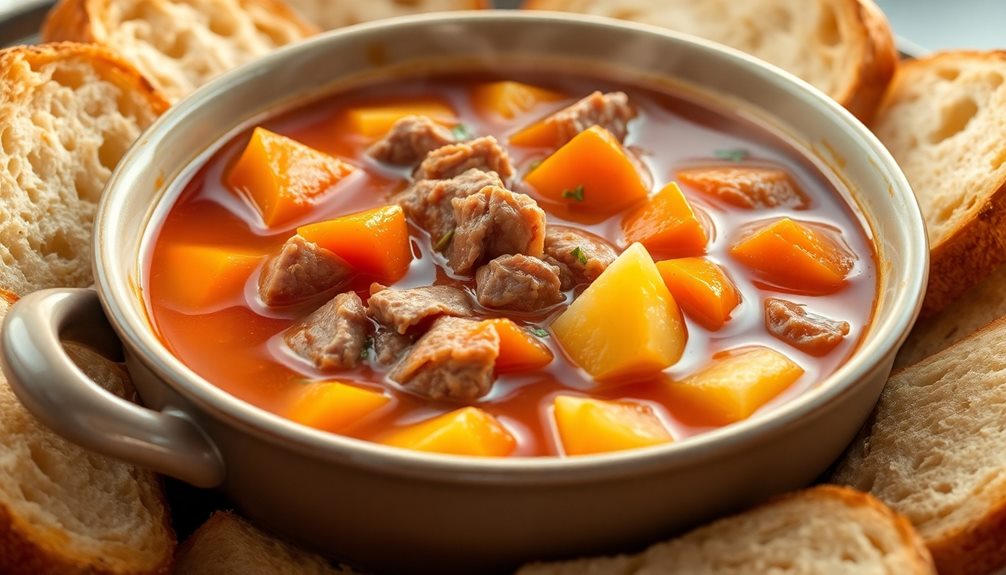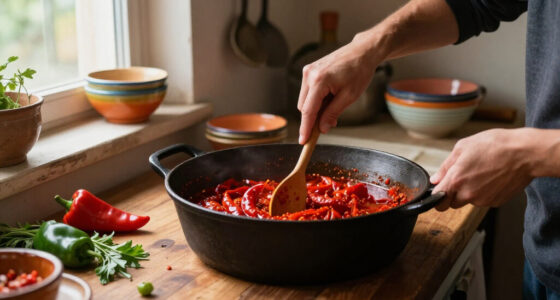
Around the world, pumpkin shines as both a sweet and savory ingredient. You’ll find it in American pumpkin pies, Italian gelatos, and muffins, as well as Southeast Asian pumpkin curry and European roasted dishes. Its mild flavor and velvety texture suit endless recipes, from hearty stews to delicate desserts. Exploring these diverse pumpkin dishes reveals its culinary versatility and cultural significance—if you keep exploring, you’ll discover even more tasty ideas from every corner of the globe.

Get kitchen staples and gadgets delivered free with Prime
- Fast, free delivery on millions of items
- Prime Video, Amazon Music and more included
- Member-only deals all year
Key Takeaways
- Pumpkin is a versatile ingredient used worldwide in both sweet dishes like pies, gelato, and muffins, and savory dishes such as soups, stews, and curries.
- Different regions incorporate pumpkin into traditional recipes, blending local flavors with its natural sweetness and hearty texture.
- Global pumpkin festivals celebrate its culinary versatility through creative desserts and savory preparations, fostering cultural unity.
- Pumpkin’s nutritional benefits and adaptability encourage its inclusion in diverse culinary traditions across continents.
- Unique regional twists, such as Italian pumpkin gelato or Southeast Asian pumpkin curry, highlight the global range of sweet and savory pumpkin recipes.

Pumpkins are more than just fall decorations; they’re a versatile ingredient enjoyed worldwide in a variety of dishes. Across cultures, people celebrate the pumpkin season with vibrant festivals, like the famous global pumpkin festivals, which highlight the fruit’s significance beyond Halloween. These events often feature creative pumpkin-based desserts that showcase the fruit’s natural sweetness and adaptability. From pumpkin pies to intricate pastries, these treats bring people together to indulge in the rich flavors of this seasonal squash. The popularity of pumpkin desserts at such festivals underscores their universal appeal, whether in North America, Europe, or Asia, each region adding its unique twist.
Pumpkins unite cultures through festivals and delicious, adaptable dishes worldwide.
In many parts of the world, pumpkin is transforming into a core ingredient for sweet recipes. In Italy, you might find pumpkin-filled cannoli or pumpkin gelato, blending local flavors with the fruit’s natural sweetness. Meanwhile, in the United States, pumpkin pie remains a staple during Thanksgiving, celebrated with whipped cream and a flaky crust. But beyond the classics, inventive bakers incorporate pumpkin into muffins, bread, and even cheesecakes, creating a spectrum of dessert options. Pumpkin’s smooth, velvety texture lends itself well to these confections, and its subtle natural sweetness balances spices like cinnamon, nutmeg, and cloves.
On the savory side, pumpkin finds a prominent place on menus worldwide. Its mild flavor and hearty texture make it perfect for soups, stews, and roasted dishes. In Southeast Asia, pumpkin curry combines the vegetable with fragrant spices and coconut milk, creating a comforting dish that’s both flavorful and nourishing. In Europe, roasted pumpkin is often served as a side dish, seasoned simply with herbs and olive oil to highlight its natural taste. The versatility of pumpkin in savory recipes means you can easily adapt it to different cuisines, whether in a spicy Mexican pumpkin chili or a Japanese pumpkin tempura.
You’ll notice that pumpkin’s adaptability is celebrated across culinary borders. Its ability to be both sweet and savory makes it a staple ingredient in many recipes. As you explore these dishes, consider how pumpkin can enhance your own cooking, whether by baking a pumpkin-based dessert inspired by global traditions or adding it to a savory stew. Additionally, understanding the nutritional benefits of pumpkin can help you appreciate its role in a balanced diet, whether in sweet or savory forms. The wide array of pumpkin recipes demonstrates that this humble vegetable holds a special place in kitchens worldwide, connecting cultures through shared flavors and festive celebrations.
As an affiliate, we earn on qualifying purchases.
Frequently Asked Questions
What Are the Health Benefits of Eating Pumpkin?
Eating pumpkin offers numerous health benefits. You get a boost of pumpkin antioxidants, which help fight free radicals and support your immune system. Its high pumpkin fiber content promotes healthy digestion and keeps you feeling full longer. Plus, pumpkin is rich in vitamins like A and C, which benefit your skin and vision. Incorporating pumpkin into your diet is a tasty way to boost overall health and well-being.
How Do I Select the Best Pumpkin for Cooking?
You might think all pumpkins are the same, but selecting ripe pumpkins truly makes a difference. Investigate the theory that certain pumpkin varieties are better for cooking, and you’ll find that firm, deeply colored pumpkins with a smooth stem are ideal. When selecting, look for pumpkins with a hard, unblemished rind and avoid soft spots or mold. These signs guarantee you’re choosing the best pumpkin varieties for delicious, fresh dishes.
Can I Substitute Pumpkin With Other Squash in Recipes?
Yes, you can substitute pumpkin with other squash options like butternut, acorn, or kabocha in recipes. Just keep in mind that alternative squash options have flavor profile differences, so the taste and texture may vary slightly. For the best results, choose a squash with a similar sweetness and moisture content to pumpkin, and adjust cooking times if needed. This way, your dish stays delicious and well-balanced.
What Are Traditional Pumpkin Dishes in Non-Western Cuisines?
In non-western cuisines, you find traditional pumpkin dishes like Thai pumpkin curry, where pumpkin absorbs rich coconut flavors, and Indian pumpkin sabzi, which is spiced and savory. During pumpkin festivals, people celebrate the cultural significance of pumpkin as a symbol of harvest and prosperity. These dishes highlight pumpkin’s versatile role in cultural traditions, showcasing its importance beyond Western recipes and emphasizing its place in festive celebrations worldwide.
How Should I Store Leftover Pumpkin Recipes?
Ever wondered how to keep that pumpkin dish fresh? You should refrigerate leftovers within two hours of cooking, using airtight containers to prevent spoilage. For longer storage, follow freezing guidelines—place the dish in a freezer-safe container or bag, remove excess air, and label it with the date. Proper refrigeration tips and freezing techniques will help preserve flavors and prevent waste, so your pumpkin recipes stay delicious longer.
Conclusion
Now that you’ve explored these sweet and savory pumpkin recipes from around the world, let your culinary journey blossom like a vibrant pumpkin patch in full bloom. Each dish is a colorful brushstroke on the canvas of global flavors, inviting you to savor diversity and warmth. So, grab your ingredients and let your kitchen become a world stage—where every recipe tells a story and every bite is a celebration of pumpkin’s versatile charm.
NFL season / tailgating Picks
team gear
As an affiliate, we earn on qualifying purchases.