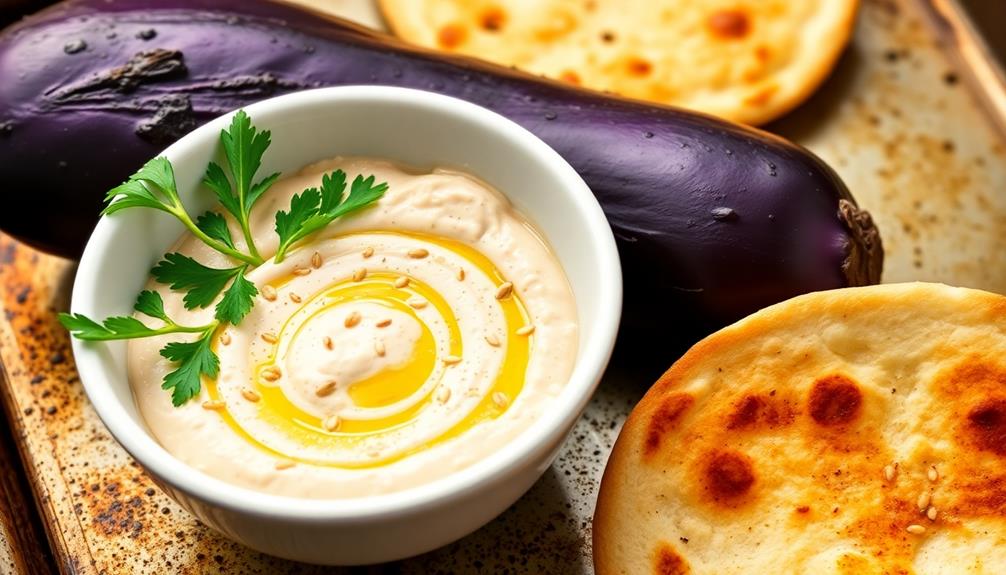
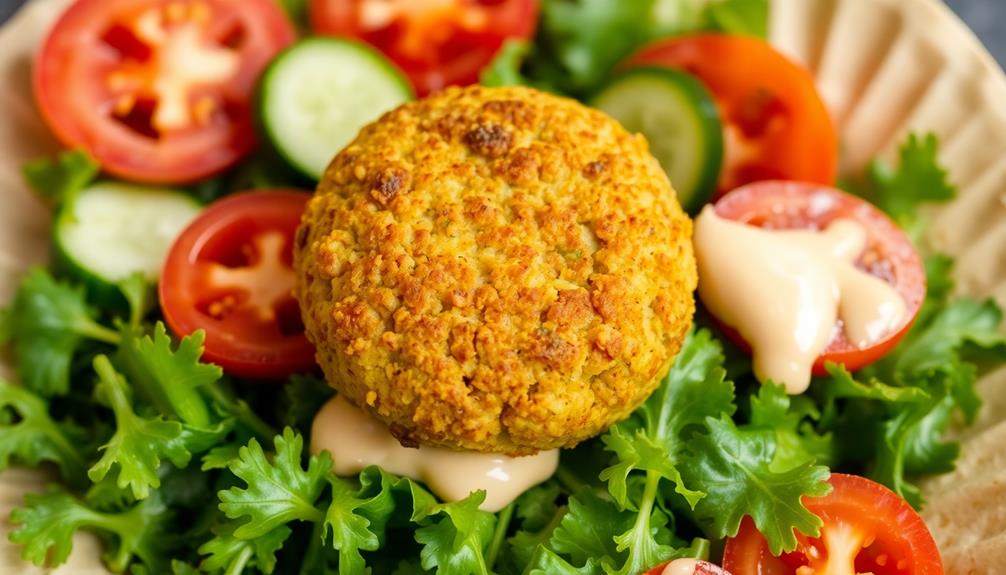
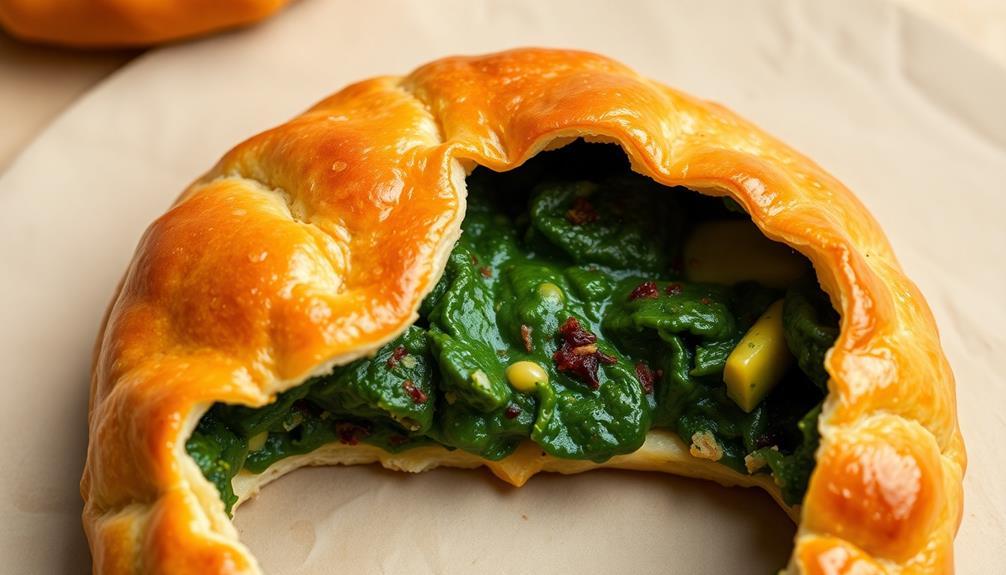
A Lebanese mezze platter offers a vibrant variety of regional flavors and textures perfect for sharing. You’ll find dishes like creamy hummus topped with olive oil and paprika, revitalizing tabbouleh with parsley and lemon, and flavorful kibbeh made with spiced meat and bulgur. Each component reflects local traditions and regional influences, creating an inviting and communal dining experience. Keep exploring if you want to discover more about assembling and enjoying this rich Lebanese tradition.

Get kitchen staples and gadgets delivered free with Prime
- Fast, free delivery on millions of items
- Prime Video, Amazon Music and more included
- Member-only deals all year
Key Takeaways
- A Lebanese mezze platter features a colorful array of small, shared dishes like hummus, tabbouleh, and kibbeh, emphasizing communal dining.
- Regional variations influence ingredients and presentation, with coastal areas favoring seafood and inland regions focusing on hearty or vegetarian options.
- Traditional presentation involves arranging multiple small bowls centrally, promoting tasting of diverse flavors and showcasing Lebanese hospitality.
- Core components such as creamy hummus, fresh tabbouleh, and spiced kibbeh highlight authentic flavors and careful preparation.
- Serving mezze embodies cultural values of generosity and connection, suitable for casual gatherings or festive celebrations.
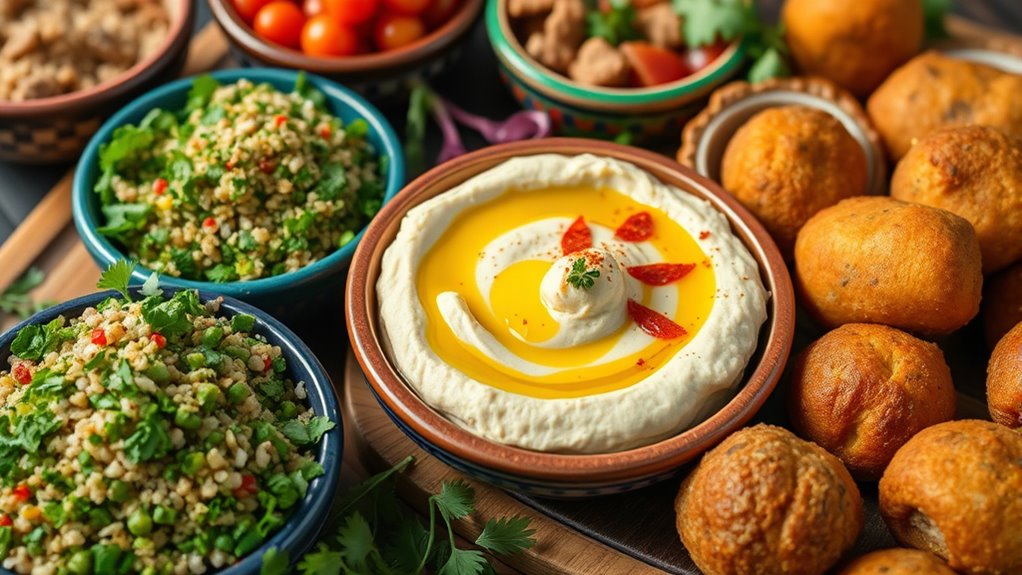
Have you ever wondered what makes a Lebanese mezze platter so irresistibly flavorful and inviting? It’s not just about the individual dishes, but also how they come together to create a vibrant, harmonious experience. The beauty of a Lebanese mezze lies in its diversity—each component offers unique textures and flavors that complement each other perfectly. When you explore the regional variations, you’ll notice how different areas of Lebanon emphasize certain ingredients or presentation styles, adding layers of richness to the traditional experience. For example, in coastal regions, you might find more seafood-based mezze, while inland areas focus on hearty meat dishes or vegetarian options. Despite these variations, the traditional presentation remains consistent: a colorful array of small bowls and plates artfully arranged in the center of the table, inviting everyone to share and savor.
The traditional presentation is key to capturing the essence of Lebanese hospitality. Typically, a mezze platter includes staples like hummus, tabbouleh, and kibbeh, each carefully prepared and served in a way that highlights their authenticity. Hummus, with its smooth, creamy texture, is often topped with a drizzle of olive oil, a sprinkle of paprika, and garnished with fresh parsley, making it both visually appealing and flavorful. Tabbouleh, a invigorating parsley and bulgur salad, is usually served chilled, its bright herbs and lemon dressing providing a burst of freshness that balances richer dishes. Kibbeh, which can be fried, baked, or raw, features a spiced meat and bulgur shell filled with nuts or minced meat, offering a hearty, satisfying bite. These dishes are presented in small, attractive portions that encourage sharing and tasting multiple flavors.
The regional variations influence not only the ingredients but also the way dishes are served. For instance, some regions might incorporate more lemon juice or fresh herbs, while others focus on specific spices or preparation techniques. Despite these differences, the core idea remains the same: to celebrate the bounty of Lebanese land and traditions in a way that’s both appealing and inviting. Serving a mezze platter isn’t just about the food; it’s about creating a communal experience, emphasizing generosity and connection. Whether you’re hosting a casual gathering or a festive celebration, the traditional presentation and regional nuances of a Lebanese mezze platter make it a timeless, flavorful way to bring people together around the table.
Lebanese mezze platter serving bowls
As an affiliate, we earn on qualifying purchases.
As an affiliate, we earn on qualifying purchases.
Frequently Asked Questions
What Are the Origins of Lebanese Mezze Dishes?
You should know that Lebanese mezze dishes originate from ancient culinary traditions rooted in the Levant region. These dishes reflect a rich blend of cultural influences from Phoenician, Arab, Ottoman, and Mediterranean civilizations. Over centuries, these flavors have evolved, preserving traditional recipes while incorporating new elements. By understanding their origins, you can better appreciate the diversity and history behind each dish, making your mezze experience even more meaningful.
How Do I Properly Serve a Mezze Platter?
Imagine you’re a modern-day sultan serving a feast. To serve a mezze platter properly, follow simple serving etiquette: arrange items attractively on a large platter, balancing colors and textures. Use small bowls for dips like hummus, and place fresh herbs or lemon wedges for garnish. Present everything with care, ensuring each dish is accessible and inviting. This thoughtful platter presentation elevates the experience, making your guests feel special and well-cared-for.
Can I Customize a Lebanese Mezze Platter for Dietary Restrictions?
Yes, you can customize a Lebanese mezze platter for dietary restrictions. Opt for gluten-free options like fresh vegetables, olives, and certain dips, avoiding bread and wheat-based items. Use vegan substitutions such as vegan hummus or stuffed grape leaves instead of meat or dairy. Communicate your needs with your host or restaurant, and they’ll help you select suitable items, ensuring everyone can enjoy the delicious flavors safely.
What Are Traditional Beverages Paired With Lebanese Mezze?
You should try traditional Lebanese beverages like arak, a clear anise-flavored spirit, or invigorating mint lemonade, which perfectly complement the diverse flavors of mezze. These drinks hold cultural significance, often enjoyed during gatherings and celebrations, enhancing the communal experience. Sipping on these beverages, you’ll appreciate their role in authentic Lebanese dining, adding a special touch to your mezze platter and immersing you in the rich culinary heritage.
How Long Can I Store Leftover Mezze Ingredients Safely?
You can store leftover mezze ingredients safely for 3 to 4 days if you follow proper food safety and storage guidelines. Keep them in airtight containers in the refrigerator at or below 40°F. Avoid leaving leftovers out at room temperature for over 2 hours, as bacteria can grow quickly. When reheating, ensure everything is heated thoroughly to prevent foodborne illnesses.
Conclusion
Now that you know the essentials of a Lebanese mezze platter, you’re ready to impress your friends with authentic flavors. Did you know that hummus has been a staple in Middle Eastern diets for over 1,000 years? Sharing these dishes not only delights your taste buds but also connects you to a rich culinary history. So, gather your ingredients and enjoy creating a vibrant, flavorful mezze experience right in your own home!
Halloween Picks
halloween
As an affiliate, we earn on qualifying purchases.