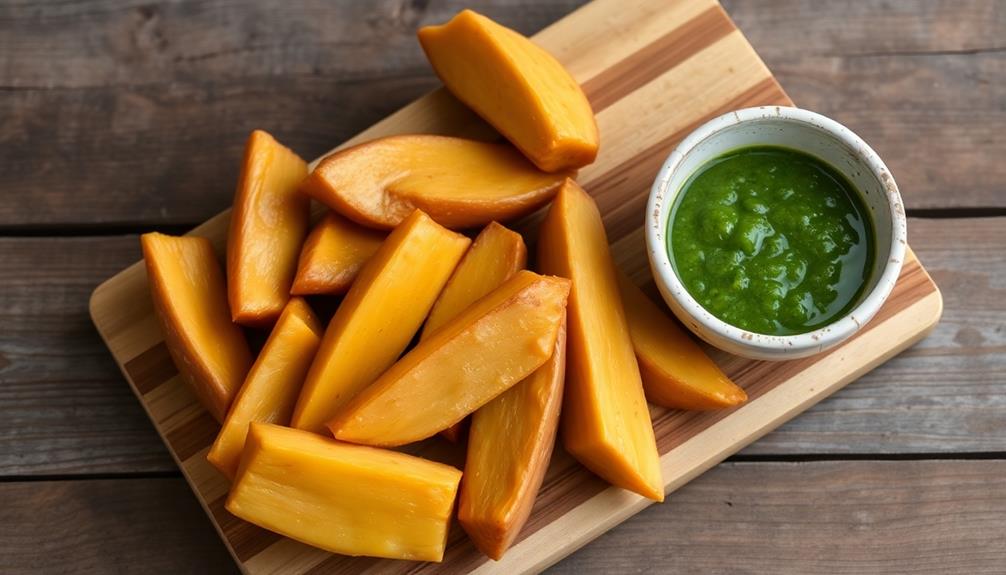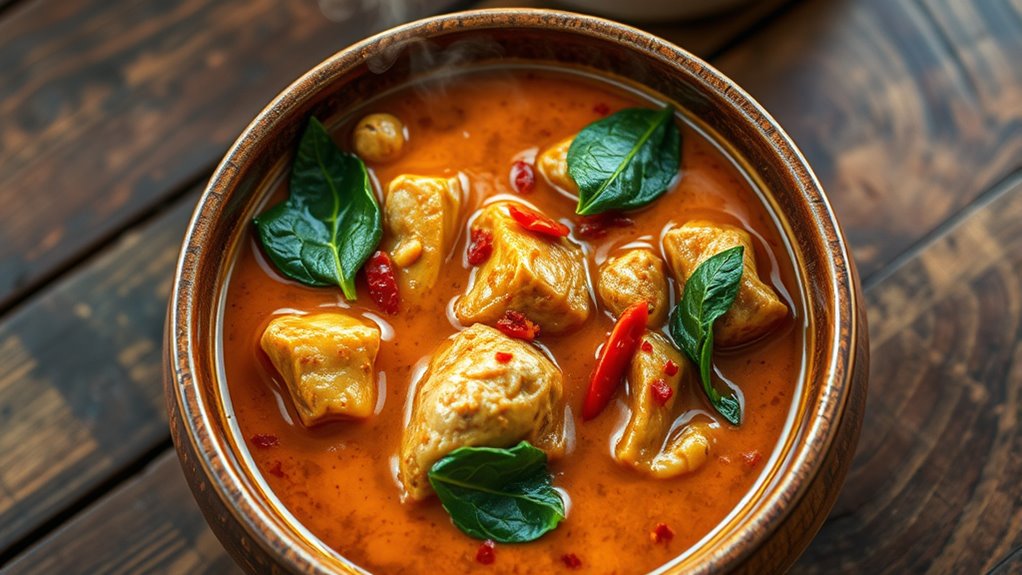

In Maafe, the magic lies in how peanut butter creates a smooth, creamy emulsion that binds the stew together. When you add peanut butter to the simmering ingredients, it emulsifies with tomatoes and broth, forming a velvety texture full of flavor. This process highlights the culinary artistry of West Africa, blending regional ingredients for a rich, hearty dish. To discover more about this fascinating technique, keep exploring the secrets behind Maafe’s delicious magic.
Key Takeaways
- Peanut butter acts as an emulsifier, creating a smooth, creamy texture in maafe by blending fats and liquids seamlessly.
- Proper emulsification requires controlling cooking temperature and timing to prevent separation and ensure a velvety consistency.
- The peanut butter’s natural oils help bind ingredients, enriching flavors and adding depth to the stew’s profile.
- Emulsification in maafe enhances its nutritional value, combining protein, healthy fats, and vegetables into a cohesive dish.
- Mastering peanut butter emulsification reflects West African culinary artistry, balancing flavors for a rich, harmonious stew.
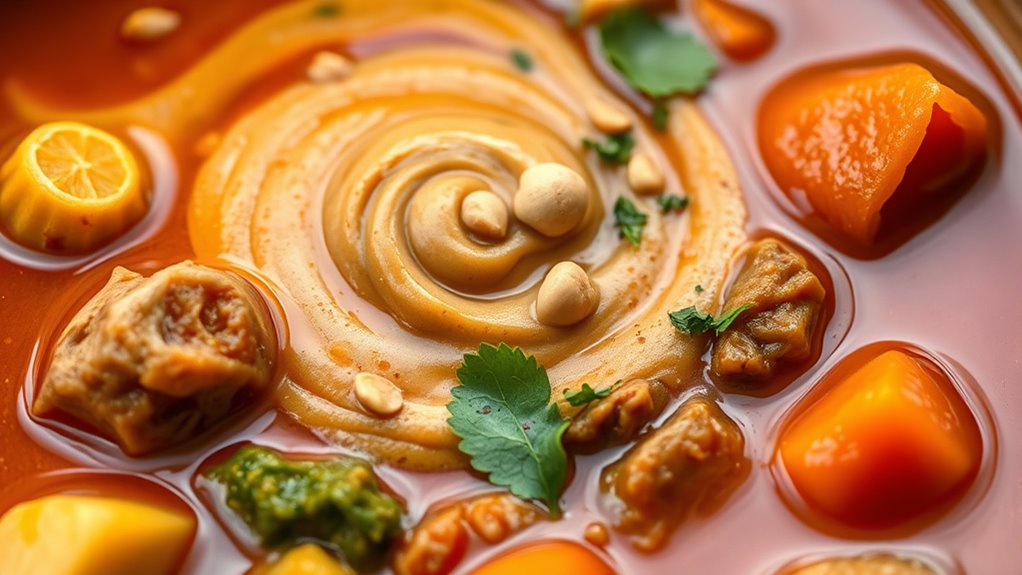
Maafe, a beloved West African stew, showcases the rich flavors of peanut butter combined with tender meats and vegetables. This dish isn’t just about satisfying your taste buds; it carries deep cultural significance that speaks to the history and traditions of the region. When you prepare maafe, you’re participating in a culinary tradition that has been passed down through generations, often served during communal gatherings, celebrations, and family feasts. Its ingredients and methods reflect regional influences, making it a symbol of unity and cultural identity. Understanding the cultural importance of maafe adds depth to your cooking experience, transforming it from a simple meal into an act of cultural appreciation.
Maafe is a cherished West African stew symbolizing cultural unity and culinary tradition.
The magic of maafe also hinges on its cooking techniques. The process involves careful layering of flavors, starting with browning the meat to develop depth and richness. You’ll typically use a combination of oil and onions to create a flavorful base, then add spices and tomato paste to enhance the stew’s complexity. The secret ingredient, peanut butter, is introduced at just the right moment to emulsify the sauce, giving it a creamy, velvety texture. As you stir, you’ll notice how the peanut butter combines seamlessly with the tomato and broth, thickening the stew and enriching its flavor profile. This emulsion is essential; it’s what gives maafe its signature smoothness and nuttiness. Prophetic dreams have intrigued many cultures, often seen as a means of divine or spiritual guidance, which reflects the importance of symbolism and interpretation in understanding deeper messages. Incorporating traditional cooking techniques ensures the flavors develop fully and authentically, honoring the culinary heritage of West Africa. Mastering the proper emulsification process is crucial for achieving the perfect consistency and flavor balance in the stew, and understanding the science behind emulsions can help improve your results.
Cooking techniques play an indispensable role in achieving the perfect consistency. You want to simmer the stew gently, allowing the flavors to meld without overcooking the vegetables or meat. The slow simmer helps break down the ingredients, resulting in tender meat and a thick, hearty sauce. You might also add vegetables like carrots, sweet potatoes, or leafy greens, which absorb the flavors and contribute to the stew’s nutritional value. The timing and temperature control are imperative here—too high, and you risk burning or toughening the ingredients; too low, and the flavors won’t fully develop. The process requires patience and attention, but the outcome is worth it: a rich, flavorful dish that embodies the essence of West African culinary artistry. A proper ingredient selection is also vital for authentic flavor, as regional variations influence the availability and type of ingredients used.
In essence, maafe’s cultural significance and cooking techniques are intertwined. By understanding the tradition behind it and mastering the methods, you’re not just making a stew—you’re honoring a centuries-old culinary heritage. Every step, from selecting ingredients to simmering to perfection, reflects the artistry and history of West Africa. Whether you’re serving it for a family meal or a special occasion, maafe connects you to a vibrant cultural tapestry, all through the simple yet profound act of cooking with peanut butter.

Peanut butter Soup Secrets Exposed!: Including healthy homemade peanut soup quick and easy to make
As an affiliate, we earn on qualifying purchases.
As an affiliate, we earn on qualifying purchases.
Frequently Asked Questions
What Are the Most Common Variations of Maafe Across West Africa?
You’ll notice regional flavor variations of maafe across West Africa, each adding unique twists. Ingredient substitutions, like different meats or vegetables, influence its taste and texture. Some areas favor peanut butter emulsions with spicy peppers, while others use tomato or coconut milk for a richer flavor. These variations reflect local ingredients and traditions, giving each version its distinct identity while maintaining the comforting essence of this beloved stew.
How Does Peanut Butter Influence the Nutritional Profile of Maafe?
Peanut butter is like a nutritional powerhouse, transforming your maafe into a healthful dish. Its benefits include added protein, healthy fats, and essential vitamins, making each spoonful more nourishing. By incorporating peanut butter, you’re enhancing the stew’s nutritional profile, supporting your energy and overall well-being. So, when you stir in this ingredient, you’re not just adding flavor but also revealing a richer, more balanced meal that fuels your body.
Can Maafe Be Adapted for Vegetarian or Vegan Diets?
You can definitely adapt maafe for vegetarian or vegan diets by using plant-based alternatives like vegetable broth and tofu or tempeh instead of meat. To keep the rich flavor, consider adding extra spices or flavor modifications, such as smoked paprika or nutritional yeast. These changes allow you to enjoy a hearty, delicious stew while adhering to your dietary preferences, without sacrificing the traditional taste you love.
What Are Traditional Side Dishes Served With Maafe?
Like a well-choreographed dance, traditional accompaniments elevate maafe’s rich flavors. You’ll often serve it with rice or fufu, which soak up the savory sauce perfectly. Plantains, sweet potatoes, or steamed vegetables also make excellent side dishes, adding flavor pairings that complement the peanutty depth. These sides not only balance the dish but also create a hearty, satisfying meal that highlights West African culinary traditions.
How Long Does It Typically Take to Prepare Authentic Maafe?
Preparing authentic maafe usually takes about 1.5 to 2 hours, depending on your cooking skills and ingredient preparation. You’ll spend time browning the meat, preparing vegetables, and making the peanut butter emulsion. The cooking time includes simmering everything to develop rich flavors. To save time, gather your ingredients beforehand and chop vegetables early. With patience, you’ll enjoy a flavorful, hearty stew that’s well worth the effort.

Organic Self Cleaning Peanut Butter Mixer, white, 16-ounce jar with 3"" diameter mouth." (3214)
Easy to use; molded plastic knob
As an affiliate, we earn on qualifying purchases.
As an affiliate, we earn on qualifying purchases.
Conclusion
You’ll love how maafe transforms simple ingredients into a rich, hearty stew, with peanut butter creating a creamy emulsion that’s both comforting and unique. Did you know that West Africa produces over 70% of the world’s groundnut (peanut) crop? This makes peanut butter a staple in their cuisine, adding flavor and nutrition. Next time you enjoy a bowl of maafe, remember you’re tasting a centuries-old culinary tradition that connects millions of people across the region.

McCormick Classic Beef Stew Seasoning Mix Packet, 1.5 oz
Hearty beef stew seasoning with onion, paprika, black pepper and thyme
As an affiliate, we earn on qualifying purchases.
As an affiliate, we earn on qualifying purchases.
traditional Maafe stew ingredients
As an affiliate, we earn on qualifying purchases.
As an affiliate, we earn on qualifying purchases.